
Chile Signals Slow Copper Recovery After Historic Production Slump, 2027 Output Forecast Cut

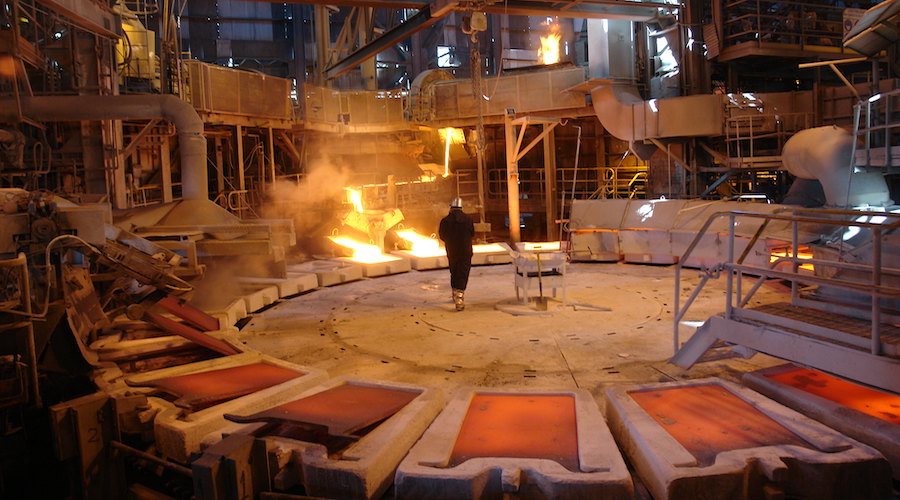
Santiago, Chile: Chile, the world’s largest copper producer, is expected to witness only a modest recovery in copper production in 2027 after suffering a significant decline in output this year. The country’s copper commission, Cochilco, has lowered its production outlook, highlighting persistent operational difficulties, declining ore grades and disruptions at major mining operations.
According to Cochilco’s latest projections released on October 30, Chile’s copper production is expected to fall by 8.4% in 2026 to approximately 4.94 million metric tonnes. This is substantially lower than its earlier estimate of 5.27 million tonnes.
The commission expects production to recover by just 3% in 2027, reaching approximately 5.08 million tonnes. The revised forecast is also below its previous projection of 5.55 million tonnes, indicating that a sustained recovery in the country’s mining sector could take longer than anticipated.
Major Mining Companies Face Production Challenges
The decline in Chile’s copper output has been concentrated at several major mining operations, particularly those operated by state-owned Codelco and global mining giant BHP.
According to Cochilco, Codelco’s operations, along with BHP’s Escondida and Spence mines, account for more than 77% of the country’s net production decline.
Between January and September 2026, Chile produced approximately 3.63 million tonnes of copper, representing an 8.5% decrease compared with the corresponding period last year.
The commission noted that lower ore grades, maintenance requirements and operational disruptions have affected mineral processing efficiency and copper recovery rates.
Ageing Mines and Operational Disruptions Add Pressure
Chile’s mining industry is facing structural challenges as several established mines become increasingly difficult to operate. Declining mineral quality means companies must process larger quantities of ore to produce the same amount of copper.
Operational disruptions have further weakened production. Codelco has faced difficulties at key facilities, including El Teniente, Chuquicamata and Ministro Hales.
A fatal accident at El Teniente in July 2025 also affected operational continuity and contributed to production constraints. Meanwhile, maintenance work and lower ore grades have placed additional pressure on output.
The combination of geological challenges, equipment maintenance and operational interruptions has made it difficult for mining companies to restore production quickly.
Copper Price Forecast Raised Amid Tight Global Supply
Despite the production downturn, Cochilco has increased its copper price expectations, citing supply constraints and resilient global demand.
The commission now forecasts an average copper price of US$6.18 per pound in 2026, compared with its previous estimate of US$5.95. For 2027, the forecast has been raised from US$5.10 to US$5.95 per pound.
Global refined copper demand is expected to grow by 1.5% in 2026 and 1.8% in 2027. However, limited production growth could leave the international copper market vulnerable to further supply disruptions. <Cite refs={[“turn552252search0″,”turn552252search6”]}/>
Global Copper Market Faces Supply Concerns
Chile plays a crucial role in the international copper industry, supplying more than one-fifth of global mined copper. Any prolonged production weakness in the country could have implications for manufacturers, electrical equipment producers, construction companies and renewable energy developers.
Copper demand is receiving additional support from electric vehicles, renewable energy infrastructure, power grids, data centres and industrial electrification.
The slower recovery in Chile could therefore add pressure to an already constrained global supply chain.
Outlook: Recovery May Take Longer Than Expected
Although Chile is targeting higher production in 2027, the revised forecast suggests that the country’s mining industry continues to face significant structural and operational challenges.
Mining companies will need to improve productivity, accelerate investment in mining infrastructure, address declining ore grades and strengthen operational reliability to restore output.
For the global copper market, Chile’s production recovery will remain an important factor influencing supply availability and price movements over the coming years.