

Support CleanTechnica’s work through a Substack subscription, on Patreon, or on Stripe. Help us produce all of the high-quality, original content we publish week after week despite the challenges of content-scraping AI, antisocial media, inflation, and other hurdles.
The arc of justice bent around and kicked US Energy Secretary Chris Wright in the shins Friday morning, when a federal court ruled that he can’t make up “emergency” orders to save old coal power plants from the dustbin of history. However, the ruling only applied to one power plant. By Friday afternoon, Wright was right back at it again, forcing yet another emergency order on yet another coal power plant. Break out the popcorn, there’s gonna be a fight!
One Coal Power Plant Closes…
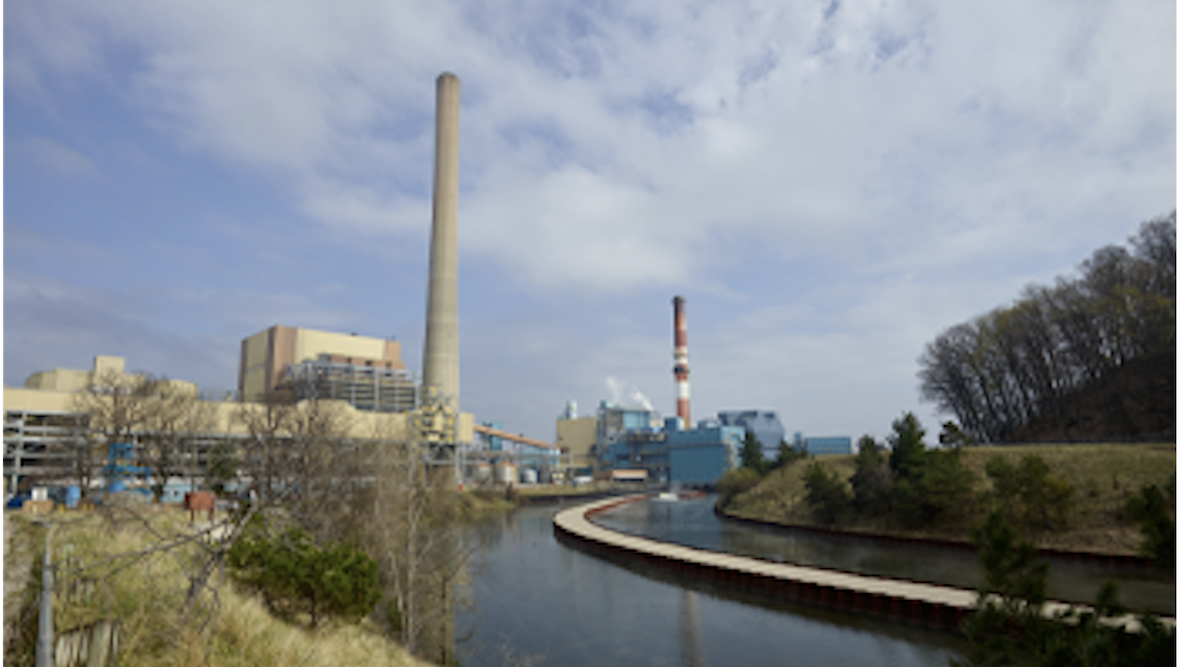
The J.H. Campbell coal power plant in Michigan was the subject of the Friday morning decision. In May of 2025, Wright began issuing a series of “emergency” orders forcing the plant to stay open. The first order came down just days before the plant was set to close, marking the final stage of a years-long planning effort involving multiple stakeholders including the facility’s owner, Consumers Energy (see more J.H. Campbell background here).
The Sierra Club is among the organizations challenging the Campbell orders and other similar orders in multiple states. As noted by Sierra Club and its partners, a normal Energy Secretary only issues emergency order on request, in consultation with the relevant stakeholders, and only under extreme conditions such as weather or wartime.
Wright, in contrast, has been sprinkling emergency orders around willy-nilly like that lady in the park throwing breadcrumbs at pigeons, and the U.S. Court for the District of Columbia finally called him on it.
“The section of the Federal Power Act that allows emergency orders ‘is essentially a narrow, last-resort backstop,’” PBS reported, citing the decision written by Appeals Court Judge Cornelia Pillard for the three-judge panel, in a unanimous finding that reversed Wright’s emergency order. Judge Pillard further noted the emergency order disrupted a “long and carefully planned retirement.”
“Use of emergency authority “‘is triggered only when there is a need for immediate, essentially last-resort action and the circumstances require action by DOE in particular, as opposed to action by the state or states responsible for resource adequacy,’” PBS further reported, again citing Pillard.
…Another One Opens!
As if to spit in Judge Pillard’s eye, Secretary Wright promptly clapped back with another emergency order just hours after the District Court released its ruling.
“U.S. Secretary of Energy Chris Wright today issued an emergency order to keep affordable, reliable, and secure coal generation in the State of Washington online to help address critical grid reliability issues facing the Northwestern region of the United States,” the Energy Department wrote on September 11.
“The emergency order directs TransAlta Centralia Generation, LLC (TransAlta) to ensure that Unit 2 of the Centralia Generating Station in Centralia, Washington, a coal-fired power plant, remains available to operate,” DOE elaborated.
As noted by DOE, Centralia Unit 2 was originally scheduled for retirement at the end of 2025. Wright issued the first emergency order on December 16, just days before it was set to retire.
Break Out The Popcorn!
Somewhat hilariously, the Centralia order will not prevent the site from being converted to support wind, solar, or energy storage operations. That’s because the carefully planned closure of Unit 2 was carefully planned around replacing coal with natural gas, not renewables, at least until the 2040’s.
That’s not going to sit very well with whatever natural gas distributor was banking on a new revenue stream supplying Unit 2. Nuclear energy stakeholders may be feeling a bit peckish as well. Back in 2022, the Energy Department surmised that hundreds of former coal power plants could host nuclear energy facilities.
Readers, if you have any insights into that angle, drop a note in the discussion thread. Meanwhile, to make matters even more hilarious, it turns out that Unit 2 has been off-grid ever since last December, despite Wright’s whackadoodle emergency orders.
“In December 2025, TransAlta announced an agreement with Puget Sound Energy to transition the remaining generating unit to natural gas, delivering up to 723 megawatts of power when needed,” the Washington State Department of Ecology explains.
“However, that same month, the U.S. Department of Energy issued an emergency order requiring TransAlta to keep the Centralia plant operational as a coal power plant,” WSDE adds.
“Despite the emergency order, which has since been extended twice, the plant has not actually been called on to supply electricity to the grid since mid-December,” the agency adds again, by way of reminding everyone that the very careful planning process leading up to the scheduled closure of Unit 2 involved ensuring that other power generation resources were ready and waiting.
Who Needs Coal Power?
The Centralia debacle is just one example of Wright’s inane — and expensive — efforts to keep an aging, creaking, outdated form of power generation cranking away well into the 21st century.
On Friday afternoon, the leading environmental law organization Earthjustice emailed an explainer to interested parties (including CleanTechnica), explaining exactly why there is no emergency where Wright pretends one exists.
The J.H. Campbell plant is a regional facility located within the territory of MISO, the Mid-Continent Independent System Operator responsible for keeping the kilowatts flowing among states in the midsection of the US.
“The regional grid, MISO, had unused available excess generation far exceeding the amount of power supplied by the coal plants under ’emergency’ 202(c) orders during Winter Storm Fern, during this summer’s hottest days, and last years’ hottest days” Earthjustice summarizes.
“On June 23, the grid’s most stressed period during the summer [of 2025], MISO had a surplus of unused excess resources of 7,941 MW. Meanwhile, according to EPA data, Campbell was providing a maximum of 760 MW. Thus, MISO had a surplus of unused excess resources more than 10 times larger than the amount of power being provided by Campbell,” Earthjustice elaborates.
Similarly, Earthjustice found that during the most stressed period during the winter of 2025-26, MISO enjoyed “a surplus of unused excess resources of at least 5,000 MW to 7,500 MW.”
They Do Maths
That’s just a snippet from Earthjustice’s much longer, detailed analysis. Meanwhile, Wright continues to represent peak Trump, up to and including the invention of his own system of mathematics. “The Trump Administration remains committed to reversing the misguided energy subtraction policies it inherited from past leaders,” Wright insisted in Friday afternoon’s order.
“Instead, we are advancing energy addition and expanding the American people’s access to affordable, reliable, and secure electricity,” he emphasized.
Okay, sure. You do you, Chris. Good boy.
Meanwhile, just two days before Wright declared the latest “emergency,” the US Energy Information Energy announced that demand for coal in the power generation industry is subtracting, not adding.
Turns out, solar, wind, — especially solar — and energy storage are doing all the heavy lifting to keep the lights stay on. Who knew?
Photo: The J.H. Campbell coal power plant in Michigan will finally get taken off the life support, as a federal court rules that Energy Secretary Chris Wright overstepped his authority to keep the plant open past its scheduled retirement (cropped, courtesy of Consumers Energy).
Sign up for CleanTechnica’s Weekly Substack for Zach and Scott’s in-depth analyses and high level summaries, sign up for our daily newsletter, and follow us on Google News!
Have a tip for CleanTechnica? Want to advertise? Want to suggest a guest for our CleanTech Talk podcast? Contact us here.
Sign up for our daily newsletter for 10–15 new cleantech stories a day. Or sign up for our weekly one on top stories of the week if daily is too frequent.

CleanTechnica uses affiliate links. See our policy here.
CleanTechnica’s Comment Policy