
Critical Minerals Getting Harder to Mine as Deposits Age, EY Warns of Rising Industry Risks

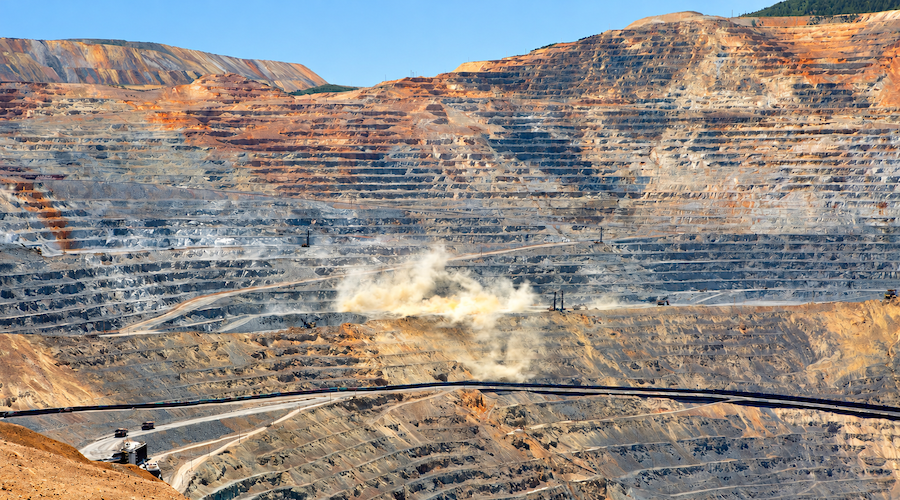
London: The global mining industry is facing growing challenges in extracting critical minerals as ageing deposits, declining ore grades and increasingly complex mining operations threaten production capacity, according to a new report by professional services firm EY.
EY’s latest Top 10 Business Risks and Opportunities in Mining and Metals report identifies operational complexity as the biggest risk facing the mining and metals industry in 2027. The findings are based on a survey of 400 senior executives from mining and metals companies worldwide.
The report highlights how the depletion of high-quality mineral reserves is forcing mining companies to explore deeper deposits and increasingly difficult geological formations. These developments are raising extraction costs, increasing processing requirements and making production less predictable.
EY Global Mining and Metals Leader Paul Mitchell said that mining operations are becoming increasingly complex as existing mines age and reserves are depleted, while replacement deposits are often more difficult to extract and process.
Declining Ore Grades Increase Mining Challenges
One of the biggest challenges identified by EY is the declining quality of mineral deposits. As high-grade reserves are gradually exhausted, mining companies must process larger quantities of ore to obtain the same amount of metal.
Lower ore grades can increase energy consumption, water requirements and processing costs. They can also put additional pressure on equipment and infrastructure, making operational efficiency increasingly important.
The situation is particularly significant for copper, nickel, lithium and other minerals that are essential for electric vehicles, renewable energy infrastructure, batteries and advanced technologies.
As existing deposits become more difficult to exploit, mining companies are increasingly required to invest in advanced extraction techniques, improved mineral processing technologies and automation to maintain production levels.
Operational Complexity Tops Mining Industry Risks
EY’s survey identifies several factors contributing to operational complexity. Regulatory compliance delays emerged as the leading concern, followed by variations in mineral reserve grades, labour availability, material handling, processing capacity, transportation and equipment reliability.
Reserve-grade variability was highlighted by 29% of respondents, while other operational factors affected approximately 24% to 26% of executives surveyed.
Ageing mines also provide fewer opportunities to adjust production schedules, combine different ore grades or redirect materials through processing facilities. This reduces operational flexibility and makes it harder for companies to respond to unexpected disruptions.
Capital Availability and Supply Chain Pressures
Access to capital emerged as the second-biggest risk for the mining industry, followed by supply chain disruptions.
Although investment funding remains available, investors are becoming more selective because of differences in commodity prices, project economics and geopolitical uncertainty.
The EY survey found that 44% of mining companies are pursuing funding from original equipment manufacturers, while 39% are seeking investment from sovereign wealth funds and another 39% are targeting government investment.
Supply chain disruptions are also affecting the availability of mining equipment, industrial inputs, processing materials and transportation services.
To reduce these risks, 53% of surveyed mining companies are investing in technology to improve supply chain visibility, while 52% are increasing inventories or stockpiles to protect operations against potential interruptions.
Governments Increase Investment in Critical Minerals
Governments worldwide are strengthening their efforts to secure supplies of critical minerals amid growing geopolitical competition and concerns over supply chain dependence.
According to EY, public financing commitments for critical minerals exceeded $65 billion between 2023 and 2025, representing more than a fourfold increase compared with the previous period.
The survey also found that 28% of mining executives expect direct government investment within the next 12 months.
Government support is increasingly important for developing domestic mining, refining and processing capabilities. However, changing trade policies and geopolitical tensions could create additional uncertainty for long-term mining investments.
AI and Automation Could Help Address Mining Challenges
Technology is expected to play a major role in addressing the industry’s operational difficulties. Artificial intelligence, automation, predictive maintenance and advanced mineral processing systems could help companies improve productivity and recover more minerals from lower-grade deposits.
However, increasing digitalisation also creates cybersecurity risks. EY reported that cybersecurity had entered its top 10 mining industry risks for 2027 for the first time. Its research found that 67% of mining and metals assets fall within a vulnerability zone characterised by below-average visibility and cybersecurity controls.
Outlook for the Global Critical Minerals Industry
The findings underline a growing challenge for the global mining sector: demand for critical minerals is increasing, but discovering and extracting new economically viable deposits is becoming more difficult.
For mining companies, the priority will be to improve operational efficiency, invest in new technologies, diversify financing sources and strengthen supply chain resilience.
The industry’s ability to overcome declining ore grades, ageing infrastructure and increasingly complex extraction conditions will be crucial to ensuring a reliable supply of minerals required for the global energy transition and advanced manufacturing.