
Earthquake Rattles Mosaic’s Esterhazy Potash Mine in Saskatchewan; Workers Safe, Operations Continue

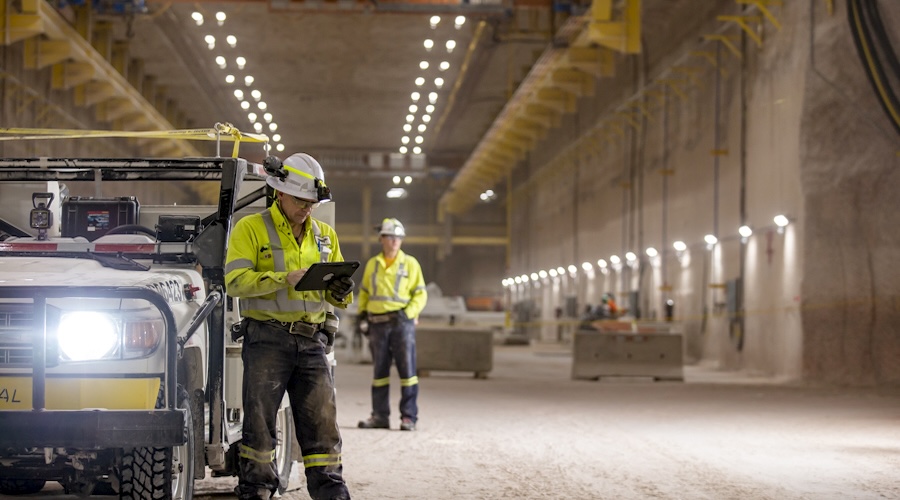
Saskatchewan, Canada: A magnitude 3.4 earthquake rattled the area surrounding The Mosaic Company’s Esterhazy potash mining complex in Saskatchewan, Canada, on November 3, 2026. The tremor, suspected to have been triggered by underground mining activity, raised concerns among local residents but caused no reported disruption to mining operations.
According to Earthquakes Canada, the seismic event occurred at approximately 7:04 a.m. local time, northeast of Esterhazy, around 230 kilometres east of Regina. The earthquake originated at a shallow depth of approximately one kilometre underground. The agency initially classified the incident as a suspected mining-induced event. Its subsequent event listing recorded the magnitude at 3.5.
Mosaic Confirms Seismic Activity at K3 Mine
Mosaic Canada confirmed that the tremor was felt near its Esterhazy potash mining operations. According to the company, the seismic event occurred in a mined-out section of the older underground workings of its K3 mine.
The company confirmed that all approximately 1,200 employees working at the Esterhazy facility had been accounted for following the incident. Safety inspections and assessments were completed, with no infrastructure damage or continuing safety concerns reported.
Mosaic also confirmed that mining operations at the Esterhazy complex were continuing normally, with no immediate impact on production.
The company stated that mining-induced seismic activity is relatively common in the region and that its facilities are engineered to withstand seismic loading. It also indicated that it would work with external experts to review the incident and improve its understanding of the geological characteristics of the K3 ore body.
Local Residents Feel the Tremor
The earthquake was felt across parts of southeastern Saskatchewan, including the Esterhazy community. Some residents reported hearing a loud bang and experiencing noticeable shaking inside their homes.
Earthquakes Canada received reports from residents who experienced the tremor, highlighting the impact of underground seismic activity on communities located near major mining operations.
Although the region is not considered highly earthquake-prone due to its distance from active tectonic plate boundaries, mining-related seismic events have been recorded in the area previously.
Three similar mining-induced seismic events were documented around Esterhazy during 2025, with magnitudes ranging from approximately 3.33 to 3.77.
Mining-Related Seismic Activity Raises Geological Questions
Mining-induced earthquakes can occur when extensive underground excavation changes the stress distribution within surrounding rock formations. The creation of large underground cavities can cause rock layers to shift, fracture or redistribute pressure, potentially generating seismic activity.
Experts have noted that such movements can continue even after mining operations in a particular underground section have stopped.
The latest incident highlights the importance of geological monitoring, underground mine safety measures and collaboration between mining companies and seismic experts.
Saskatchewan is one of the world’s major potash-producing regions, and the Esterhazy complex is among the most significant potash mining operations globally. The incident has once again drawn attention to the relationship between large-scale underground mining and geological stability.