
Support CleanTechnica’s work through a Substack subscription, on Patreon, or on Stripe. Help us produce all of the high-quality, original content we publish week after week despite the challenges of content-scraping AI, antisocial media, inflation, and other hurdles.
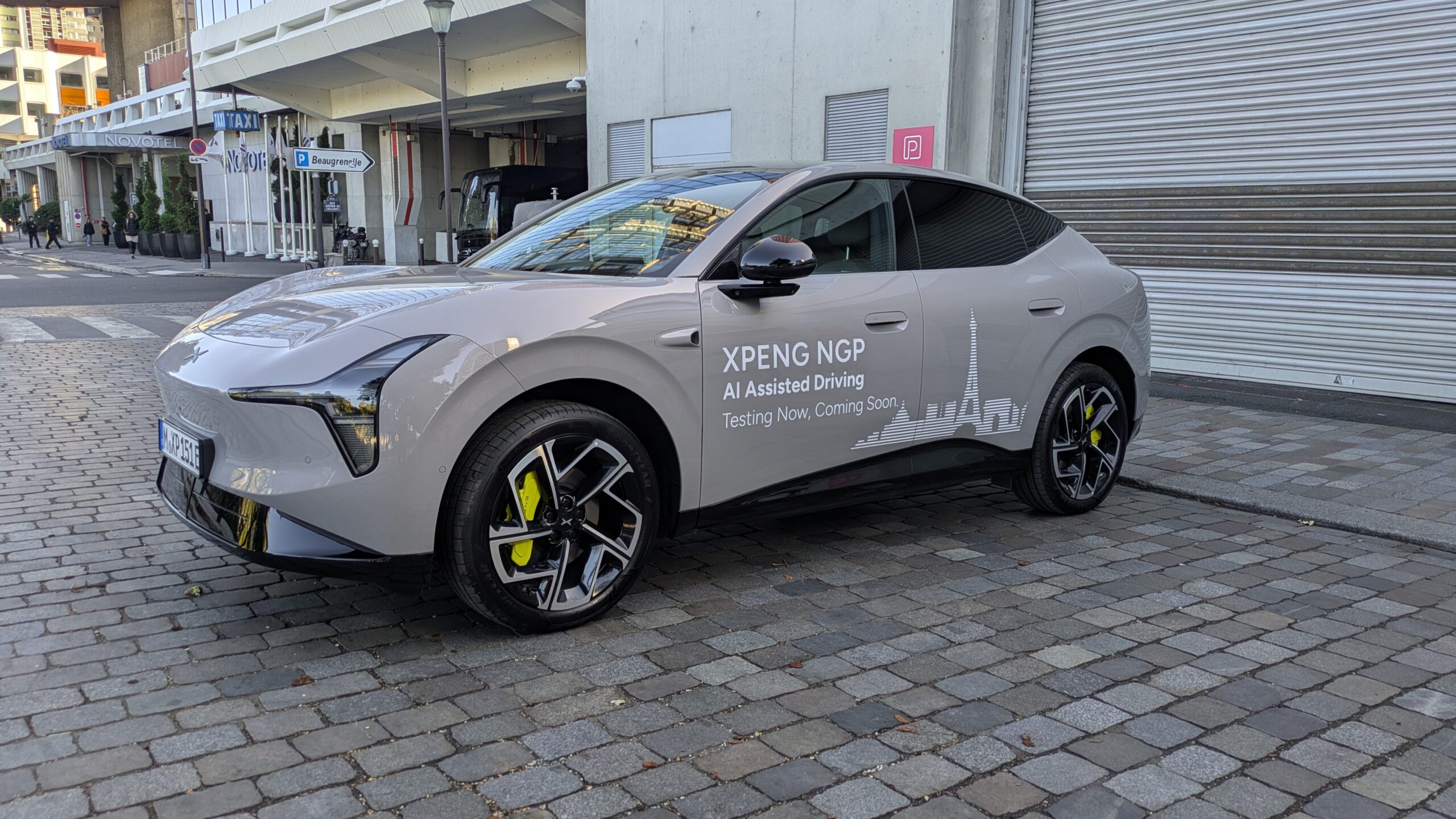
On my recent trip to Paris, I had the opportunity to experience NGP with VLA 2.0 in an XPENG L03. Paris roads and drivers are a bit different than my past experiences. Adapting to the traffic poses a unique challenge. I had previously sampled XPENG’s intelligent driving system in Guangzhou, Beijing, Munich and Amsterdam, and you can read more details about the system in those articles.
Overall, XPENG has the smoothest and most human-like intelligent driving system that I have experienced. However, I wanted to hear a different perspective. So, when I heard Joel from the Tech Jamo YouTube channel was trying to schedule a ride along, I gave him shotgun on my time slot. We soon took off along with Tanya from XPENG and the test driver.
As the system is not officially approved for Europe yet, we were not able to take the wheel. The French test driver had only used the system a few times before we took our lap. Soon after taking off, I used the voice controls to turn the front seat massager on for Joel. He was instantly a fan, as I was on my past test ride.
While I had previously ridden in the back of the L03 for a short time in Munich, the Paris trip was a bit longer and the roads were much rougher. Overall, the L03 offers a surprising amount of room in back for its size and feels very premium for its class. It felt far more spacious with better build quality and materials compared to the similarly sized and shaped Audi Q4 Sportback e-tron that I sat in at the Paris Motor Show. While riding, it was comfortable and quiet over rough parts of the road. The smoothness of the intelligent driving system also did not create the slightest sense of motion sickness, which I can sometimes be vulnerable to when sitting in the back.
Sitting in the back seat, I was also able to see the HUD over the driver’s shoulder. While it is always difficult to capture on video, the HUD was clear, with necessary information and navigation. I kept thinking that it would be great to have a dark mode, where only the HUD stays on with voice controls handling other functions. You would never need to take your eyes off the road and could activate the screen with a touch if you needed it. Joel was also a fan of the idea, having owned a Honda E with a similar capability. That function is not yet available on the L03, but XPENG has a history of listening to feedback.
Joel also has a Tesla Model 3 with HW3, so he has some frame of reference. He seemed impressed with the smoothness and overall quality of the XPENG. After the drive, I sat down with Joel to get his thoughts.
At the Paris Motor Show, multiple companies were invited to demonstrate their intelligent driving systems. Only XPENG and Tesla had the courage to face the challenge, although I unfortunately didn’t get a chance in my schedule to sample Tesla FSD on this trip. Paris can be a difficult driving environment. You have to anticipate other drivers rather than expecting them to follow the rules. Lane markings, when present, are often not followed.
On these roads, the L03 did seem to accelerate and brake more aggressively than in Amsterdam. To navigate Paris streets, you need to be more assertive, much like on my experience in Beijing. However, it seemed to navigate traffic very smoothly. One issue is that drivers in Paris often drive far beyond the speed limit. However, the XPENG sticks to the speed limit by default, as required under upcoming UN DCAS regulations. Tesla FSD can currently speed, but that will need to change if they are to comply with the new regulations.
The car seems to be adapting rapidly to different road conditions. A Dutch or German driver may feel out of place on Paris roads, but the system seems to be adapting to different roads rapidly. Joel has yet to drive on Paris roads, but I would like to hear his perspective when he tries it. If anything, the intelligent driving system could be helpful with unfamiliar roads and traffic patterns, as well as the unfamiliar customs of other drivers, cyclists and pedestrians.
The L03 anticipated what was going to happen surprisingly well. It thought ahead, rather than reacting. In one instance, it saw someone crossing the road, judged her speed and trajectory, and slowed down just enough so that it would get to her position as she was stepping off the road. No slower or faster than needed. It didn’t accelerate and then brake hard like many drivers. It navigated the system just as fast, but the smoother driving would have prevented accordion effect from the cars behind it. And the lack of unnecessary acceleration and braking would undoubtedly reduce energy consumption.
Overall, the car drove very smoothly. So smoothly that what might have been a tricky situation was a non-issue, and you could forget it was driving. You almost take for granted how good it is until you get into a Paris Uber driven by a human being. While people can nitpick little things from the test video, it performed noticeably better than the typical human driver in Paris. Not only was it smoother, but it seemed to be safer and follow the rules better. None of the colorful hand signals and yelling that I experienced on more than one occasion from human drivers.
While NGP with VLA 2.0 is still a Level 2 system, it already felt safe. A human using it would almost undoubtedly be safer than if driving on their own. Especially on unfamiliar roads. NGP with VLA 2.0 may not be ready to fully replace human drivers yet, but it doesn’t feel far off.
Sign up for CleanTechnica’s Weekly Substack for Zach and Scott’s in-depth analyses and high level summaries, sign up for our daily newsletter, and follow us on Google News!
Have a tip for CleanTechnica? Want to advertise? Want to suggest a guest for our CleanTech Talk podcast? Contact us here.
Sign up for our daily newsletter for 10–15 new cleantech stories a day. Or sign up for our weekly one on top stories of the week if daily is too frequent.

CleanTechnica uses affiliate links. See our policy here.
CleanTechnica’s Comment Policy