

Support CleanTechnica’s work through a Substack subscription, on Patreon, or on Stripe. Help us produce all of the high-quality, original content we publish week after week despite the challenges of content-scraping AI, antisocial media, inflation, and other hurdles.
Now that US President Donald Trump has emerged in full flower as a butt-ogling, noise-bleating presence on the 2026 campaign trail, climate advocates are all the more certain that his attempt to throttle back on the nation’s wind and solar industries will ultimately fail. Trump does not hate all forms of renewable energy, though. For example, he has been supporting the marine energy industry all along, perhaps because much of it is hidden under water. Go figure…
The Invisible Renewable Energy Resource
Marine energy refers specifically to devices that harvest the kinetic energy of tides, currents, and waves. That’s an important distinction because wind turbines, both offshore and onshore, have earned the wrath of Trump ever since the early 2000’s, when he lost a legal battle against an offshore wind farm that allegedly spoiled the view from one of his golf courses in Scotland. Unlike wind turbines, marine energy devices are barely visible above the surface of the water, so the view-spoiling argument loses quite a bit of steam against them.
That helps explain why the US Department of Energy continues to pour taxpayer dollars into marine energy R&D, even while Trump systematically tries to destroy any and every wind turbine in sight (see more Trump v. wind turbines here).
As for potential competition against President Trump’s allies in the fossil fuel industry, no worries. Marine energy is a newly hatched global industry, and it lacks the supply chain and workforce needed for rapid scale-up before it can make any significant contribution to the renewable energy transition. Much of the activity still consists of testing, demonstration, and pilot projects.
Still, if all goes according to plan the payoff will be considerable. The US Department of Energy calculates that wave energy alone could introduce 1,170 terawatt-hours per year onto the nation’s grid.
Siting opportunities for tides and currents are less expansive, but these two parts of the marine energy industry could still make a significant contribution to local and regional decarbonization efforts. The Energy Department estimates that tidal energy could introduce 220 terawatt-hours per year into the grid.
The US has been pushing itself forth as a global influence on the marine energy industry since 2010, when the US Navy and Marine Corps partnered with the Energy Department on a wave energy test facility in Hawaii. The Hawaii facility has been upgraded several times since then, and the Energy Department has also established the TEAMER program, which makes a network of US marine energy laboratories available to innovators from around the world. The jewel in the crown is PacWave South, an open ocean test facility off the coast of Oregon which just celebrated its official launch over the summer.
The hum of activity is somewhat more muted around tidal energy. To date, the work has focused on locations where other on-site renewable energy resources are inadequate or impractical. That includes the “RITE” demonstration turbines in the East River in New York City, with the East River being a tidal waterway and not an actual river as commonly understood. Cobscook Bay and Western Passage in Maine are additional targets for tidal energy deployment, along with Cook Inlet in Alaska.
An Underwater Dragon Harvests Renewable Energy From The Ocean
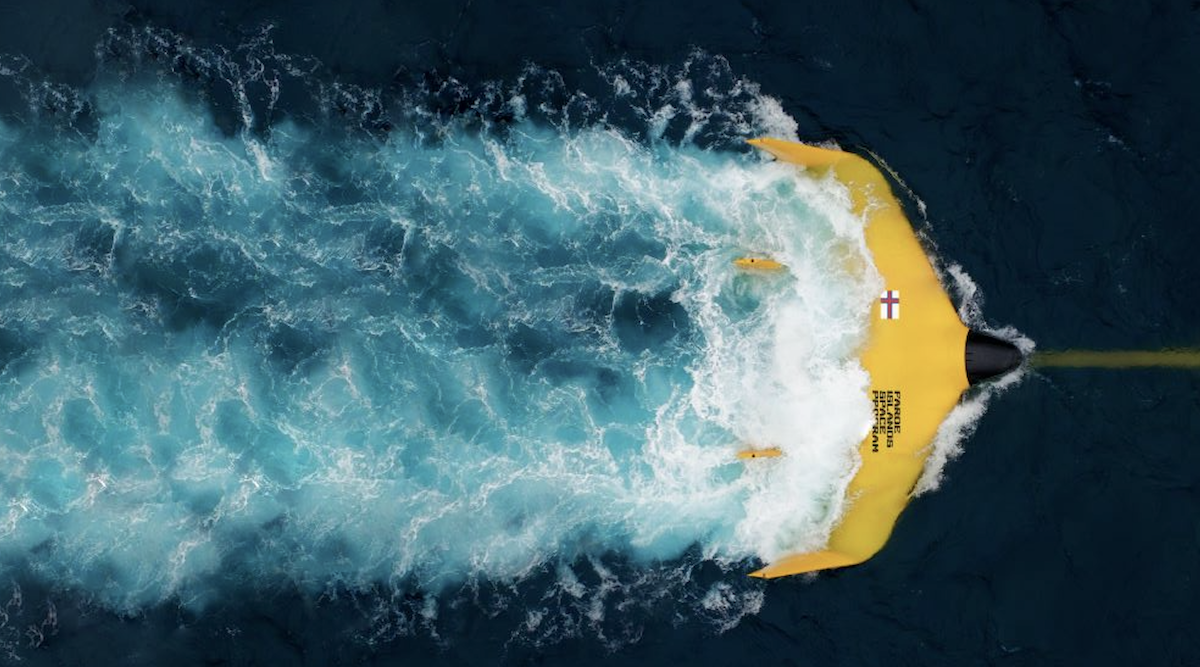
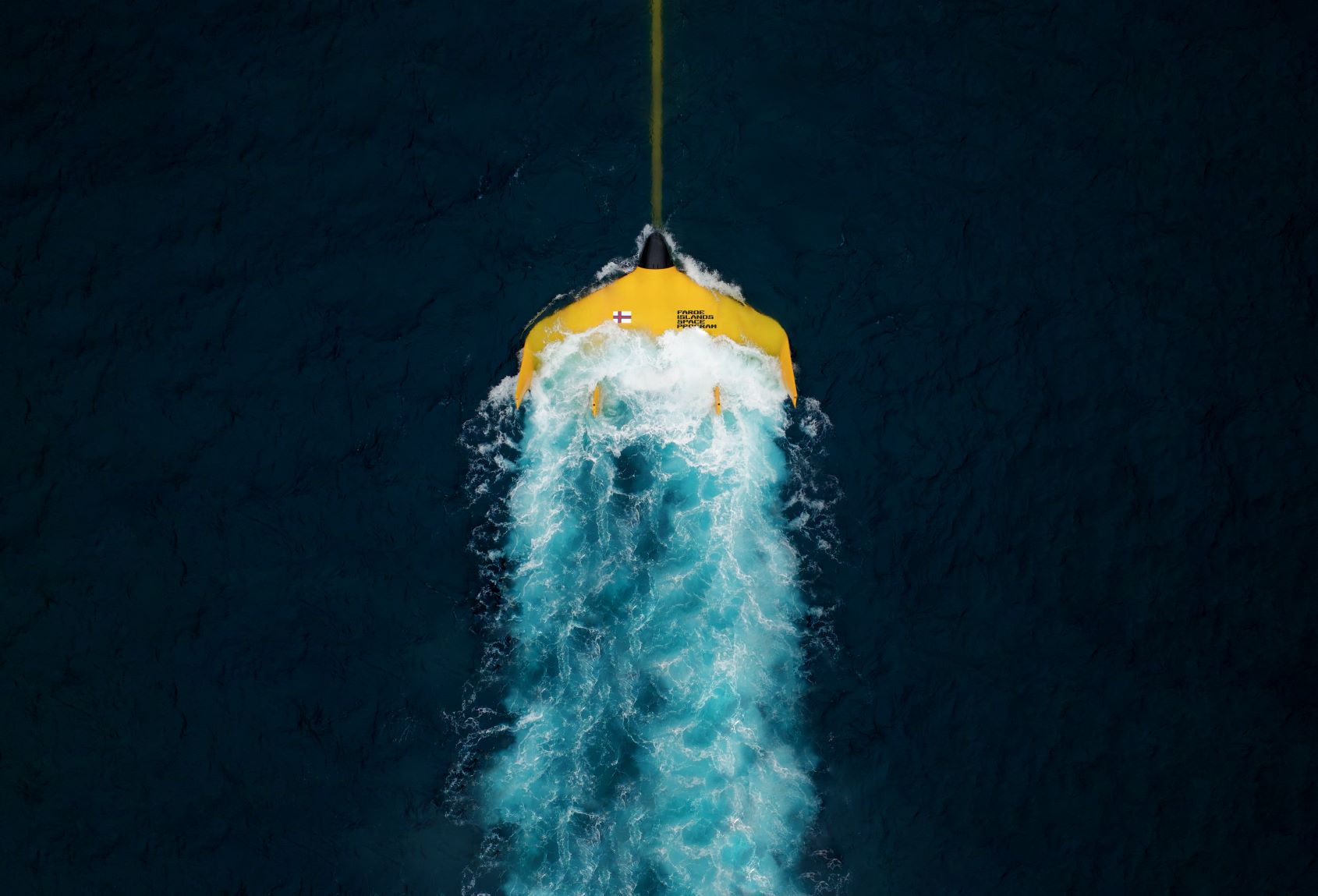
Other nations already have a running start on tidal energy. Among them is Sweden, where the startup Minesto has been developing its “Dragon Class” series of tidal energy devices that resemble high tech underwater kites. The Dragon devices are designed to optimize energy harvesting from low-flow tidal streams and ocean currents.
Minesto has been focusing its business on tourist destinations and other remote locations where the demand for renewable energy runs headlong into aesthetic objections. To date, the company lists active projects in the Faroe Islands, Wales and Taiwan.
In the latest news, earlier today Minesto described a new Memoradum of Understanding with the UK investment firm Morteza Capital, aimed at providing clean power solutions for the Republic of Maldives. The “Nopef” economic development fund has also chipped in to assist both the Maldives and Minesto. Nopef is supported by Denmark, Finland, Iceland, Norway, Sweden, the Faroe Islands, Greenland, and the Åland islands of Finland.
The Maldives is a ripe spot for tidal energy development. It consists of hundreds of low-lying islands that are particularly exposed to sea level rise and extreme weather. As a poster child for the climate crisis, the Maldives government aims to extricate itself from the grip of imported diesel fuel. However, the Maldives economy is heavily reliant on tourism, limiting opportunities for wind and solar energy.
That’s where tidal technology comes in. “The Maldives faces significant challenges in transitioning towards renewable energy. Its geographically dispersed islands rely heavily on imported diesel for electricity generation, resulting in high energy costs and carbon emissions. At the same time, tourism is a cornerstone of the country’s economy, placing particular importance on developing renewable energy solutions that preserve its pristine natural environment and scenic landscapes,” Minesto explains.
Next Steps For Renewable Energy In The US
Perhaps some day in the sparkling green future, Minesto’s Dragon undersea kites will make their way to the US, much in the same way that other renewable energy hardware has been imported or manufactured here. In the meantime, it’s fair to ask why marine energy made the list of favored resources under Trump’s “American Energy Dominance” plan, while wind and solar did not. For that matter, hydropower, biomass, and geothermal are also enjoying the warm embrace of Trump’s “American Energy Dominance” policy, along with nuclear energy and energy storage.
Only wind and solar got the short of the stick, and why? Who knows! Regardless, solar has become the most economical, accessible, and quickest way to get more kilowatts into the hands of an energy-thirsty public.
And, despite Trump’s extraordinary efforts to banish wind turbines from view forever, the nation’s wind industry is already poised for a fresh round of growth largely fueled by new tax deadlines. According to the latest Wood Mackenzie report, the uptake of wind turbines hit a three-year high under Trump’s watch in Q2 of this year, and US onshore wind energy capacity is set to increase 39 gigawatts by 2030, which is just around the corner.
Image: With years of R&D under its belt, the global marine energy industry is poised to make a significant contribution to the renewable energy transition (“Dragon” kite-style tidal energy device courtesy of Minesto).
Sign up for CleanTechnica’s Weekly Substack for Zach and Scott’s in-depth analyses and high level summaries, sign up for our daily newsletter, and follow us on Google News!
Have a tip for CleanTechnica? Want to advertise? Want to suggest a guest for our CleanTech Talk podcast? Contact us here.
Sign up for our daily newsletter for 10–15 new cleantech stories a day. Or sign up for our weekly one on top stories of the week if daily is too frequent.

CleanTechnica uses affiliate links. See our policy here.
CleanTechnica’s Comment Policy