
Support CleanTechnica’s work through a Substack subscription or on Stripe.
Quick quiz: Which high-level government clown in the Trump administration insists that “catastrophic failure” besets solar power plants every time the sun goes down? If you guessed Interior Secretary Doug Burgum, run right out and buy yourself a cigar. Meanwhile, the grownups are pressing ahead with new energy storage solutions that soak up the clean kilowatts from solar panels and wind turbines when available, and spit them out as needed regardless of the time of day or vagaries of weather.
Batteries put wind and solar on equal footing with other domestic energy resources, and new sodium-ion technology is providing storage-seekers with new options. So what’s the problem, Doug?
The Return Of The Sodium-Ion Energy Storage Solution
There was much weeping and gnashing of teeth among the energy storage community last September, when the US sodium-ion specialist Natron went out of business and took 1,000 or so green jobs along with it.
Still, other US stakeholders have picked up the torch, with their eyes on the advantages of the sodium-ion formula over conventional lithium-ion batteries. Leading the plus column is an abundant, inexpensive, non-toxic, non-flammable domestic supply of the key ingredient, salt.
“In addition, sodium offers the potential for long-duration energy storage at the grid-scale level, which the US Department of Energy (such as it is today) defines as at least 10 hours, ideally much longer. In contrast, the typical lithium-ion battery array only lasts around 4 hours or so,” CleanTechnica observed last fall.
There being no such thing as a free lunch, the limitations of sodium-ion technology posed formidable obstacles when the idea of a “salt battery” first emerged about 50 years ago. That enabled lithium-ion to leapfrog into the front of the pack, at least for the time being. Now that sodium-ion systems have decades’ worth of R&D under their belts, the competition is heating up (see more sodium battery background here).
Keeping Up With China
To the surprise of no-one, China has already picked up the sodium-ion ball and launched it into the market. Last week, for example, the leading Chinese energy storage firm CATL officially introduced its new TENER Sodium Energy Storage System, billed as “the world’s first real-world validated sodium-ion energy storage solution.” CATL states that it expects shipments to reach the 1-gigawatt mark before the end of this year, with deliveries in global markets expected to begin next June.
US stakeholders have not exactly been sitting on their hands all this time, but last year’s U-turn in federal energy policy — including the all-important tax incentives — threatens to stick the US energy storage industry in the playpen while Chinese firms donut their way around the world.
Additional support from federal policy makers may or may not be forthcoming, but US energy storage firms are determined to go down fighting. Last week they engaged the newly launched DC firm Founders Policy Group to take their case to the halls of Congress and presumably the White House, too.
US Energy Storage Firms Flex Their Collective Muscles
The platform for the lobbying effort is the new American Battery Leadership Coalition, featuring some of the more familiar faces on the pages of CleanTechnica. The group is chaired by Alsym Energy CEO Graeme Grant, with Peak Energy VP Edward McGlone serving as Vice Chair.
At launch, the group includes nine featured members in all, with the others being Mana Battery Inc., Ingevity, Re:Build Manufacturing, Microporous, NAION, Batri, and ESS inc.
If ESS rings a bell, you may be thinking of the flow battery startup Energy Storage Systems, and you would be correct. During the Obama administration the US Department of Energy supported ESS’s quest for an all-iron flow battery. More recently ESS has adopted the sodium-ion field as well, cemented by a new partnership with Alsym Energy.
In its new iteration as ESS Tech, on June 23 the company announced plans for pushing the envelope on its sodium-ion business, citing “strong early customer engagement for its planned U.S.-made sodium-ion battery energy storage system (BESS) offering.”
Challenging Lithium-Ion On Its Own Turf
The ESS announcement is notable on a number of accounts, including a focus on the short duration and medium duration markets. Typically with a capacity of 2-4 hours on up to 6-8 hours, this market has been traditionally dominated by lithium-ion technology.
Long duration storage systems are another beast entirely. The aim, as defined by the Energy Department, is for a duration of at least 10 hours, stretching into days, weeks, and ideally into whole seasons. That’s a tough nut for new 21st century technologies to crack. About 95% of the long duration field is still held by pumped storage hydropower, a technology that dates back 100 years or so.
Long duration aside, there are plenty of openings in the short- and medium-duration market. “Since announcing its letter of intent with Alsym Energy seven weeks ago, ESS has generated significant customer interest for sodium-ion solutions across data centers, critical infrastructure, and utility markets, exceeding demand expectations with limited outbound marketing,” ESS noted in a press statement.
For the record, ESS also plans to continue developing its flow battery for 8-24 hours of energy storage, while re-adjusting its resources to focus on the near-term opportunities in short- and medium-term markets.
Hmmm…What About Hydropower?
The pumped storage hydropower angle is of interest considering its dominant role in the US long duration market. While hydropower is constrained by limitations of geography and water resources, it did make the short list of renewable energy resources embraced by US President Donald Trump’s “American Energy Dominance” policy, alongside biomass and geothermal energy.
The US hydropower industry is not particularly interested in building massive new Hoover-style dams, but there are many opportunities to upgrade existing hydropower and pumped storage facilities, and to retrofit existing dams for hydropower production. Transmitting hydropower from Canada has also emerged as an option.
The industry has also been exploring opportunities for new pumped storage facilities, and now researchers are investigating the potential for battery-type energy storage systems to complement hydroelectric facilities.
In particular, a recent report from the Energy Department’s Pacific Northwest National Laboratory slots right into ESS’s focus on the short duration market. In a nutshell, PNNL found that hydropower stakeholders can increase revenue, improve efficiency, and reduce operational costs when they divert excess power to a battery energy storage system instead of curtailing their turbines. The researchers describe significant benefits when excess output is shunted to a 60-megawatt lithium-ion BESS with a short, 2-hour duration.
The PNNL report indicates expensive new pumped storage facilities are not the only way to increase the output of US hydropower facilities. If you have any thoughts about that, drop a note in the discussion thread.
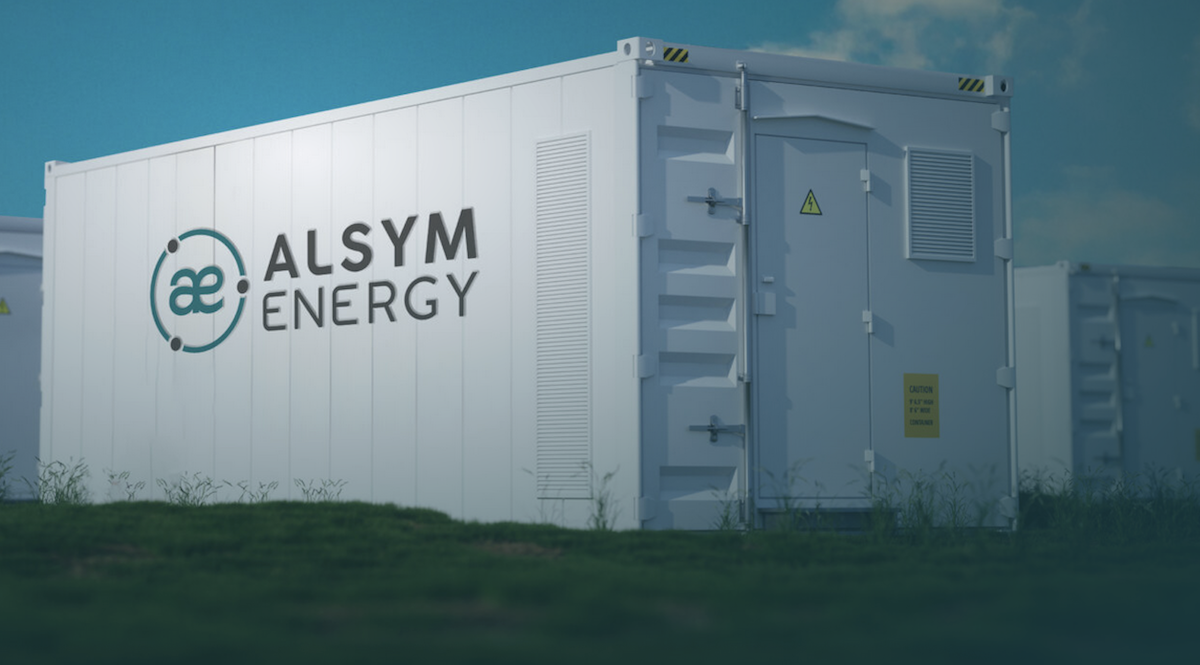
Photo: The US sodium-ion energy storage field heats up with a new partnership between two leading battery stakeholders and a new lobbying platform called the American Battery Leadership Coalition (courtesy of Aslym Energy).
Sign up for CleanTechnica’s Weekly Substack for Zach and Scott’s in-depth analyses and high level summaries, sign up for our daily newsletter, and follow us on Google News!
Have a tip for CleanTechnica? Want to advertise? Want to suggest a guest for our CleanTech Talk podcast? Contact us here.
Sign up for our daily newsletter for 15 new cleantech stories a day. Or sign up for our weekly one on top stories of the week if daily is too frequent.

CleanTechnica uses affiliate links. See our policy here.
CleanTechnica’s Comment Policy