
Support CleanTechnica’s work through a Substack subscription or on Stripe.
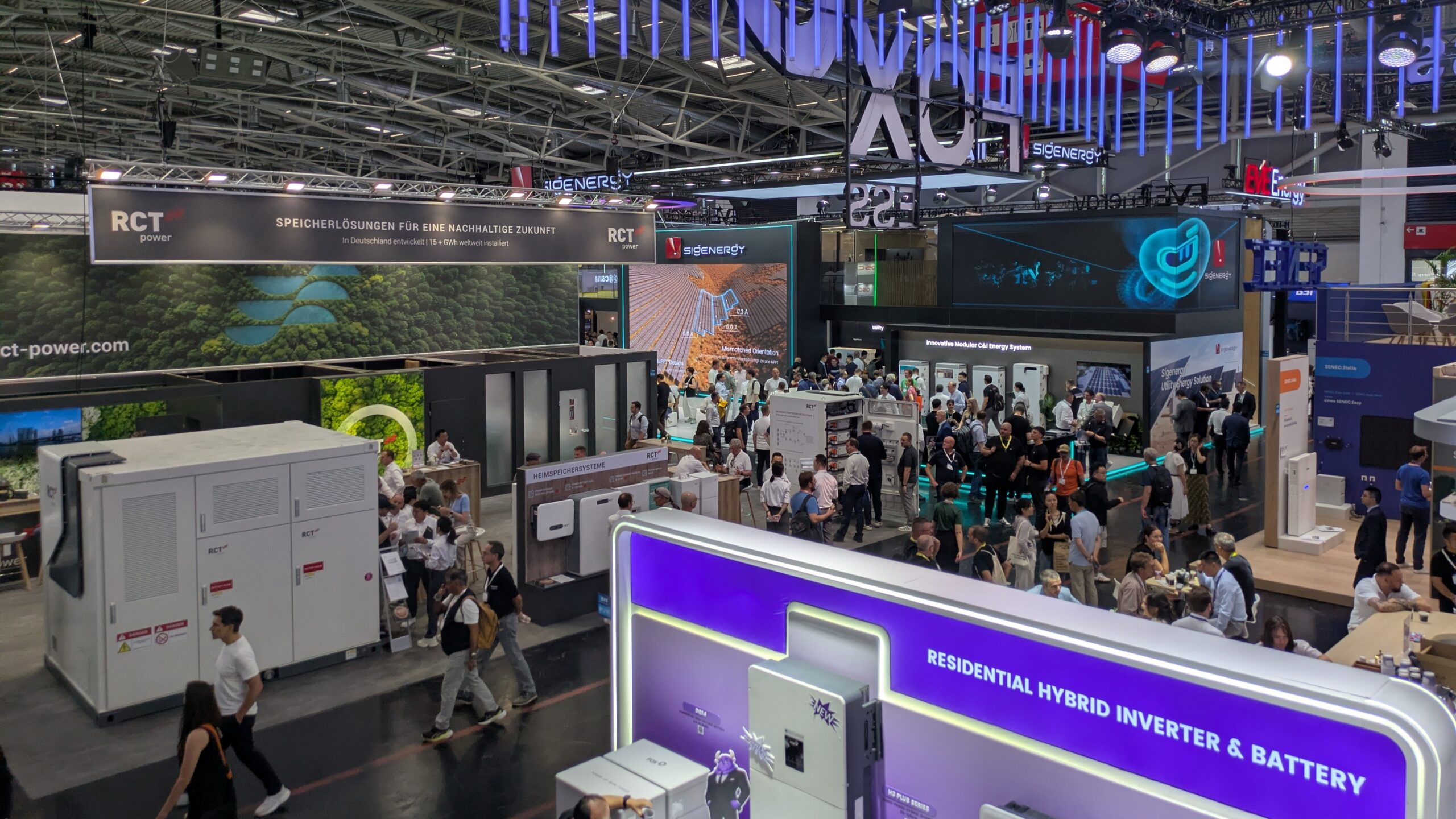
The smarter E Europe 2026 happened this week in Munich, with the lead event of InterSolar Europe co-located with ess Europe, Power2Drive and EM-Power. Regardless of the intended organization of the conference and exhibitions, the lines between them have increasingly blurred, as solar is combined with storage, EV charging and energy management.
Having tried to drink from the information fire hoses of CES and Auto China already this year, I thought that attending InterSolar would be more manageable. I was wrong. While I made it to all the major halls, I could not get into depth with every company or see all the presentations. I didn’t get a chance to test drive any EVs while I was there either. But I learned a lot. I will go into more detail on some of these topics in the days and weeks to come, but some key takeaways stood out:
Solar’s Future is Battery Storage
A recent Bloomberg NEF study looking at the stall in US residential solar concluded that “battery storage is the future of home solar.” However, looking at Germany, energy storage systems (ESS) are increasingly looking like the future of solar overall and the future of building a cost-effective, stable grid. In addition, ESS is increasingly looking like the future of power-hungry applications, like commercial heat pumps and EV chargers. While many countries can prevent residential solar from feeding into the grid during periods of excess production, as well as utility scale curtailment, that leaves a massive resource being wasted. Beyond residential solar adding storage to make better use of the energy generated, commercial and industrial solar applications can see similar benefits. In addition, due to years of backlog associated with installing new transformers, storage can be used to provide additional peak power. Utilities are also increasing their storage capacity to take advantage of cheap utility-scale solar generation when the sun isn’t shining and to provide the stability needed to turn off base load thermal generation.
The Future is Crowded
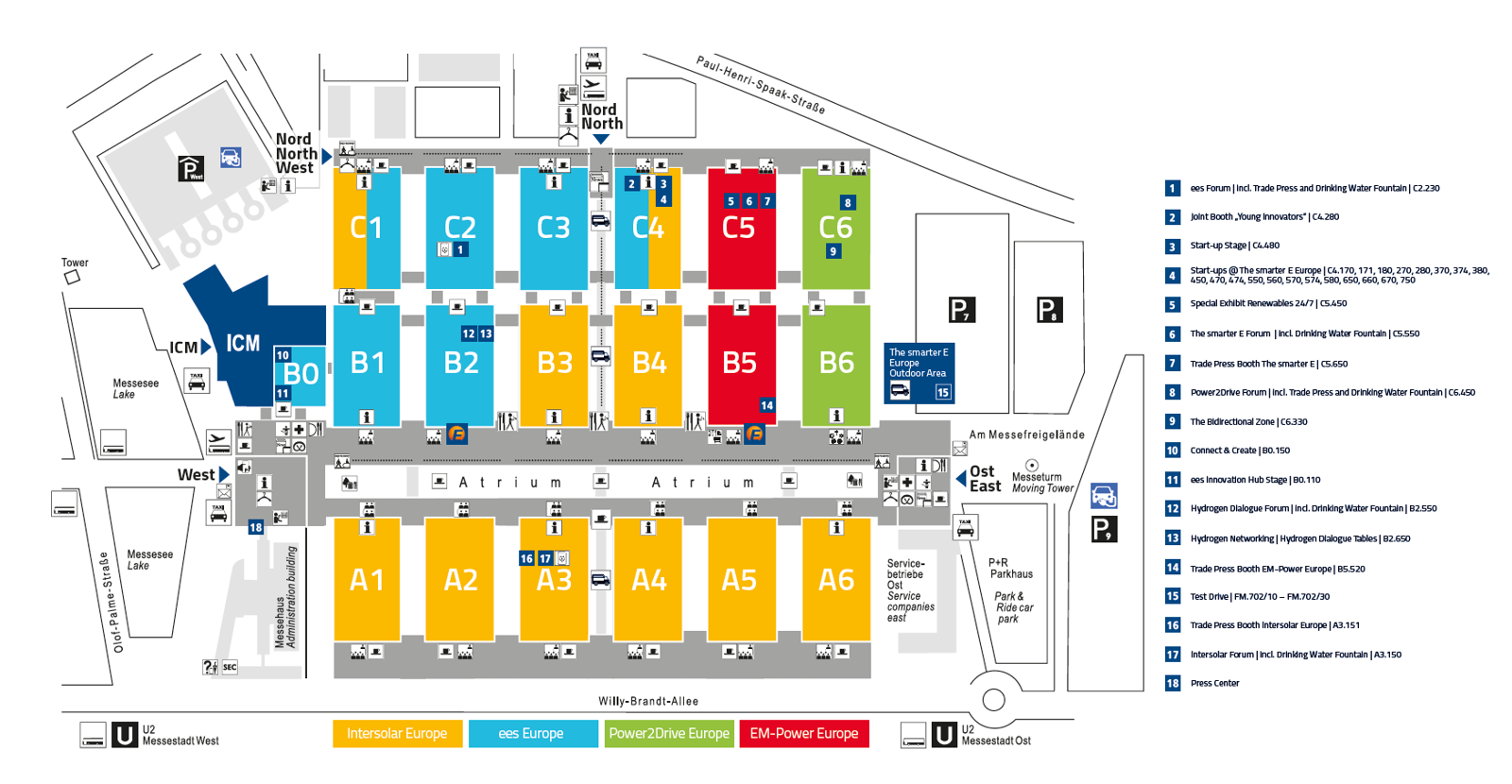
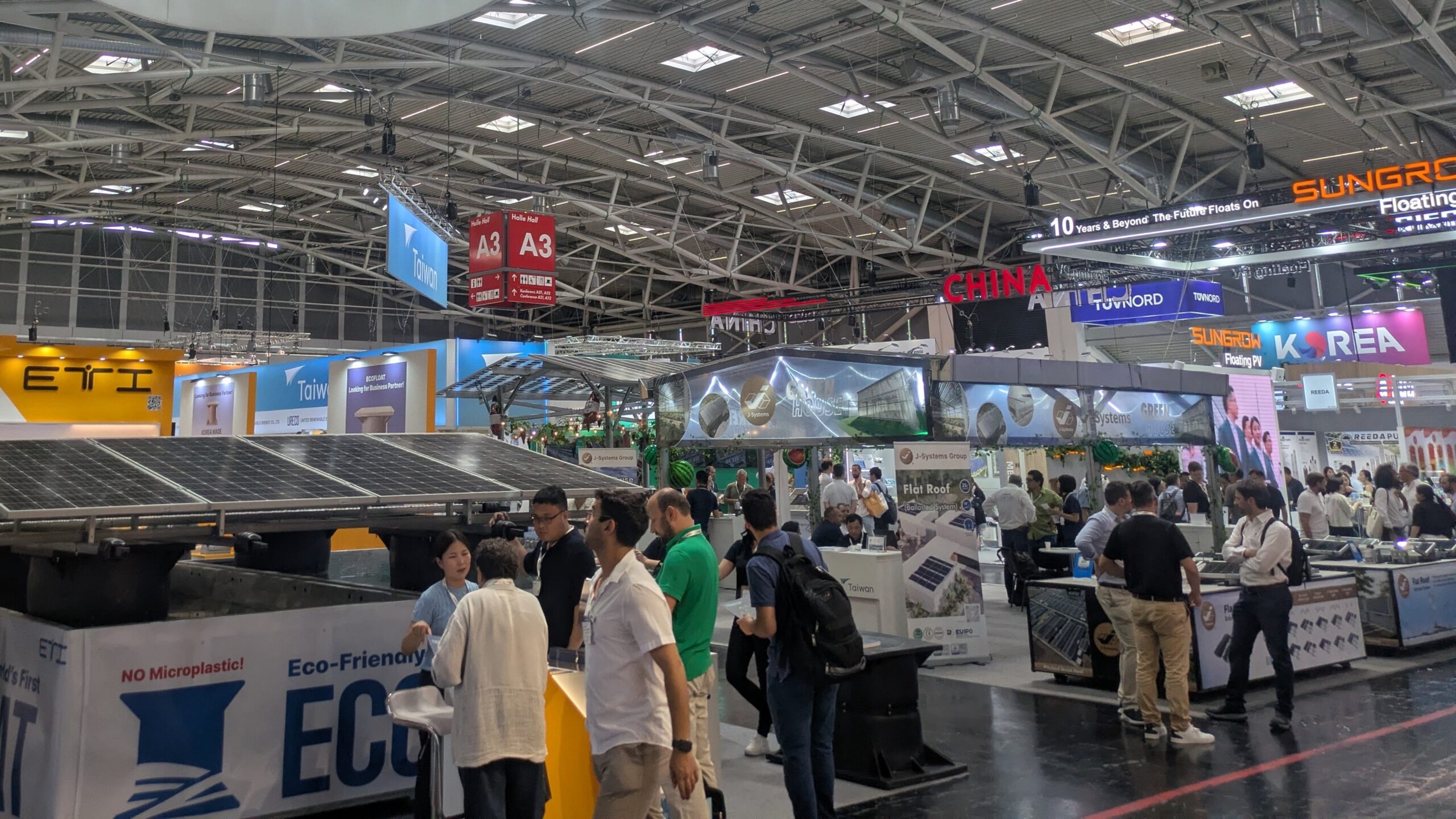
Walking through the 18 halls of Messe Munich, the competitive landscape is massive. According to the organizers, more than 2800 companies exhibit at the event, some with multiple divisions. I met people from additional companies not exhibiting but in attendance to find suppliers or check out the competition. Whether the company is headquartered in Germany, the UK, Turkey, Spain, Italy, Korea or China, all are fiercely competing for the German market, as well as European and global markets. Many have similar offerings. I have a feeling that the best will rise to the top and we could see some consolidation in the future. However, differentiation can be a challenge.
Differentiation With Design & Usability
Jackery, who hosted me at the event, has led in designing products to fit customer needs. It becomes even more obvious in person, seeing the details, quality of execution and ease of use. Like with phones, despite often having similar shapes, design details and useability set top companies apart. However, several other competitors have mimicked their aesthetic, including the charcoal gray and high visibility orange color scheme of their portable models. While there, I even saw competitors examining their products in detail and taking a lot of pictures. Designers will need to work hard to keep ahead. Moving into the solar exhibits, you get the sense that the standard flat panels many of us think of have become commoditized and creativity is needed to set companies apart. Along with Jackery’s Solar Gazebo and Solar Roof that looks like clay tiles, I also saw panels that simulate slate roofs, copper roofs and various colors and textures of cladding. Solar is even being integrated into surfaces like vehicle hoods.
Balcony Solar Fills Market Gap
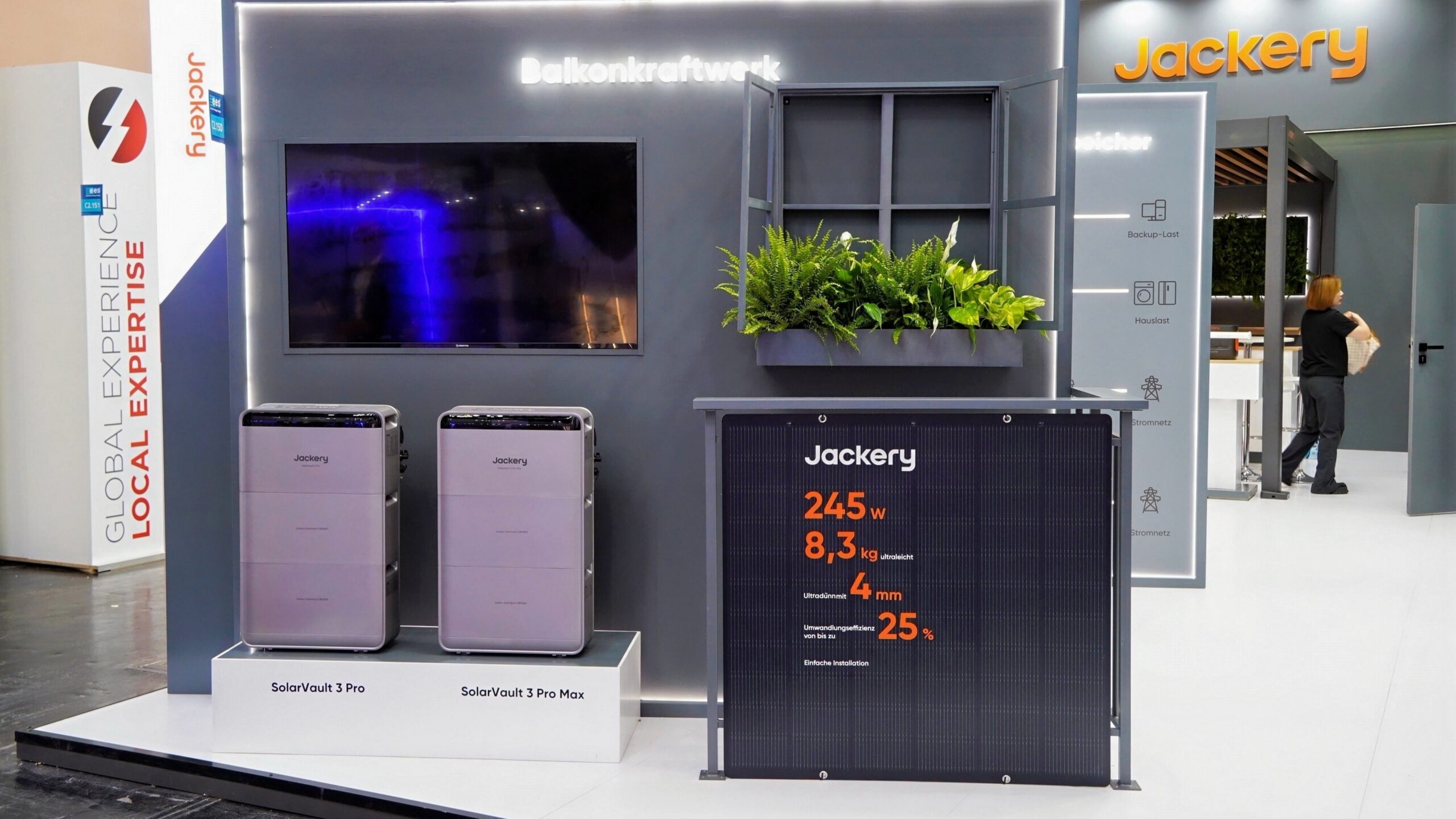
In many cases, detached homes that want solar already have it in Germany. Commercial and industrial supply chains are well developed. Balcony solar, with integrated storage, brings solar and the ability to benefit from TOU rates to apartments and other residences where it previously was not available. However, design and ease of use are especially important in this segment, where people are self-installing in floorplans with limited space to hide industrial-looking systems. Jackery’s new SolarVault 3 is an excellent example that I will explore in a future post.
Growing Solar Applications
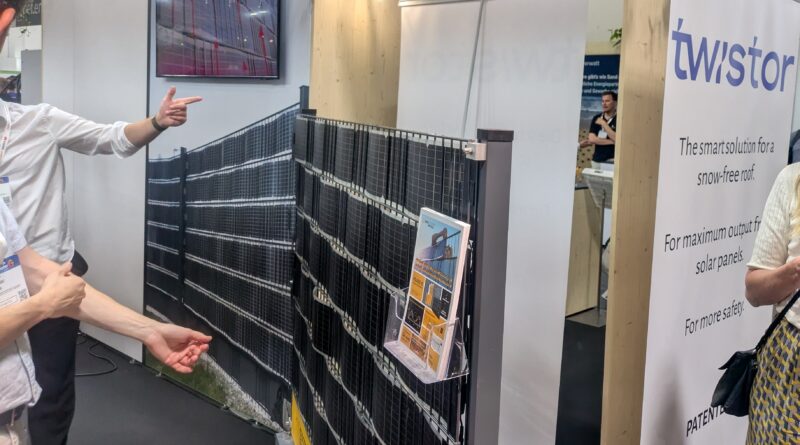
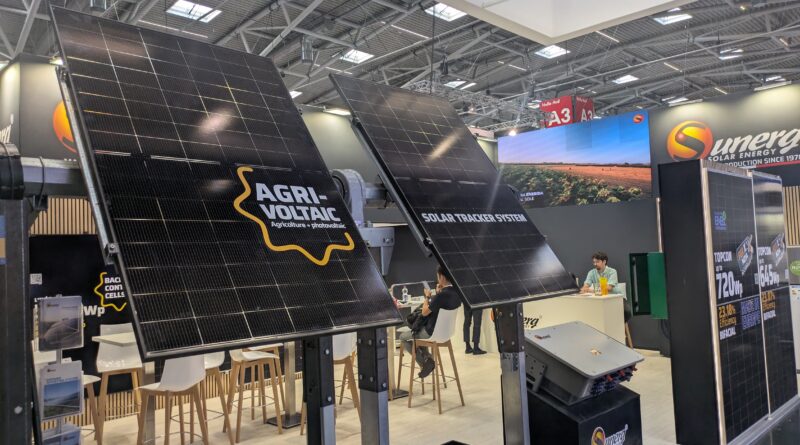
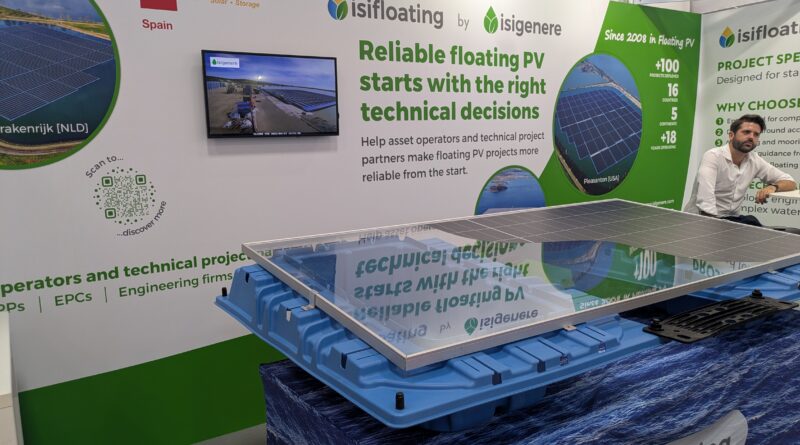
Beyond the traditional rooftop or ground mount solar, PV panels were also designed for fencing and to allow some light through for agrivoltaics, providing for dual use of valuable land. Floating solar is increasingly proven and expanding rapidly. In addition to the energy benefits, the panels reduce evaporation and can improve water quality when integrating bubblers and blocking the sun that could otherwise lead to algae blooms.
Automating Solar
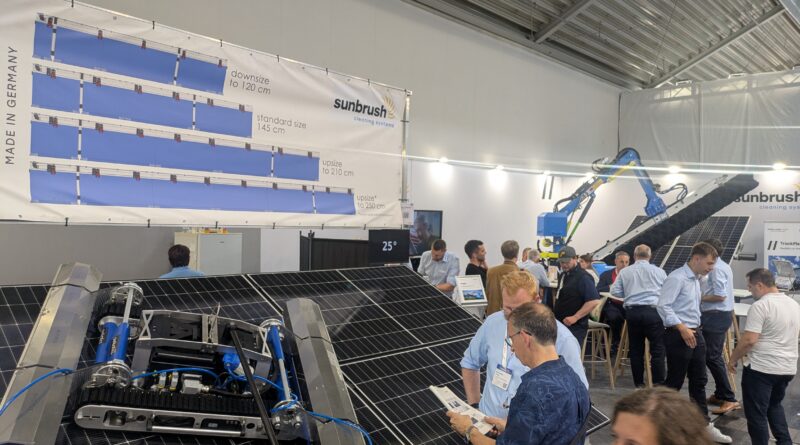
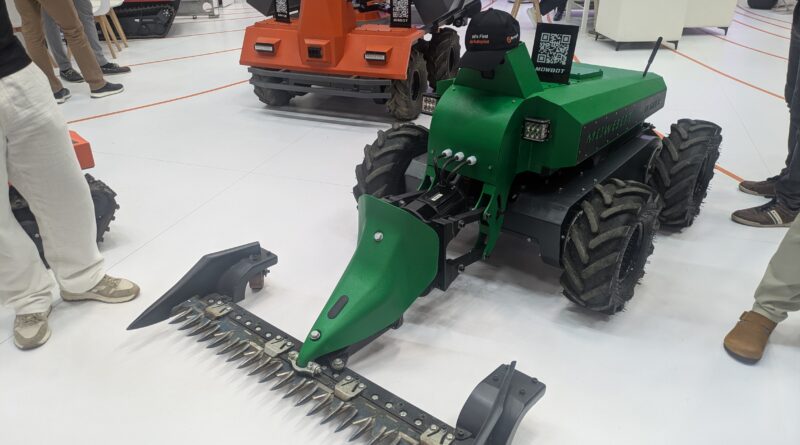
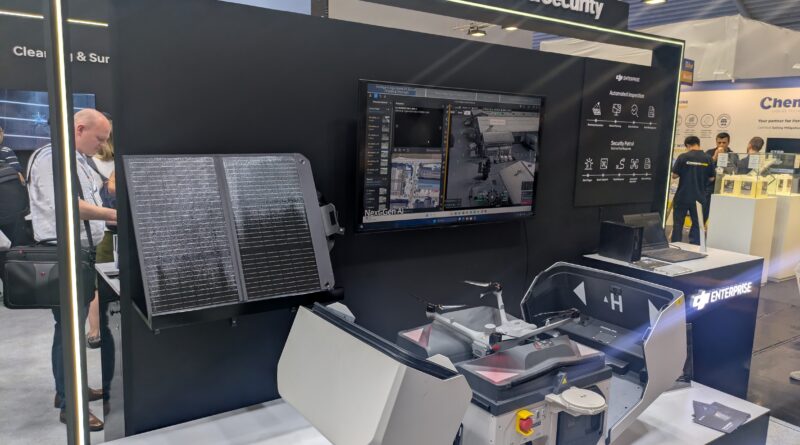
On the opposite side of the spectrum from self-installed balcony solar, robots are increasingly becoming involved in utility-scale solar. Applications included mount installation, cleaning, mowing and inspection. Beyond the robots, a clear focus was placed on making installation faster and easier through simplified connections and mounting. Solar manufacturing is already heavily automated, and solar system implementation and maintenance are headed in that direction rapidly.
Management Opportunities
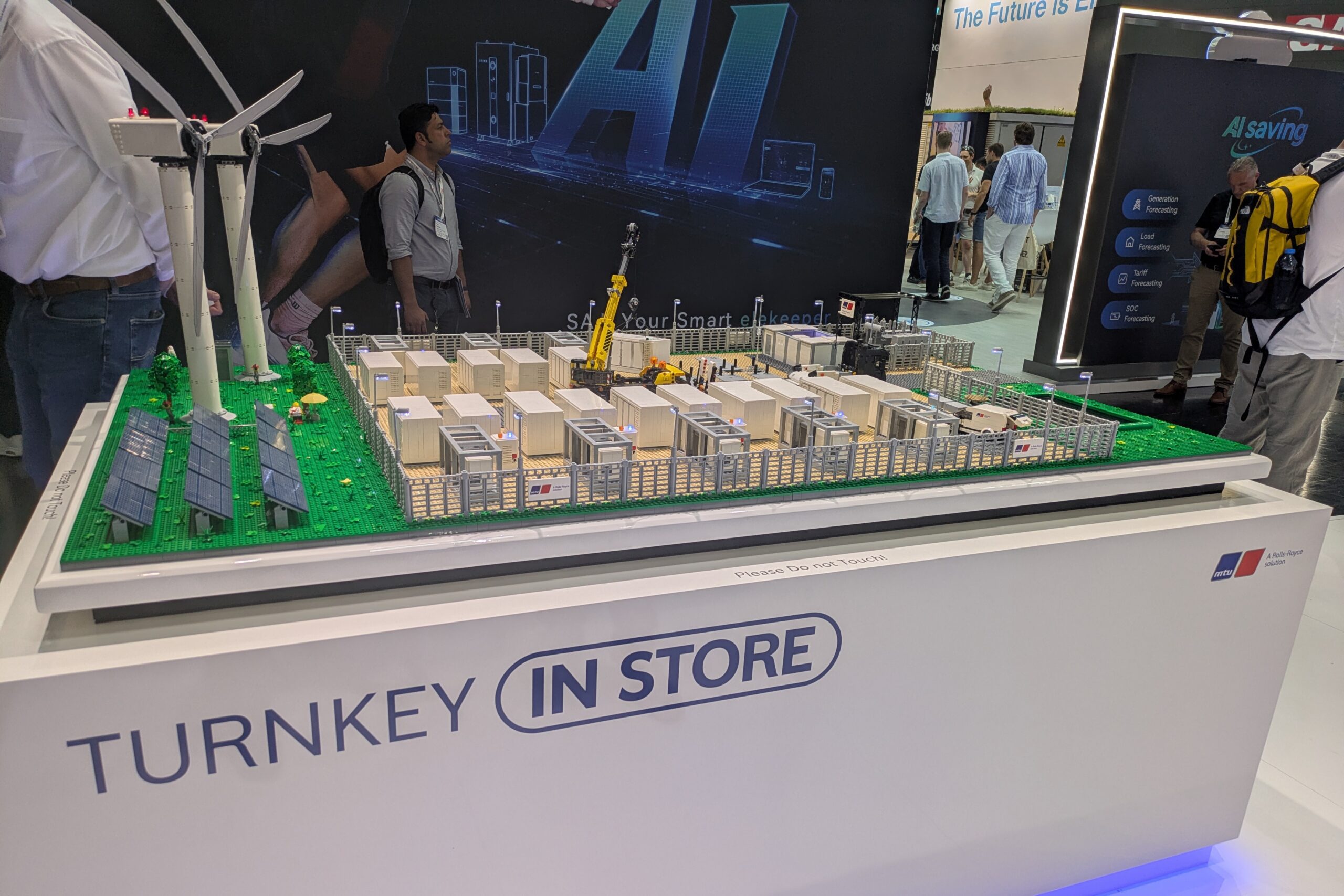
All the renewable generation and storage is only as good as their management. Power needs to be stored when it is clean and available and deployed when it is needed, reliably and without inconveniencing the customer. Companies like BYD, Huawei and Rolls Royce Energy highlighted their advanced energy management systems (EMS), but the capability isn’t limited to utility scale. V2G services from VW and Octopus Energy are adding a layer of intelligence to V2G charging. Jackery, Powerizer, Huawei, and more introduced Ai-enabled home energy management that can optimize energy sources, storage and points of use. “Ai” may not yet be the catch phrase at InterSolar that it was at CES, but intelligent energy management will become increasingly important as renewable generation and energy storage grow.
Trust
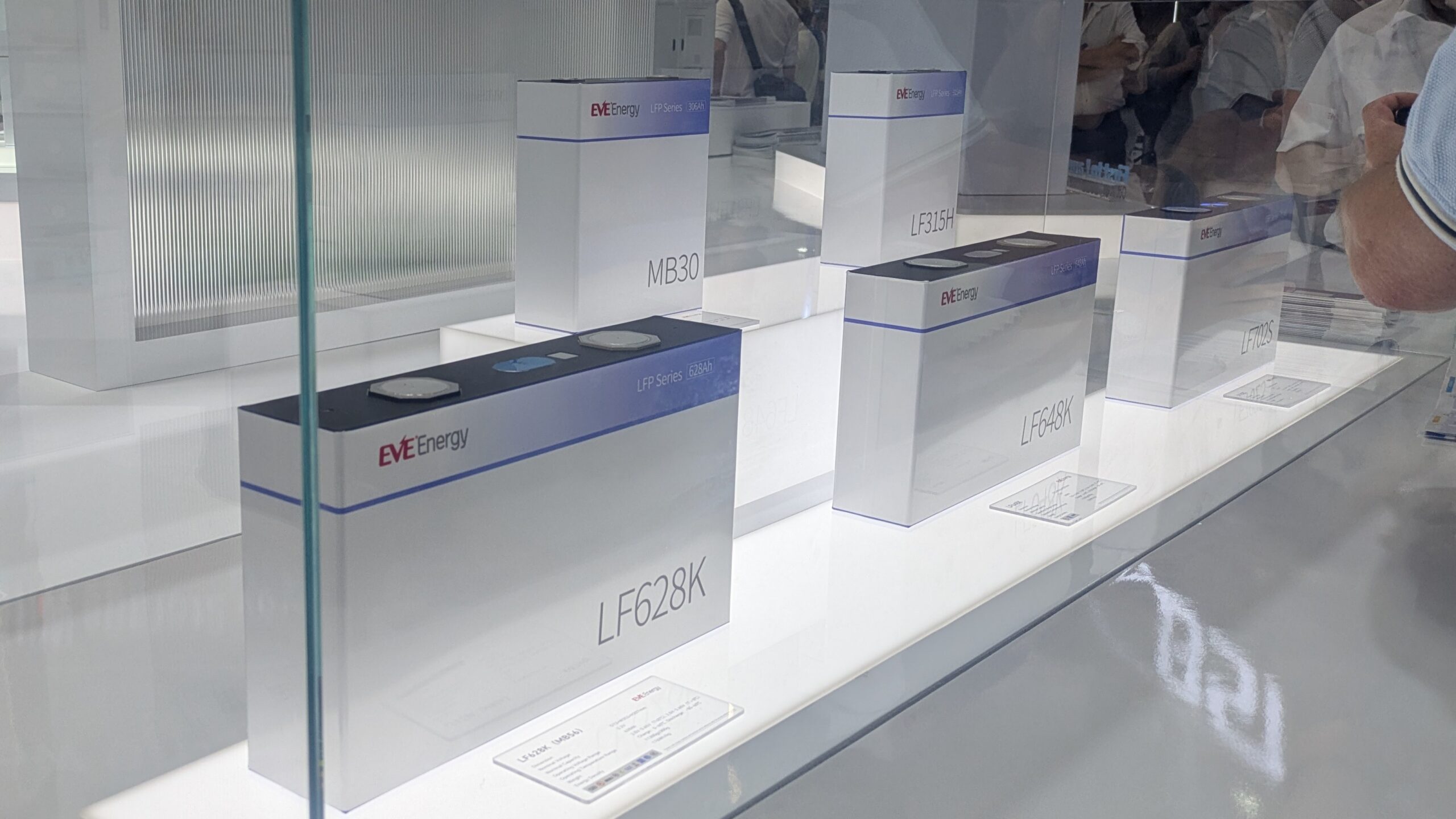
When going to the different ESS system booths, I asked them which cells they were using. EVE Energy, Gotion and CATL were the top responses. Some said that BYD used to be a major supplier but has shifted focus to building their own ESS batteries. Although prices have come down, these are top tier cell manufacturers. Even the unfamiliar ESS brands tend to use high quality cells, even if their customers never see them. When I asked companies why they picked these more expensive cells, a frequent answer was trust. Trust that they will have a consistent product that easily exceeds global regulatory standards. Trying to save costs with a no-name supplier could lead to greater costs from regulatory hurdles, recalls and tarnished brand reputation. Digging a little deeper with EVE, they said trust is built on “mutual benefit.” Listening to customer needs and delivering. Building upon a quality product with quality service. Customers get a better product, and the supplier gets repeat purchases.
Learning From EVs
Major automotive battery manufacturers had a strong presence at the show. The largest EV maker, BYD was there with a Sealion 7 alongside commercial, residential and utility scale storage. GAC INPOW had model cars at their BESS booth. EVE had a BMW iX3 with their batteries in it next to energy storage systems. Even Tesla, who skipped CES and the major auto shows, was at InterSolar. In speaking to people at the exhibits, several mentioned that what they learned from making robust batteries for EVs has led to better batteries for ESS. With China’s latest fire safety requirements for cars, their ESS batteries can easily pass any global requirement. For BYD, their vertical integration on the automotive side, simplifying part counts and improving system efficiency, carries over to their large-format ESS Blade Battery cells and increased volumetric power density on the utility side. That has made BYD the largest utility-scale ESS manufacturer by installed capacity. Mass production for EVs has also taught many manufacturers how to make consistent battery cells that exceed requirements for ESS applications, even when those batteries are much smaller.
V2G Shows Promise
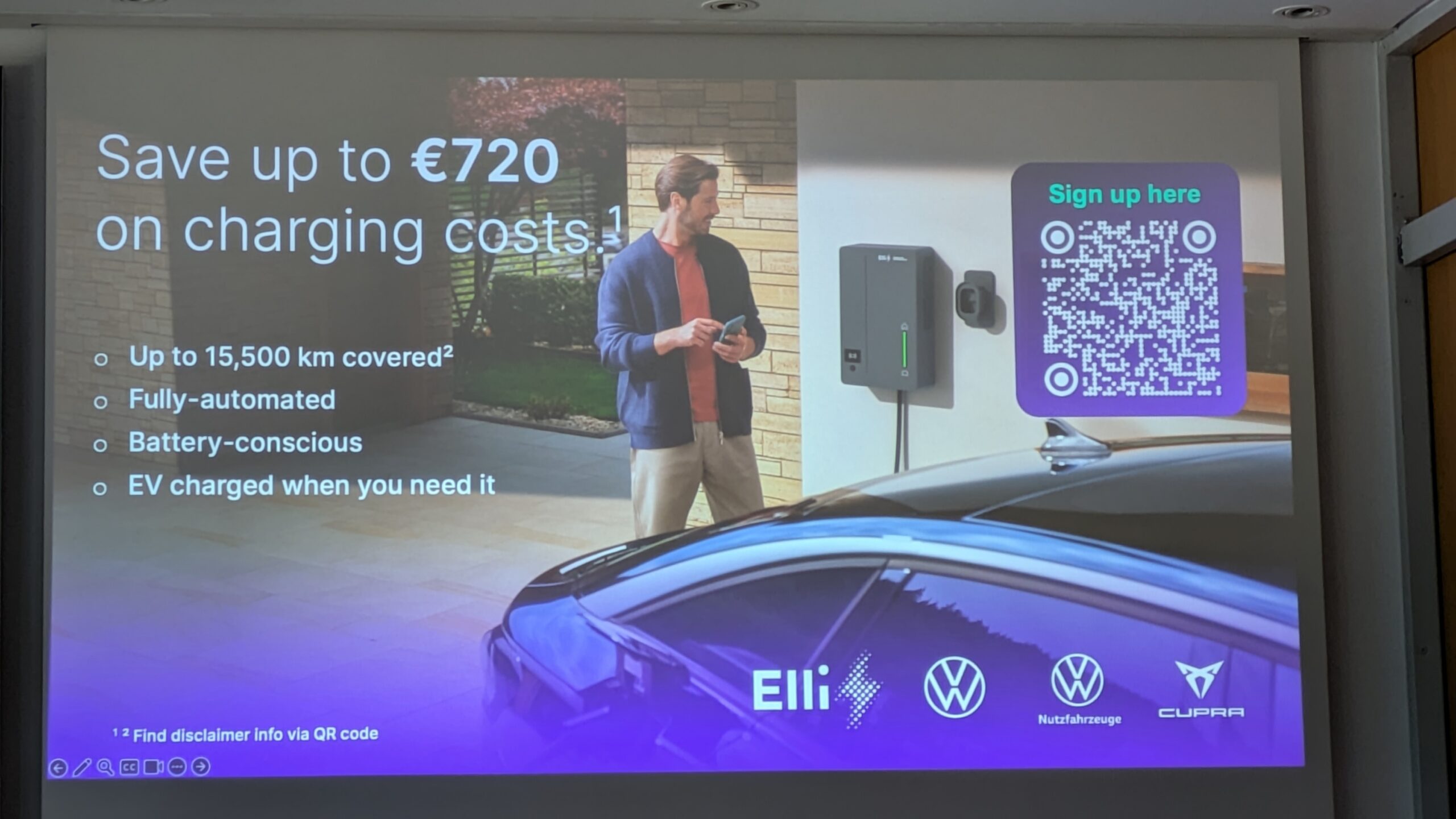
The first conference I attended was “Ready For Electrification: Preparing The Power Grid For EVs.” Petrouschka Werther, Director of the Dutch Ministry of Infrastructure and Water Management, showed EV progress in the Netherlands and how much of the grid challenge presented by EVs could be solved by EVs themselves through vehicle-to-grid (V2G) and bi-directional charging. The key to the success of V2G comes from ensuring the cost/benefit reflects the needs of the grid. The following morning, Volkswagen Group’s Elli launched their V2G service in Germany, offering drivers 720 Euros in revenue per vehicle per year or roughly 15,000 km worth of driving. That makes driving their EV free for many car owners. This is designed to operate transparently in the background, without noticeable inconvenience to the driver. Currently, the service is being rolled out in Germany with VW Group vehicles, which makes sense due to scale and economics. However, I could see the service spreading to more countries and partners moving forward.
Expensive, Volatile Energy Prices Attract Solutions
In Germany, electricity is expensive and the price can fluctuate significantly. That creates a massive market of people trying to reduce their bills with residential solar. However, if left unmanaged, that solar can also contribute to grid instability, and people are not using or getting paid for much of the electricity that they generate. That has led to strong ROI for storage, which is creating a massive market. As such, I heard from several exhibitors that they are concentrating on Germany for their products and services first. The relatively low cost of electricity compared to gasoline in China drives EV adoption, but it also weakens the economic case for many residential and commercial solar and storage products. The low cost of electricity in parts of the US is good for our economy, but it also reduces the ROI and market for some new technologies. However, the high and volatile electricity prices in Germany make the economic case strong for many clean technologies, including solar and storage.
DC Comeback
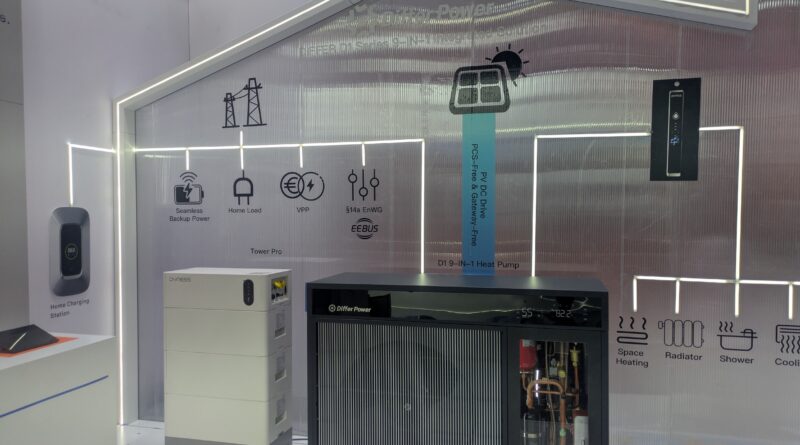
At the opening press breakfast of The smarter E Europe 2026, one of the speakers mentioned the potential for DC to play a larger role. While AC had won out for the electrical grid, solar, batteries and many electricity applications are DC. While a transformer is a relatively simple way to change AC voltage, it is also bulky and expensive. With the creation of DC-DC converters, like the highly efficient solid state SiC models from Epic Power, there is increasingly little need to involve the energy-losing inverter. In addition, Differ Power showed off their DC heat pumps that can take power directly from solar panels or batteries, without the inverter losses.
Battery Buffering
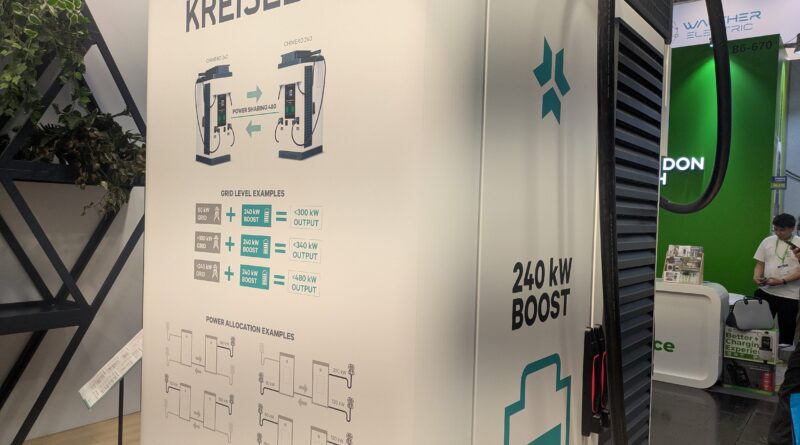
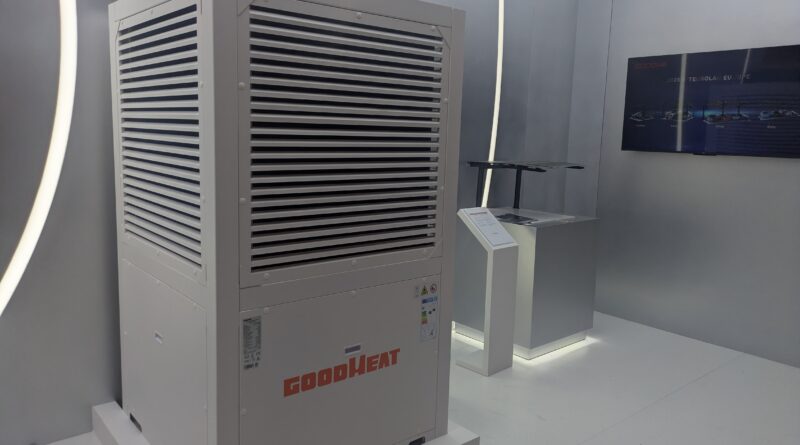
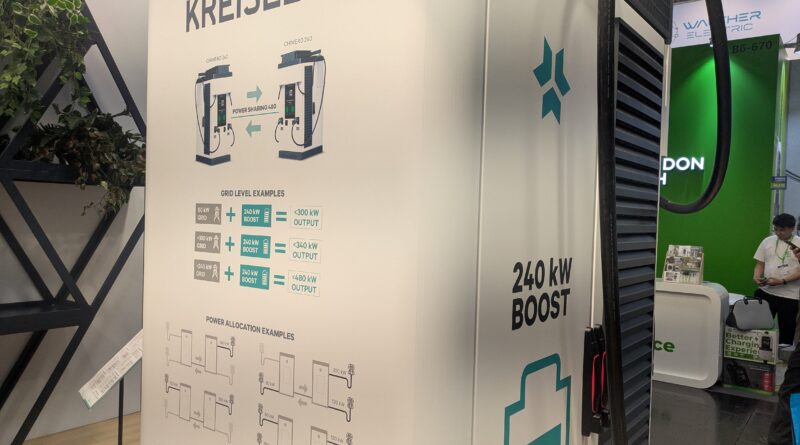
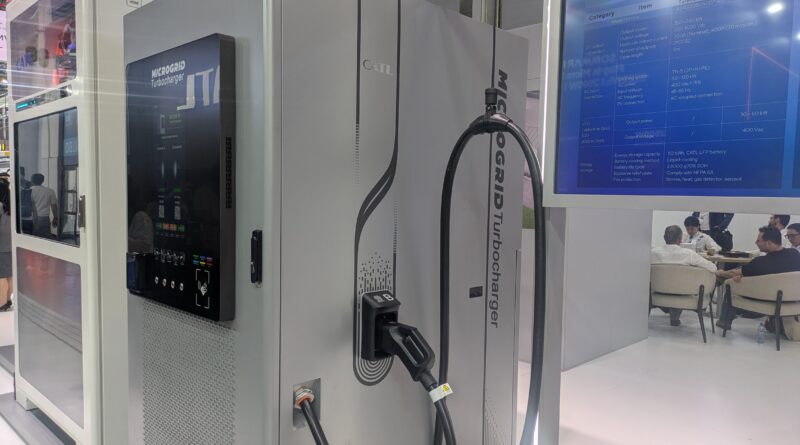
Speaking about heat pumps, much of the motivation for ESS is due to efforts to stop burning fossil fuels for heat. This is especially the case for industrial applications, where the large amount of heat that needs to be generated can have large power demands, as seen in GOODWE’s GOODHEAT heat pumps. In addition, many DC fast chargers were shown with battery buffering to increase peak output from standard utility connections. For example, ADS-TEC, who supplies battery buffered chargers to Porsche. These are similar to BYD’s Flash Chargers, but at lower power levels. CATL showed off their battery-buffered Turbochargers, which also reach MW-level charging power. New transformers can take years to come online in Germany. Battery storage, especially when combined with solar, can help take peak power demand off the utility connection, increasing the speed of the transition to electrification.
Simplicity & Harmonization Needed
The German grid is built from four main Transmission Service Organizations (TSOs) and over 800 Distribution Service Operators (DSOs), as well as retail electricity providers. Each has their own bureaucracy and policies, in addition to lengthy government bureaucratic processes. I asked several companies what their largest challenges were in Germany, and the complexity was often the top answer. This not only makes it frequently take years for renewable energy generation to connect to the grid, but also for major electricity consumers to get the power they need. The lack of access to affordable electricity holds German industry back, even if it stimulates the sales of some industrial solar and storage systems for on-site use. I also asked several companies if we might see their products in the US. Different standards and UL certifications require extensive, costly testing. The requirements are typically not more stringent, just complex and different, creating a barrier for global companies entering the US. Some saw it as a greater barrier than tariffs, which raise prices for everyone and would leave them still competitive in the market. Overall, an effort to coordinate and simplify bureaucracy, harmonized globally, would accelerate adoption, speed electrification and reduce emissions while also reducing costs to consumers.
Global Footprints
While several companies proudly displayed “Made in Europe” signs, they still tend to rely on global suppliers of battery cells, solar cells, transistors, connectors, microprocessors… Without those components local innovation would not be possible. Several robots were based on Chinese models but modified and outfitted to fit specific local needs. I saw innovative solar, storage, inverters and DC/DC converters. While they may not be highlighting it in their marketing materials, several mentioned that only through global supply chains and collaboration is local innovation feasible.
Local Jobs
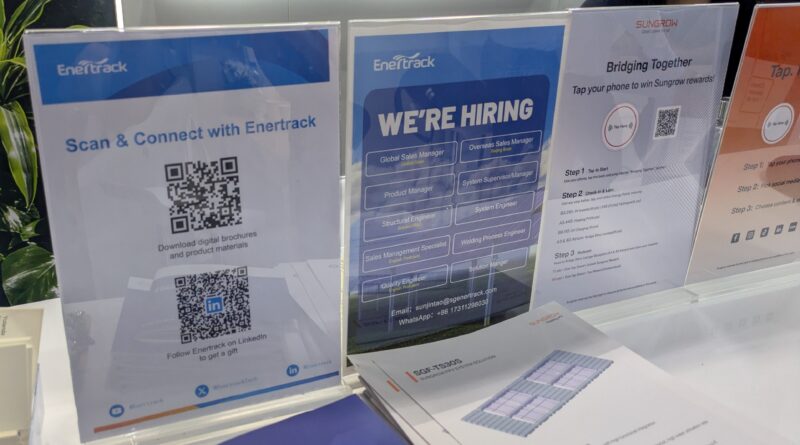
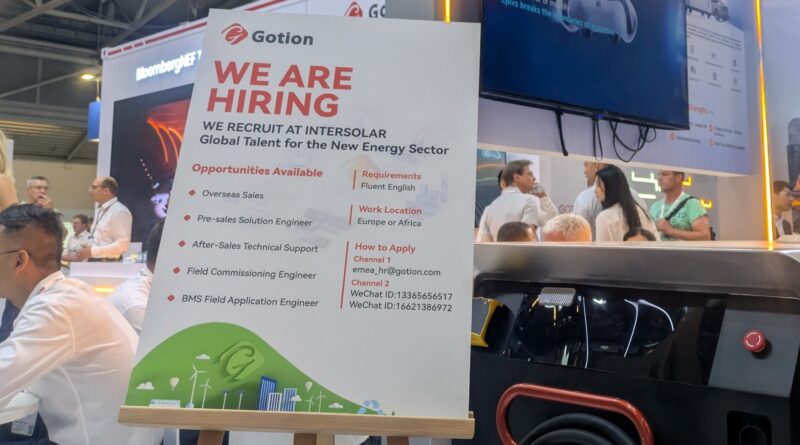
Walking around the show floor, filled with industry people, it becomes impressive seeing how many people are employed in these clean technology jobs. In many cases, companies based in one country will rely heavily on local talent to understand the needs of the market and develop better products. Increasingly, the bulky products are seeing their heavily automated manufacturing happen locally. A multitude of European companies are coming up with creative applications that use global supply chains, like agrivoltaics systems, or are implementations of global products. For example, Isifloating’s floating solar mounts are based in Europe and have localized production in the US, but their business and the jobs it creates are made possible by the global supply of products that make up the remainder of the system. Across the show floor, whether it is from a company based in Europe or based elsewhere, a lot of local hiring was happening at InterSolar. A job portal is also prominently featured on the smarter E Europe website.
“The Best Learner Is The Winner.”
That quote comes from an executive of a major manufacturer at the show who asked not to be named as our conversation strayed into politics, but he makes a great point. He mentioned a dynamic where his company is constantly learning about the needs of global customers, while his customers learn from them about potential applications. He learns from different divisions within his own company to provide better solutions across divisions. He learns from the advancements of his competitors, while they learn from his company, each seeking to improve upon what they learned to move ahead. In the global dynamic seen at InterSolar, a lot of learning was going on. The executive mentioned that isolation from that learning dynamic was holding the US back, even more than the elevated prices from protectionism. Holding the imaginations of innovators back from learning the full extent of what is happening now, in order to create what’s next. Even if our government prevents customers from having the freedom to choose the best products globally, consumers should learn what is possible to demand better. Companies who hope to remain relevant should also seek to deeply engage in the global clean technology ecosystem, to learn more and help develop advanced products up to global standards. At the very minimum, they could attend global exhibitions and conferences like InterSolar with the objective of learning. I hope to attend similar global conferences in the future to learn from different perspectives. Or as the executive said, “cutting yourself off from other cultures means you are not learning from other cultures.” That learning will define the winners and losers in the decades to come.
Sign up for CleanTechnica’s Weekly Substack for Zach and Scott’s in-depth analyses and high level summaries, sign up for our daily newsletter, and follow us on Google News!
Have a tip for CleanTechnica? Want to advertise? Want to suggest a guest for our CleanTech Talk podcast? Contact us here.
Sign up for our daily newsletter for 15 new cleantech stories a day. Or sign up for our weekly one on top stories of the week if daily is too frequent.


CleanTechnica uses affiliate links. See our policy here.
CleanTechnica’s Comment Policy