
Chile Copper Output Set to Hit 23-Year Low as Ageing Mines and Rising Costs Weigh on Production

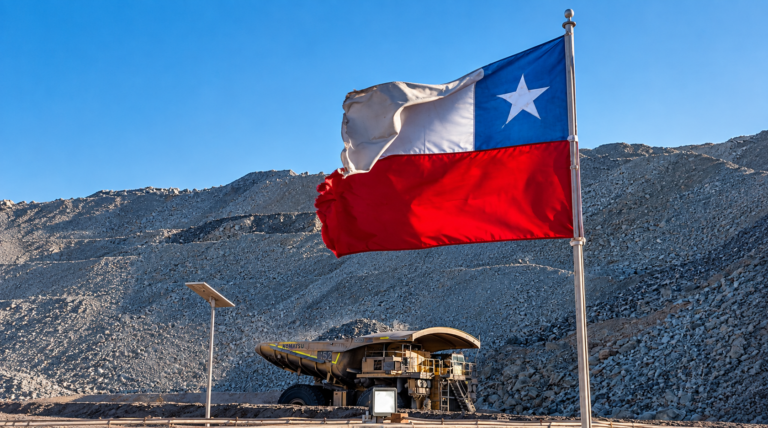
Santiago: Chile’s copper production is heading towards its lowest level in 23 years as declining ore grades, operational disruptions and rising input costs put pressure on mining operations in the world’s largest copper-producing country.
According to estimates by Chilean mining consultancy Plusmining, the country’s copper output is expected to decline 6.6% to approximately 5.034 million tonnes in 2026, compared with the previous year. This would mark the weakest annual production performance since 2003, when Chile produced around 4.904 million tonnes of copper.
Ageing Mines and Operational Disruptions
Several major copper mining operations have experienced production challenges due to declining ore grades, maintenance requirements and adverse weather conditions.
Major producers, including BHP’s Escondida and Spence mines and state-owned Codelco, have contributed significantly to the production decline. Operations at El Teniente have also faced restrictions following a fatal rockburst incident in 2025, while snowfall disrupted mining activities at Los Pelambres and Caserones.
Chile’s copper production fell 12.7% year-on-year to 366,000 tonnes in August 2026, highlighting the difficulties facing the country’s mining sector.
Sulphuric Acid Shortage Adds to Industry Pressure
Another major challenge for Chile’s mining industry is the rising cost and limited availability of sulphuric acid, an essential chemical used in copper extraction through leaching processes.
The country’s sulphuric acid imports reached a record 3.97 million tonnes in 2025, accounting for approximately half of national consumption. Meanwhile, domestic production declined 17.2% to 3.92 million tonnes, its lowest level since 2002.
Reduced activity at several domestic smelters, including the closure of Ventanas and operational suspensions at other facilities, has contributed to the supply shortage.
China, which accounted for 37% of Chile’s sulphuric acid imports in 2025, also introduced export restrictions in May 2026, adding further uncertainty to supply chains.
Mining Companies Adjust Production Strategies
Rising sulphuric acid prices have forced some mining companies to reconsider their processing strategies. Capstone Copper, for example, adjusted its production plan at the Mantoverde mine by prioritising sulphide processing over acid-intensive leaching operations.
The company reduced its projected sulphuric acid requirements for 2026 by approximately 200,000 tonnes.
Industry estimates indicate that the cost of sulphuric acid inputs for solvent extraction and electrowinning (SX-EW) copper production increased significantly during 2026, putting additional pressure on operating margins.
Recovery Expected in 2027
Despite the current challenges, Chile’s copper industry is expected to gradually recover as mining companies advance expansion projects and improve existing operations.
Plusmining estimates that production could increase by approximately 250,000 tonnes in 2027, provided planned investments progress and existing mines achieve their production targets.
Separately, Chile’s state copper commission Cochilco has projected a 3% recovery in 2027 to approximately 5.084 million tonnes, following its November revision of the production outlook.
The country’s mining investment pipeline also remains significant, with projects worth more than US$25 billion submitted to the environmental assessment system through October 2026.
However, approvals, financing and construction timelines will determine how quickly these projects translate into additional copper supplies.
Chile’s production difficulties come at a time when global demand for copper remains important for electricity networks, renewable energy, electric vehicles and industrial infrastructure. Any prolonged decline in output from the world’s largest copper producer could add further pressure to an already closely watched global copper supply market.