

Support CleanTechnica’s work through a Substack subscription, on Patreon, or on Stripe. Help us produce all of the high-quality, original content we publish week after week despite the challenges of content-scraping AI, antisocial media, inflation, and other hurdles.
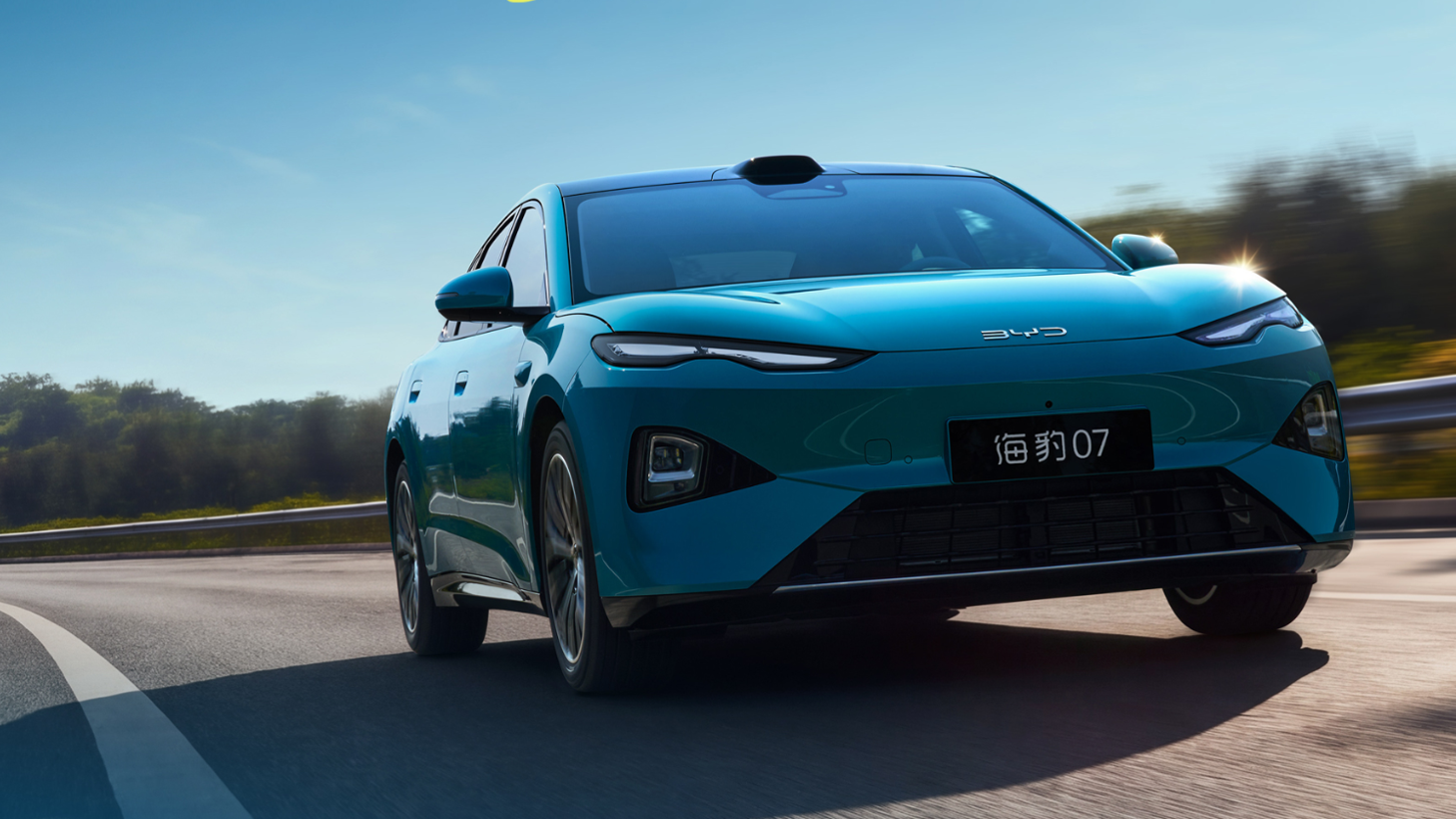
Last week, BYD introduced the next generation Seal 07 EV. This model replaces the original BYD Seal, which entered the market in late 2022 and put the brand on the map in the minds of many people around the world. While the new vehicle is important to BYD, it also illustrates many of the changes that have happened to the EVs and the EV market in China over the past few years.
The new Seal 07 grows to 5080 mm long by 1960 mm wide by 1495 mm tall. That compares to 4,800 mm long, 1,875 mm wide and 1,460 mm high for the previous Seal. That also makes it slightly larger than the late Tesla Model S.
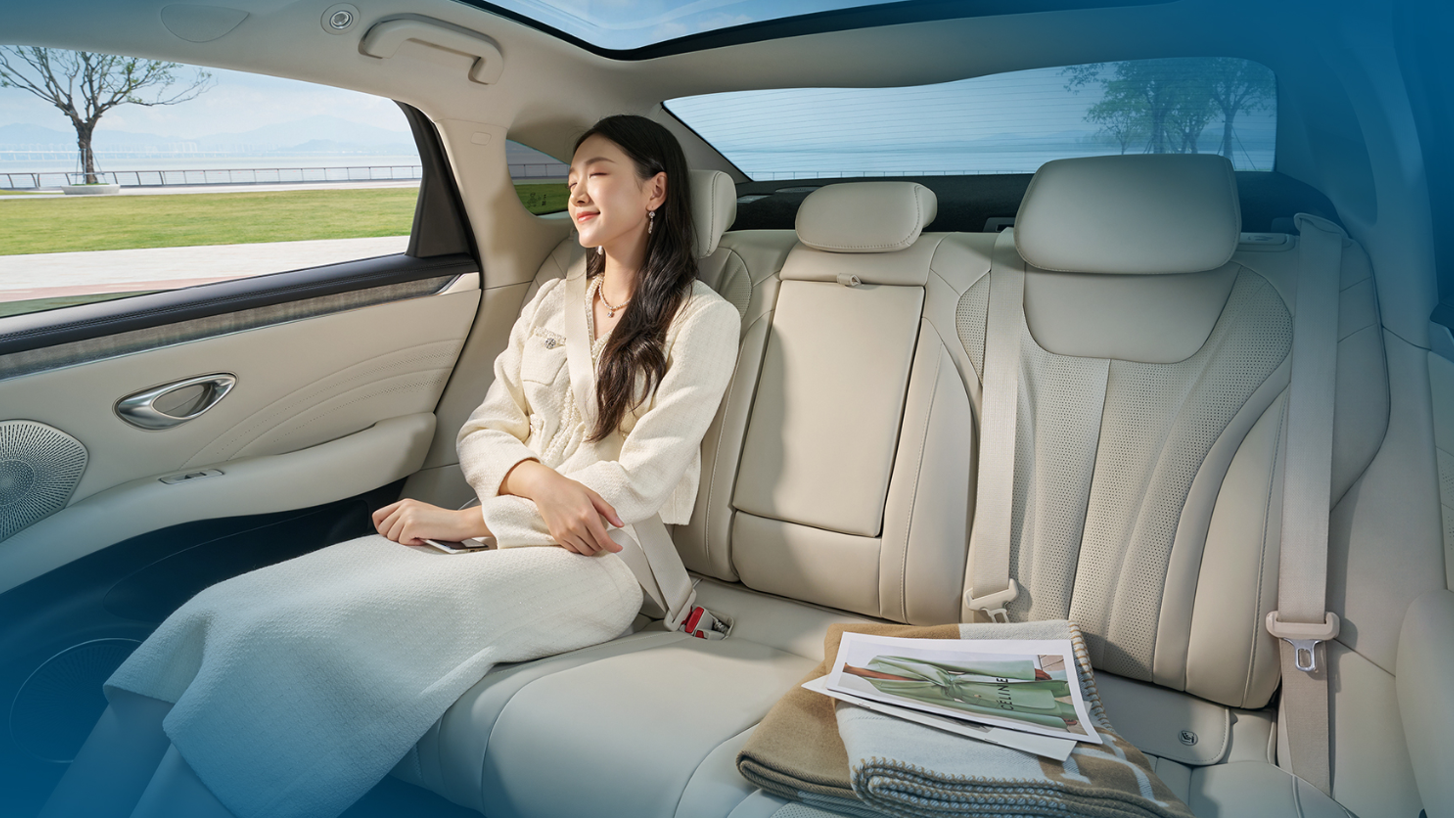
Like many new BYD cars, the interior has become more premium and technologically advanced. Interiors offer front zero gravity seats with heating, ventilation and massage. An onboard refrigerator is offered in the center console and a power sunshade in the roof. Speakers have proliferated. The screens have improved, programmable buttons can be added, and voice interaction has improved. Basic versions come with BYD’s God’s Eye C with BYD covering autonomous parking, while higher trims offer LiDAR-based God’s Eye B with BYD adding coverage for city navigation.

Seal 07 models now come with DiSus-C adaptive damping on lower trim models and DiSus-M magnetorheological active dampers on higher trims. Suspension is double wishbones up front, multilink at the rear.
Of course, the new car offers BYD’s flash charging, capable of charging from 10-70% in 5 minutes and 10-97% in 9 minutes, while taking 12 minutes to go from 10-97% at -30 C with no preconditioning. 20,000 BYD flash charging stations are planned to be in operation by the end of the year, which will be more than all DC charging stations in the US combined. Meanwhile, the previous Seal took 26 minutes to go from 30-80%.

Looking at the closest version of the original Seal from 2022, battery capacity has dropped from 82.5 kW to 76.4 kW for the new model. Meanwhile, range increased to 775 km CLTC from 700 km in the old model due to greater efficiency. While efficiency may have once been a criticism of the Seal, it is now a highlight. Power is up from 230 kW to 245 kW (329 hp). Meanwhile, a curb weight of 1975 kg is lighter than the previous 700 km model (2055 kg), with increased use of UHSS in the structure.
Overall, it is a larger and more luxurious car than the vehicle it replaces, while losing a little weight. Performance, charging and efficiency have improved. Equipment levels are higher. Technology is more advanced. And then we get to affordability.

In 2022, the original Seal offered a 550 km range trim for 209,800 RMB ($31,424 USD at current exchange rates), but the 700 km range version, which is closest to the new model, started at 259,800 RMB ($38,913).
A little over 4 years later, the new Seal 07 EV starts at 149,900 RMB ($22,437 USD) with 775 km of range, more power and much faster charging. It costs 10,000 RMB ($1498) more for a version with God’s Eye C intelligent driving. For the top-of-the-line flagship with LiDAR-based God’s Eye B, the price is 184,900 RMB ($27,694 USD). In addition, there are launch discounts and perks. Of note, there is no AWD version of the new Seal 07, with that role filled by other BYD models in China.
For the default comparison, the standard RWD Model 3 is smaller (4720 mm long) slower, comes with less equipment and only 634 km of CLTC range (612 km with optional 19” wheels). Price starts at 225,500 RMB, although paint colors and interior options increase the price (included with the Seal). To get Enhanced Driver Assistance, which is roughly equivalent to God’s Eye C, you need to add on 32,000 RMB, while Tesla Driver Assist (similar to God’s Eye B) adds on 64,000 RMB ($9,586 USD). To get as close to a top spec Seal 07 in a standard Model 3, would take you to 307,500 ($46,057), but you would still be under-equipped with less range in a smaller, less powerful vehicle. The Long Range RWD would take you to a bit above the Seal 07 with 800 km of range on 19” wheels, even though that ternary battery is recommended not to charge to 100% on a regular basis, unlike the LFP-based second generation Blade Battery in the BYD. The Long Range RWD Model 3 costs 331,500 RMB ($49,652 USD) with paint, 19” wheels and Driver Assist, but still lacks in equipment.
However, the Seal 06 (4870 mm) is a better match for the standard Model 3 but comes in at 119,900 to 159,900 RMB ($17,958 to $23,950 USD). There is also a no-compromise, larger (5150 mm) Seal 08 with more available range, power and amenities from 196,900 to 239,900 RMB ($29,492-$35,932 USD). And if you want something sportier, there is now the Fang Cheng Bao Formula S (5060 mm) at 189,900 to 229,900 RMB ($28,443-$34,434 USD). For something more luxurious, there is the Denza Z9S at 255,800 to 325,800 RMB ($38,313-$48,798 USD). None of those BYD models existed when the original Seal was launched. In addition, there are also Dynasty Han and Qin sedans from BYD for a little different flavor. And those are just the BEV models. There are also PHEV versions.
Looking beyond Tesla and BYD, the Seal 07 fits in the price gap between the Mona M03 and Next P7 at XPENG. It slots below the SU7 from Xiaomi. Below a Zeekr 7X or Nio ET5. At its current price, size and capability, the Seal 07 is in a good competitive niche between entry level sedans and more premium vehicles. If the Seal 07 had kept the original Seal’s higher price point, the competition would be much more challenging.

Compared to 2022, the new Seal 07 does not need to cover as many bases. This lets it better meet the needs of specific customers, while related models can be tailored to different customer needs. Undoubtedly, these different models will divide sales numbers, which may not be good for bragging rights. Analysis will become more challenging and may require combining sales of related models for relevant comparisons. But the increased choice is better for customers.
It may be a while before we have a clear picture of what impact this all has on sales. Chinese regulations that began earlier this year prevent manufacturers or dealers from selling below cost. This essentially prohibits the model-year-end clearance sales that are typical throughout much of the West. In addition, Chinese regulations stopped the practice of registering a vehicle and then exporting it as a zero-mile used car. In combination, it becomes much more difficult to manage inventory. As such, many models that are about to be replaced have their deliveries cut well in advance of the new model launch and have sales essentially evaporate. Then, it can take a while for the new models to ramp up production and deliveries to take hold. We may not have a good picture of BYD’s sedan sales in China until next year.
It also may be a while before we have global distribution plans or pricing for the new models. The three new Seal models are not yet offered outside of China. BYD has taken the approach of waiting to bring their latest models to export markets, often introducing models overseas as new that have already been discontinued in China. When they do offer current models, they tend to be at a significant premium (see Denza Z9GT). Meanwhile, companies like XPENG are introducing their latest models globally.
However, with intensifying competition from Chinese automakers in some export markets, BYD’s approach may change. Some flash charging cars are starting to reach export markets. The Seagull (ATTO 1) has recently been selling in Australia for $19,990 AUD ($13,752 USD), representing a significant reduction in export markup. We might see more advanced models at lower markups in markets where protectionism has not taken hold.
For comparison to the US, the least expensive car of any powertrain is the gasoline Kia K4 at $23,535, which is more than the base Seal 07 ($22,437). The least expensive EV is the soon-to-be-discontinued Chevy Bolt at $28,995, which is more than the most expensive Seal 07 ($27,694). Meanwhile, the least expensive EV sedan in the US is once again the Tesla Model 3 at $38,630 (including destination and fees, which are included in Chinese prices). A number of other EV models were canceled.
In China, EV choices have expanded, cars have become more capable, and prices have come down over the past four years. Meanwhile, in the US, cars remain unaffordable and EV choices have diminished with aging products.
Of note, the original BYD Seal had already attained regulatory approval from Transport Canada for import prior to Biden and Trudeau implementing prohibitive 100%+ tariffs on Chinese cars. Due to regulatory harmonization between the two countries, that meant it would have also been approved to enter the US. The US EV market could have looked dramatically different now, even with the rollback of consumer subsidies. With free trade, we could be looking at an EV growth in market share, expansion of options and improvement in affordability similar to China, even if not to the same extent.
Overall, the new Seal 07 is a strong entrant into a competitive segment in a very competitive market. It might be a challenge to choose it over one of the many other excellent options from BYD and its competitors in China. However, having too many excellent, affordable EV options to choose from is a good challenge for customers to have.
Sign up for CleanTechnica’s Weekly Substack for Zach and Scott’s in-depth analyses and high level summaries, sign up for our daily newsletter, and follow us on Google News!
Have a tip for CleanTechnica? Want to advertise? Want to suggest a guest for our CleanTech Talk podcast? Contact us here.
Sign up for our daily newsletter for 10–15 new cleantech stories a day. Or sign up for our weekly one on top stories of the week if daily is too frequent.

CleanTechnica uses affiliate links. See our policy here.
CleanTechnica’s Comment Policy