

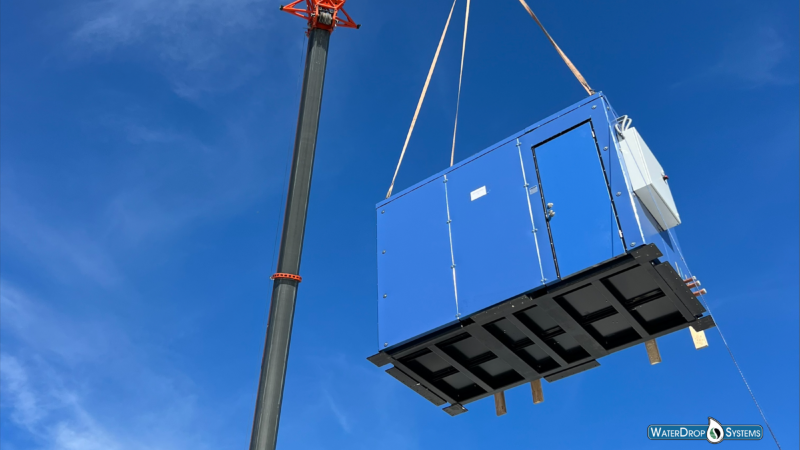
Central heat pump water heaters (HPWH) are on the up and up by any way you measure it. These HPWHs heat water for bigger buildings such as apartment complexes, hotels, and grocery stores. More manufacturers are getting into the market and producing a variety of products. More innovations are helping drive down costs and are making these efficient water heaters a better fit for any application or building.
On the first day of Heat Pump Water Heater Week, we devoted most of the sessions to updates on central HPWHs and heard lots of exciting developments. I’m live-blogging updates on all the great content from the week and here are some highlights from the sessions devoted to efficient central water heating.
Packaged & Specified Systems
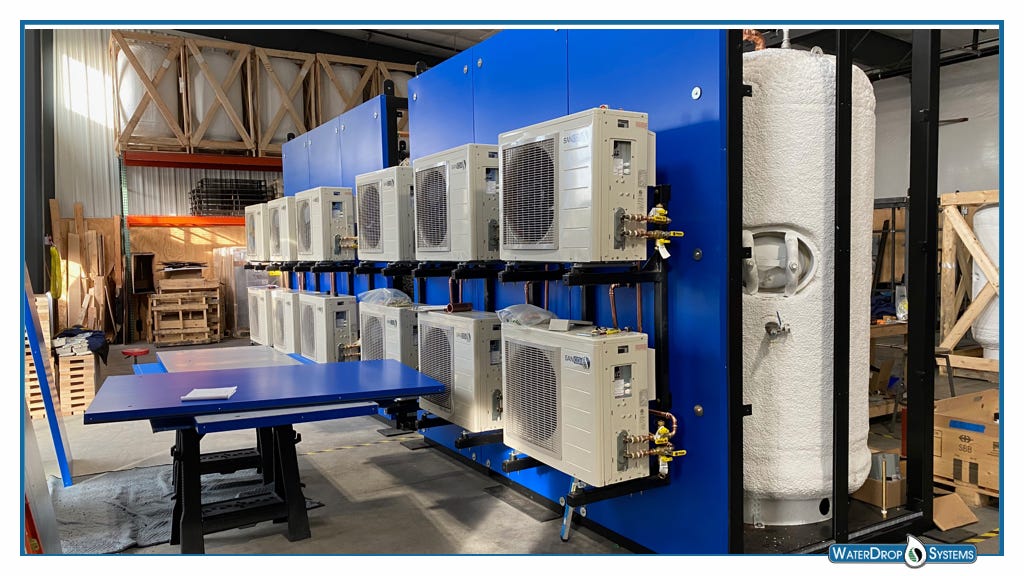
We first got an update on packaged central heat pump water heating systems. These are systems that are built offsite with heat pumps, piping, storage, and swing tanks all constructed and tested in a laboratory before being delivered to a building.
Albert Rooks from Water Drop walked us through exactly how a skid-mounted CHPWH is built and delivered and how easy it can be to plug it into a building, no assembly required. Madison Johnson from Ecotope then walked through a case study of how packaged central HPWHs operate in the real world. Key to success, according to Madison, is making sure temperatures on swing tanks aren’t too high, which can really reduce efficiency (since they use electric resistance). Jake Bucklin from Lync also joined the conversation and discussed specific HPWH systems. These systems resemble packaged central HPWHs in that they are designed and built by one manufacturer but differ in that they are shipped in pieces and assembled on site. Specified systems can be better options for retrofits, which might have more space limitations.
Watch their presentations here.
HPWH Financing
From packaged systems, the conversation then turned to how to handle upfront costs of both residential and commercial HPWHs, which can be a major barrier, even if HPWHs save lots of money on utility bills and pay for themselves (which they almost always do).
Gregg Holladay and Kevin Clark from Bradford White discussed on-bill financing for heat pump water heaters. They encouraged utilities to set up programs to provide low- or no-cost financing for homeowners switching to HPWHs as a way to help drive the product and increase efficiency in their territory.
Then, Machias Schoen from Palmetto talked about HPWH leasing. Leasing a HPWH rather than owning it can both help with the upfront cost barrier (leases are usually zero money down) and include monitoring and maintenance which will ensure systems continue to perform well.
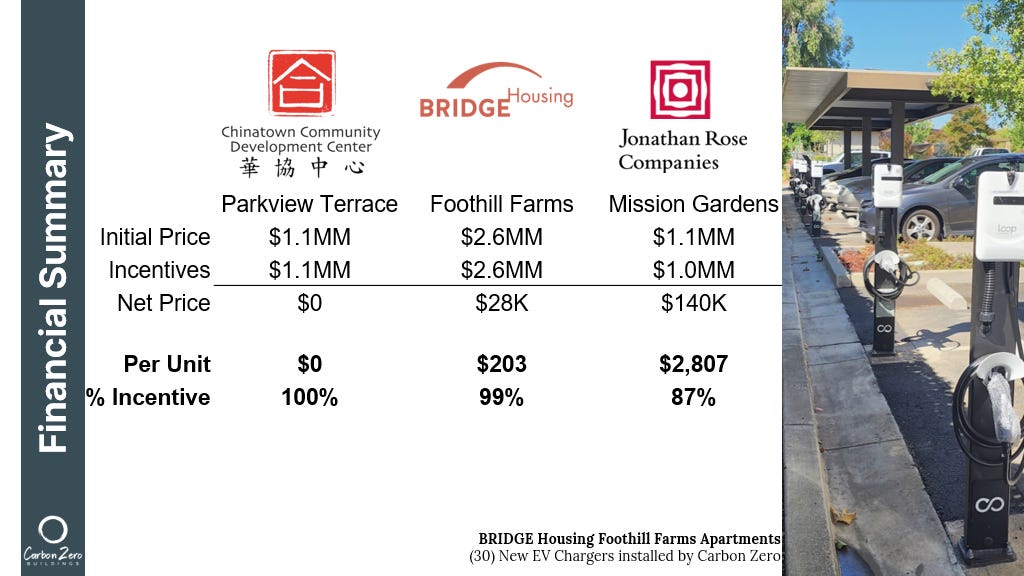
Finally, Andy McNamara from Carbon Zero Buildings talked about their innovative way of both braiding incentives and having contractors finance construction costs to enable building owners to install central HPWHs at low or no cost. Seems like an effective approach, and the Carbon Zero Buildings team has been installing central HPWH systems like hotcakes in California.
Watch their presentations here.
New Central Heat Pump Water Heating Products
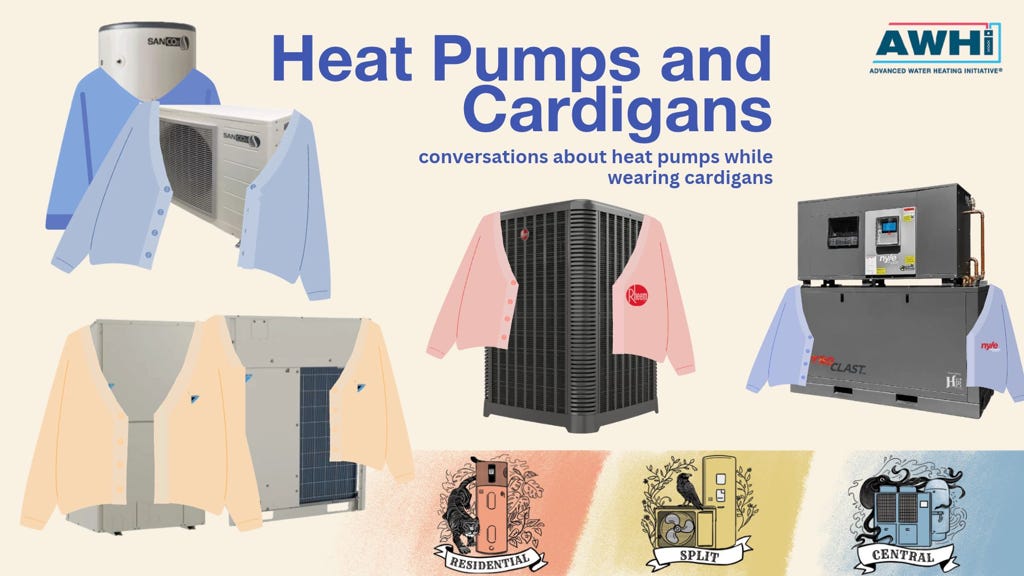
The last session of the day featured manufacturers that have brought central HPWH products to market in the last year.
Daikin talked about its Mega Q central HPWH, which is a cascading system that can provide high water heating temperatures and doesn’t need a swing tank or electric resistance backup.
Eco2Systems talked about its new 40 kW product, where it has combined the capacity of 8 to 10 heat pumps into one unit. This larger HPWH will allow for a more streamlined installation in larger buildings and relies on their classic CO2 with no electric resistance backup.
Rheem talked about its new central heat pump water heater model, the Torin. This new system is primarily designed for domestic hot water, but can also do hydronic heating. Rheem used its classic air-conditioning cabinet to house the central heat pump water heater. It uses an inverter-driven heat pump and can be chained together in up to 16 units.
Finally, Nyle talked about its Velo central heat pump water heating system. This system excels in its ability to fit through normal doors and into tight spaces, which can be a challenge in retrofits. It also can handle both single and multipass systems and doesn’t use a swing tank.
Watch their presentations here.
All in all, it was a day filled with incredible presentations and content on the latest and greatest in central heat pump water heating. Join us for more free, virtual sessions throughout the week, including a keynote speech from Bill McKibben!