
Lost Mettle! Vedanta Aluminium, Vedanta and NALCO Sink Up to 6% as Metal Index Drops 3%

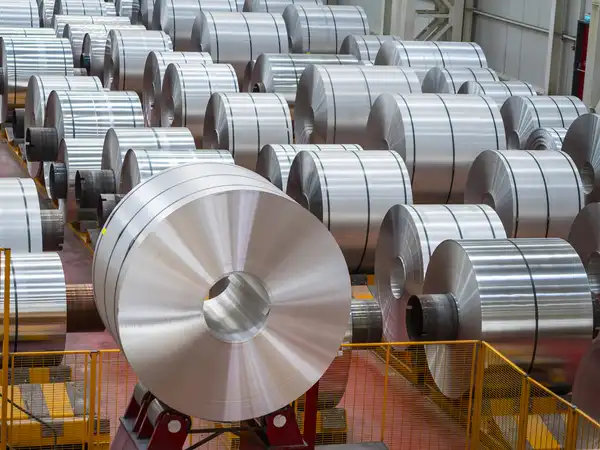
New Delhi, October 23, 2026: Indian metal stocks witnessed heavy selling pressure on Friday as the Nifty Metal index declined sharply, with Vedanta Aluminium Metal, Vedanta Limited and National Aluminium Company (NALCO) among the biggest losers. Concerns over rising crude oil prices, global economic uncertainty and weakening investor sentiment weighed on the sector.
At around 11:55 a.m. on Friday, the Nifty Metal index had fallen approximately 3.5%, making it the worst-performing sectoral index during the trading session. All 15 constituents of the index were trading in negative territory, reflecting broad-based weakness across the metals and mining sector.
Vedanta Aluminium and NALCO Lead the Decline
Vedanta Aluminium Metal emerged as the biggest loser, with its shares falling approximately 6% to ₹338. National Aluminium Company declined 4.6% to ₹296.70, while Vedanta Limited, Hindustan Copper and Hindustan Zinc registered losses of around 4–4.5%.
Other major companies, including Tata Steel, Steel Authority of India (SAIL), NMDC, Jindal Stainless, Jindal Steel, APL Apollo Tubes and Lloyds Metals and Energy, also faced selling pressure.
The latest decline extended the sector’s losing streak to four consecutive trading sessions. Over that period, the Nifty Metal index lost approximately 6.3%, compared with a 3% decline in the benchmark Nifty 50 index. The metal index was also down around 18% from its record high of 13,931.35, recorded on June 15, 2026.
Why Are Metal Stocks Falling?
1. Rising Crude Oil Prices Put Pressure on Margins
Surging crude oil prices have emerged as a major concern for metal producers. Brent crude approached $114 per barrel amid escalating geopolitical tensions in the Middle East, raising fears of higher transportation, freight and energy costs.
Mining and metals companies rely heavily on energy to operate equipment, transport raw materials and run processing facilities. Higher fuel prices can increase production costs and reduce operating margins, particularly for companies without captive energy supplies or sufficient pricing power.
2. Global Economic Uncertainty Weakens Demand Outlook
Metals such as aluminium, copper and steel are closely linked to global industrial activity. Concerns about slowing economic growth, weaker manufacturing activity and uncertainty surrounding China’s demand have weighed on investor sentiment.
China is one of the world’s largest consumers of industrial metals. Any slowdown in its construction, manufacturing or infrastructure sectors could affect global commodity prices and earnings expectations for Indian producers.
A stronger US dollar and elevated bond yields can also put pressure on dollar-denominated commodities by making them more expensive for buyers using other currencies.
3. Aluminium Supply Concerns Add to Selling Pressure
The aluminium sector is facing additional uncertainty as production capacity in the Middle East gradually returns.
Emirates Global Aluminium has been restarting operations at its Al Taweelah smelter in the United Arab Emirates, with full production expected in the first quarter of 2027. The facility produced approximately 1.6 million tonnes of aluminium in 2025.
The prospect of additional supply, combined with rising Chinese exports, could ease global supply constraints and limit aluminium price gains. This has added to concerns about the earnings outlook for Indian aluminium producers, including Vedanta Aluminium and NALCO.
Nifty Metal Index Faces Increasing Pressure
The continued decline in metal stocks highlights the sector’s sensitivity to global commodity prices, energy costs and changes in investor risk appetite.
Unlike defensive sectors, mining and metals companies are closely tied to economic cycles. When investors anticipate slower industrial growth or higher production costs, they often reduce exposure to cyclical stocks.
The recent sell-off has also intensified concerns about valuations and the sustainability of earnings growth across the sector.
However, analysts believe that companies with lower production costs, manageable debt levels and strong operational efficiency may be better positioned to withstand periods of market volatility.
What Are Analysts Saying?
Market experts have highlighted the importance of monitoring crude oil prices, global demand and the trajectory of industrial metal prices.
According to market commentary reported by Business Standard, Piyush Jhunjhunwala, founder and CEO of Stockify, noted that rising energy costs typically put pressure on corporate profit margins, particularly for companies without captive energy supplies or sufficient pricing power.
Meanwhile, Geojit Investments’ chief investment strategist, VK Vijayakumar, indicated that fairly valued large-cap companies with sound growth prospects could present opportunities for long-term investors.
Nevertheless, the outlook remains uncertain, and any investment decision should account for company-specific fundamentals, commodity price movements and broader market risks.
Outlook: Can Metal Stocks Recover?
The near-term performance of Indian metal stocks will depend on several factors, including crude oil prices, global economic growth, Chinese demand and movements in international aluminium, copper and steel prices.
A sustained decline in energy costs and stronger industrial demand could help improve sentiment. Conversely, prolonged geopolitical tensions, elevated fuel prices and weaker commodity demand could keep the sector under pressure.
Investors will also monitor upcoming quarterly earnings for indications of whether higher input costs are significantly affecting profitability.
For now, the sharp sell-off in Vedanta Aluminium, Vedanta and NALCO reflects growing concerns about energy costs, global supply and the outlook for industrial metals. Whether the correction creates buying opportunities or signals further weakness will depend on how these factors evolve in the coming weeks