
What Happens to the Fossil Fuel Ecosystem as EVs Take Over the Road Fleet? Case Study: Denmark

Support CleanTechnica’s work through a Substack subscription, on Patreon, or on Stripe. Help us produce all of the high-quality, original content we publish week after week despite the challenges of content-scraping AI, antisocial media, inflation, and other hurdles.
There is more to the electric vehicle resolution than endless stats. What about the rest of the ecosystem? This article was inspired by a chat with a correspondent in Denmark.
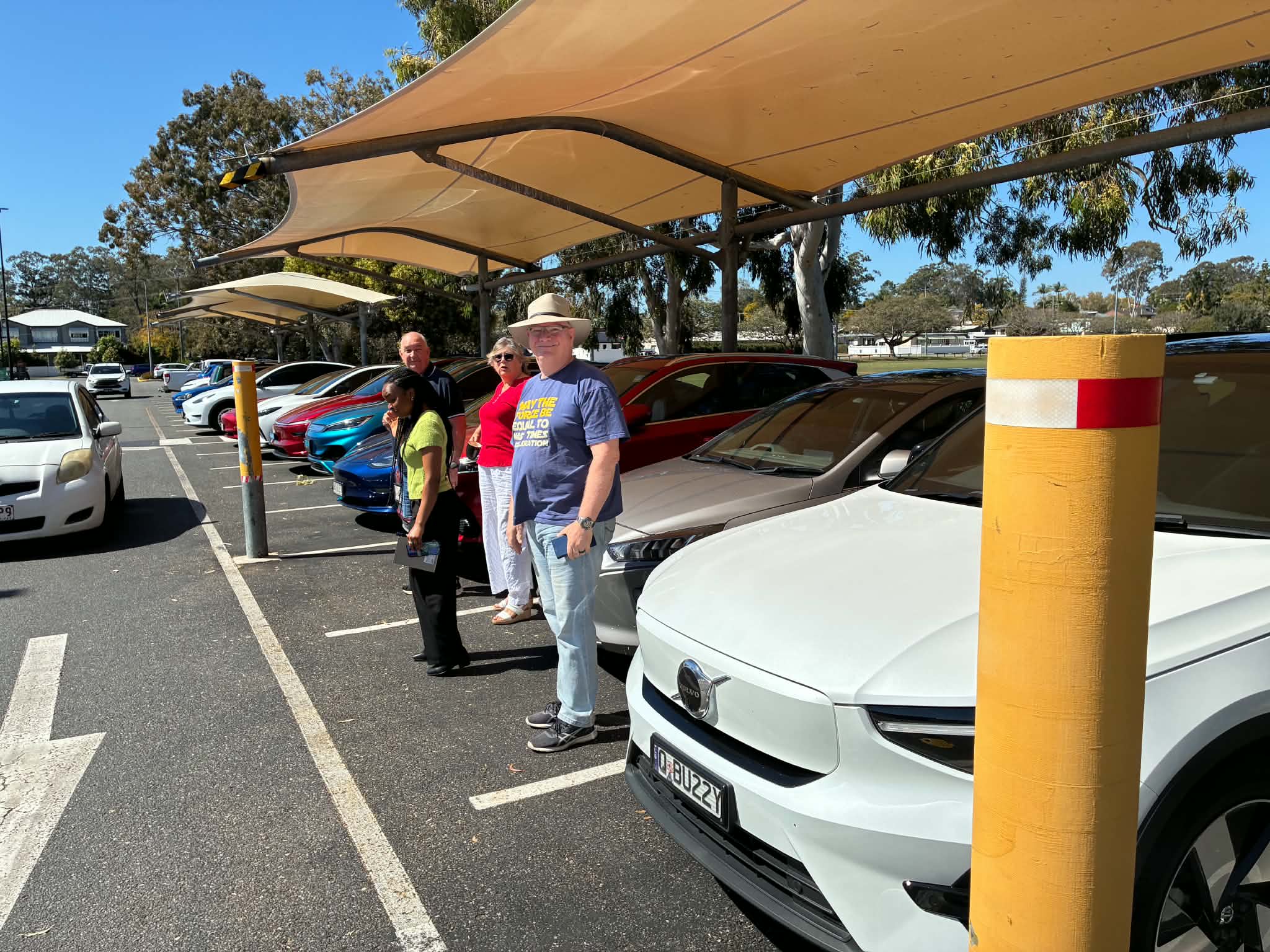
Once a month, Majella and I host a coffee morning for EV drivers, and those who are interested in the transition. I advertise on several EV forums on Facebook. Last month, I got this strange response from an EV driver in Denmark. No, he did not make it for coffee, but we had a good chat about what was happening in his home country.

Henrick tells me:
“Seriously…. It’s so liberating for the mind that the Age of internal combustion engines are over in Denmark, where I live. 97% of new private vehicles are full battery electric. There is no need for debate or explanation. Just the help for the uninformed about charging solutions and what vehicle to go after. I really hope you get there soon.”
Me too. We are still dealing with the endless, out-of-date FUD.
Of course, I had to write back and seek more information. I told him I would love to hear more news from Denmark — particularly about the effects on the ICE ecosystems (repair shops, spare parts, mechanics training, etc.) — if he was happy to share information.

Henrik: “My specialty is not mechanic and repair. I do electric engineering, so I know more about the charging, consumption and statistical analysis. But got some experience from +180.000km in my own EV. Denmark — 6 million of us, 2.8 million cars, almost no pickup/utes. 700.000 EVs on the road and counting. The education for mechanics is changing and there are courses in EV mechanic too.
“Most of the EVs are still under some form of warranty, so there is still a lot to find out. The reaction to a decline in the market for fuel and mechanical services has not played out yet. But I will and it will be swift, as anyone in business should know.
“To me the next bottleneck might be AC 11/22kW street charging in towns and cities. A market that expanded quickly a few years ago, but stopped expansion and might be an issue again.
“There is room for mechanic workshops, but it will probably be smaller and have to retool. It’s completely different to work on an internal combustion engine and gearbox than an electric drivetrain and large battery packs. They already do that here. The EV mechanic just added a green e to their logos and signage. Brake, tires and suspension are still the same. But now the issue with brakes is more that they rust or stop working because of under usage.”
We also have to consider that there will be less need for work on electric motors than there is for ICE motors. It isn’t like for like. In Australia, some dealers insist on services on EVs at the same intervals as ICE, but the Chinese models have extended the gap between services. We have many repair shops that specialise in mufflers — for example, those businesses will certainly decline. Mechanics may have to evolve into highly skilled technicians. Henrik pointed me to a small, independent EV mechanic cooperating with YouTuber Bjørn Nyland — Elbilmek, an independent EV repair shop located near Oslo, Norway.
Google tells me (because I can’t understand the language) that Elbilmek is focusing on:
1. “Advanced Diagnostics They utilize specialised software and hardware systems built specifically to run diagnostic reports on electric drivetrains. This includes pulling up to 19,000 live parameters via direct LAN connections to circumvent the often tightly guarded manufacturer diagnostic tools.”
2. “The ‘State of Health’ Lie: Nyland and his partner mechanics frequently cover how a car’s standard dashboard ‘State of Health’ (SOH) calculation is heavily oversimplified (often only measuring total capacity). Their deep-dive videos focus on identifying true health by testing localized internal resistance, moisture leakage into motor units, and connector degradation.”
3. “Aftermarket Component Optimization: They have public partnerships with automotive giants like SKF to develop aftermarket bearing kits that fix common out-of-warranty failures (such as the Tesla Model 3 small drive units), engineering them to have lower friction coefficients and higher resistance to rust than factory parts.”
It is obvious that this is a big step from unscrewing an oil filter and replacing the oil in a petrol clunker. You will need more tools than a hammer and a screwdriver.
I asked Henrik about fuel/ gas stations.
Henrik: “My guess is that lots of them will disappear. A few years ago, an executive from CircleK said that they compete for 15% of the charging market. But is turned out that 85% of charging is done at home. So, they’re fighting with the other DC fast Charge companies for a small part of the market (15% of 15%). So, of course loads of sites will disappear.”
Some may say that the northern Europe car market is small beans. But them beans is going electric and we would be well to keep an eye on the aftershocks. In Australia, where we have far more cars than people, it will be even more significant. Walk into any Supacheap car auto shop and you will find a great bulk of their sales depend on oil for home oil changes. Have a look at their webpage.
It’s not just Denmark. All of Scandinavia is rapidly evolving into an electro region. Denmark’s citizens are buying over 20,000 EVs a month, achieving a penetration rate of 89% — only second to Norway, which is approaching the 100% mark. Norwegians buy almost 19,000 battery electric passenger cars per month. BEVs made up 41.5% of all new passenger car registrations in Sweden (14,000 cars) during the first half of 2026. Add in PHEVs and the penetration reaches 67%. In Finland, sales penetration has reached 62%.
About 56,000 cars are sold per month in the region. (So, it is half the size of the Australian market.)
It’s not just new car sales that caught my eye. We need to consider the fleet penetration of plugin passenger vehicles. These figures are significant: Finland 13%; Sweden 15%; Denmark 24%; Norway 33%. We should note that these countries are also transitioning towards zero emission freight vehicles. What will the future hold for the petro-chemical eco system? Would you advise your grandson to become a diesel mechanic? I would welcome comments from my readers who live in or visit the Nordic countries. What lessons can we learn from this transition, and the future of the world we will all live in?
Sign up for CleanTechnica’s Weekly Substack for Zach and Scott’s in-depth analyses and high level summaries, sign up for our daily newsletter, and follow us on Google News!
Have a tip for CleanTechnica? Want to advertise? Want to suggest a guest for our CleanTech Talk podcast? Contact us here.
Sign up for our daily newsletter for 10–15 new cleantech stories a day. Or sign up for our weekly one on top stories of the week if daily is too frequent.


CleanTechnica uses affiliate links. See our policy here.
CleanTechnica’s Comment Policy