
Half a Million Miners Stand Between Bolivia and a Critical Minerals Rush

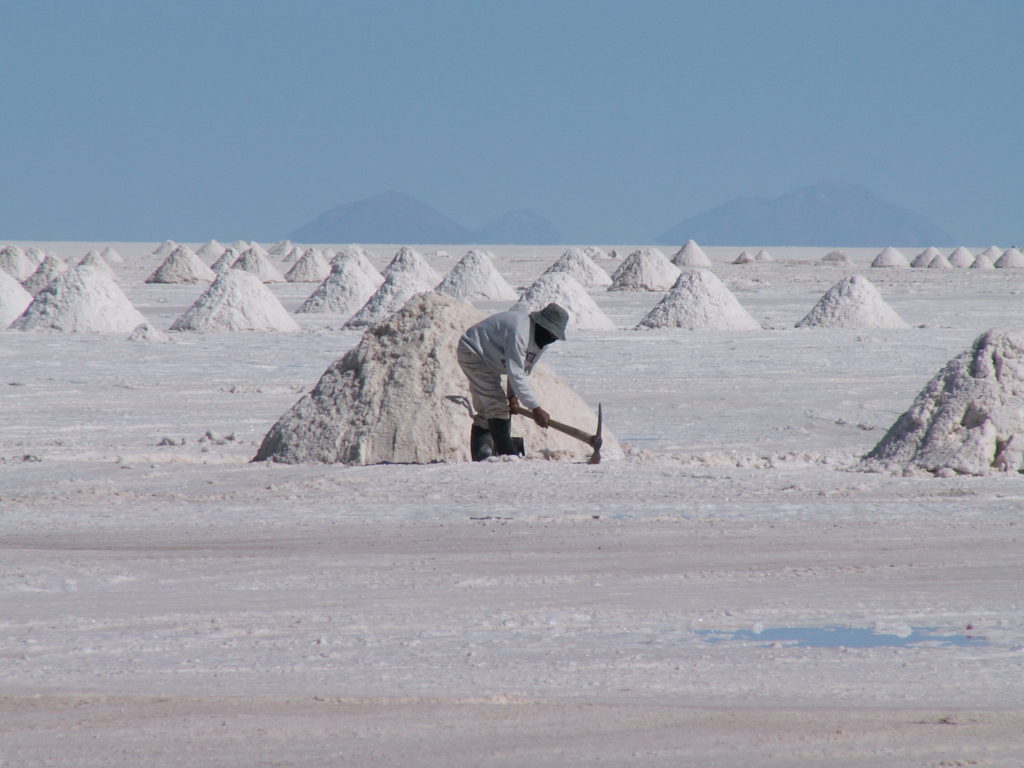
La Paz, October 3, 2026: Bolivia is seeking to attract fresh international investment into its mining sector as global demand for critical minerals accelerates, but the government faces a major domestic challenge: the influence of nearly 500,000 cooperative miners who play a central role in the country’s mining economy.
The issue has gained importance under President Rodrigo Paz, whose government is seeking to encourage greater private investment and develop Bolivia’s deposits of copper, gold, silver, antimony and other strategically important minerals. The administration is also considering changes to mining rules aimed at improving legal certainty and making new projects easier to develop.
Cooperative Miners Hold Significant Influence
Bolivia’s mining cooperatives represent a substantial part of the country’s mining workforce and account for a significant share of mineral extraction. Their political influence has repeatedly been demonstrated through protests and negotiations with successive governments.
Recent tensions illustrate the difficulty of changing the country’s mining framework. Thousands of cooperative miners protested in La Paz earlier this year, pressing for greater access to fuel, explosives and additional mining areas.
For the government, the challenge is therefore not simply attracting foreign capital. Any major reform must also address the economic interests of miners whose livelihoods depend on the existing system.
Bolivia’s Mineral Potential
Bolivia already has an important position in several mineral markets. According to the U.S. Geological Survey, the country ranked fourth globally in 2024 for silver, antimony and tungsten production, while also ranking among major producers of tin, zinc and lead.
The country also possesses substantial lithium resources. USGS estimates Bolivia had around 23 million metric tons of identified lithium resources, although it did not have identified lithium reserves under the agency’s 2024 assessment.
Mineral exports are already an important component of Bolivia’s economy. In 2024, nonfuel mineral exports were worth approximately $4.5 billion, accounting for nearly half of the country’s total exports.
Government Looks to Modernize Mining Rules
The Paz administration is reportedly considering targeted amendments that could allow private companies to partner with cooperatives, strengthen development rights for exploration companies and adjust the tax framework. A broader modernization of the mining code is also being considered.
The objective is to create conditions under which international mining companies can invest while maintaining a role for Bolivia’s established cooperative sector.
Industry participants say cooperation between private companies and miners could become an important part of future development. Tom Larsen, chairman and CEO of Eloro Resources, described cooperative miners as a significant part of Bolivia’s social and economic fabric.
Lithium and Critical Minerals Draw Global Attention
Bolivia’s mineral potential comes at a time when governments and manufacturers worldwide are seeking secure supplies of minerals needed for batteries, electricity infrastructure, renewable energy and advanced technologies.
The country has already pursued partnerships for lithium development. USGS reported agreements involving Russia’s Uranium One Group and China’s Contemporary Amperex Technology Co. Ltd. (CATL) consortium for lithium projects.
The next phase of Bolivia’s mining industry will depend on whether the government can balance foreign investment, private-sector participation, cooperative mining interests and stronger regulatory oversight.
For international mining companies, Bolivia offers significant geological potential. But converting that potential into large-scale production will require regulatory changes and agreements with the powerful cooperative mining sector.