

Support CleanTechnica’s work through a Substack subscription, on Patreon, or on Stripe. Help us produce all of the high-quality, original content we publish week after week despite the challenges of content-scraping AI, antisocial media, inflation, and other hurdles.
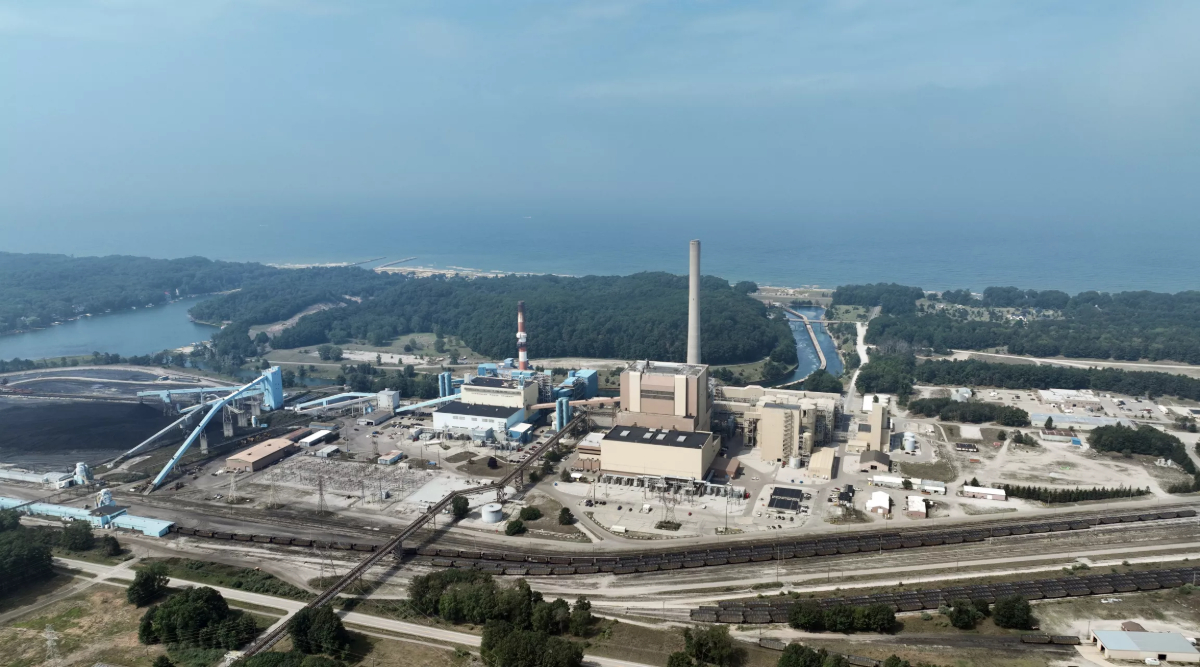
The J.H. Campbell generating station first went into service in 1962. It is located in West Olive, Michigan in the western part of the state, just a few miles from the shores of Lake Donald Lake Michigan. At its peak, it supplied 1,420 MW of coal fired electricity from three separate generating facilities.
Sixty years later, Consumers Energy, the owner of the J.H. Campbell plant, began making plans to replace the aging facility with a combination of methane and solar resources. Coupled with battery storage, it would not only reduce air pollution in the area but also the cost for electricity paid by its customers. The plan was reviewed and approved by Michigan state regulators and won approval from officials at MISO, the grid operator for the lower Michigan peninsula and much of the Midwest of the electric grid.
The people responsible for managing America’s supply of electricity reviewed all the details of the plan to shut down and replace the J.H. Campbell generating station. They all agreed the new supply arrangements were more than enough to match the output of the old coal fired plant and make a significant extra dollop of electrons available.
The Gospel According To Russell Vought
Then the Trump train wreck came to town. During the four years Trump was out of office, Russell Vought spent his time at the Heritage Foundation looking for time bombs planted throughout the federal government by Congress and prior administrations that could be used to sweep away the regulatory environment that is anathema to conservatives. One of his projects was to catalog every emergency power ever granted to the executive branch by Congress.
One of those time bombs was located in Section 202 (c) of the Federal Power Act which permitted the federal government to order the continued operation of coal fired plants during weather emergencies. According to the New York Times, that power has been rarely used and only for a few days at a time during extreme weather events.
Vought found there really were no time limits on the government’s authority under Section 202 (c). Once the president declared an “emergency” existed, the order to keep a coal fired plant operating was valid for 90 days. What happens at the end of the period? Declare the “emergency” is still in existence and issue another 90 day order. The administration has now done exactly that in the case of the J.H. Campbell facility six times.
The state of Michigan, joined by the states of Minnesota and Illinois and a coalition of climate organizations, sued the administration. On Friday, September 11, 2026, the DC Circuit Court of Appeals found the administration’s claim of an “energy emergency” was fictitious. Writing for the three judge panel that heard the case, Judge Cornelia Pillard emphasized that it’s up to the states to decide how to manage power generation, and that the federal government should only intervene when states and grid operators are unable or unwilling to respond.
“The court rejected the Department of Energy’s use of emergency authority, and agreed with our interpretation that emergency authority is to be used for actual emergencies, not picking preferred resources or addressing issues that Congress and the law have entrusted states to deal with,” Michael Lenoff, the lead attorney for Earthjustice, told The Times.
Earthjustice, the Sierra Club, Natural Resources Defense Council, Environmental Law and Policy Center, Clean Air Task Force, and Environmental Defense Fund represented a large public interest coalition that petitioned the court to set aside DOE’s order forcing the J.H. Campbell coal plant to continue operating.
DOE Grossly Overstepped Its Authority
In a press released shared with CleanTechnica, Kathryn McGrath, a public affairs and communications strategist for the Clean Energy Program at Earthjustice, said, “The court affirmed that the DOE grossly overstepped its authority when it prevented the retirement of the J.H. Campbell coal plant. The court ruled that the Department’s justification for the order — that it can keep a power plant open when there is no imminent need to do so — was unlawful.”
McGrath continued, “The court order finds that the DOE cannot invoke Section 202 (c) unless it establishes a genuine emergency. The court agreed that the federal government may not override well-established long-term planning processes to force an old, polluting coal plant to continue to operate. The court further affirmed that the management of day-to-day fluctuations in demand and supply belongs to grid operators and utilities, while states and grid operators are ready and able to plan for future long-term demand growth.”
Michael Lenoff added, “The court rebuked the Trump Administration’s abuse of emergency powers. The DOE needs to stay in its lane and use its emergency powers only in actual emergencies. Preventing the market-driven retirements of coal plants to advance a coal-friendly agenda is not a proper use of emergency powers. We will continue to challenge unlawful orders if DOE persists in issuing them.”
“Today’s ruling is a victory for families across the Midwest who are tired of paying to keep this old, expensive, and dirty power plant online,” said Sierra Club chief appellate counsel Sanjay Narayan. “Instead of working to lower costs and clean up our air and water, the Trump administration has been pulling out all the stops to try to bolster dirty and expensive fossil fuels — at public expense.
“This reckless agenda will not succeed. We will continue to hold the Department of Energy accountable to the law, and ensure that the J.H. Campbell plant finally retires as it was scheduled to, and we will continue to fight back against the other illegal extensions across the country.”
The biggest losers in all this are the ratepayers in the MISO service area who, so far, have been forced to shell out more than $248 million to keep the J.H. Campbell facility functioning. At no point over the last year was the electricity from the power plant needed. While those rate payers get a refund from DJT for their out of pocket losses? When pigs fly.
Will we ever know who in the coal industry greased which palms to win this expensive present from the most corrupt administration in US history? That’s unlikely, but readers are free to form their own opinions on that subject.
Flooding The Zone
The key to the Vought strategy is that is uses the friction built into the US legal system to win victories by forcing opponents to seek redress of grievances in lengthy court proceedings while its illegal orders take effect immediately and take years to unwind. It’s a strategy worthy of Niccolo Machiavelli.
The US Supreme Court declared Trump’s tariffs illegal, but the very next day, the administration pivoted to another emergency procedure provision to reissue them in essentially the same form. It’s a deliberate plan to use the courts’ own procedures to thwart every attempt to block the administration from imposing its will on the nation.
Kathryn McGrath added context to the fraudulent claims of the Department of Energy that electricity from J.H. Campbell was vital to the MISO grid. In a subsequent email, she pointed out, “Campbell’s output since the 202 (c) orders began on May 23, 2025, demonstrates its unreliability and the dangers to grid reliability of relying on old coal plants. For instance, on June 23, 2025, the grid’s most stressed day that summer, Campbell Unit 1 suddenly dropped offline in the middle of the day. Meanwhile, Campbell Unit 2 was already offline that day, had been offline since May 23, and has barely been able to stay online during the entire term of the 202 (c) orders.”
The New York Times reports the Energy Department has also issued emergency orders to keep coal plants open in Washington, Indiana, and Colorado. And yet the coal industry is still shedding jobs, despite having friends in high places. Preventing the nation’s coal plants from retiring for the duration of Trump’s term could cost consumers at least $3 billion per year, according to a report from the consulting firm Grid Strategies.
Remember when Repugnicans used to bleat about “all of the above” solutions and how the government should not be picking winners and losers in the marketplace? It was like a religious incantation to them. That was then, this is now. Today they recognize no constraints on their power to reward their friends and abuse their opponents. The stench of corruption hangs like a pall of wildfire smoke over this administration.
Today, how can you tell when members of the administration are lying? That’s easy; their lips are moving.
Sign up for CleanTechnica’s Weekly Substack for Zach and Scott’s in-depth analyses and high level summaries, sign up for our daily newsletter, and follow us on Google News!
Have a tip for CleanTechnica? Want to advertise? Want to suggest a guest for our CleanTech Talk podcast? Contact us here.
Sign up for our daily newsletter for 10–15 new cleantech stories a day. Or sign up for our weekly one on top stories of the week if daily is too frequent.

CleanTechnica uses affiliate links. See our policy here.
CleanTechnica’s Comment Policy