

Support CleanTechnica’s work through a Substack subscription, on Patreon, or on Stripe. Help us produce all of the high-quality, original content we publish week after week despite the challenges of content-scraping AI, antisocial media, inflation, and other hurdles.
Italy is a world leader in recycling. It went from hardly recycling anything 30 years ago (less than 10% in 1997) to recycling over 60% of waste in 2020 (with only 20% going to the landfill).
The country does a couple of simple, no-brainer things that make it very easy for people to recycle their waste. I spent the summer in this great (and hot) country and spent some time jotting down what I saw. Most of these rules originate in the European Union, so the EU should also get a lot of the credit for such advanced recycling.
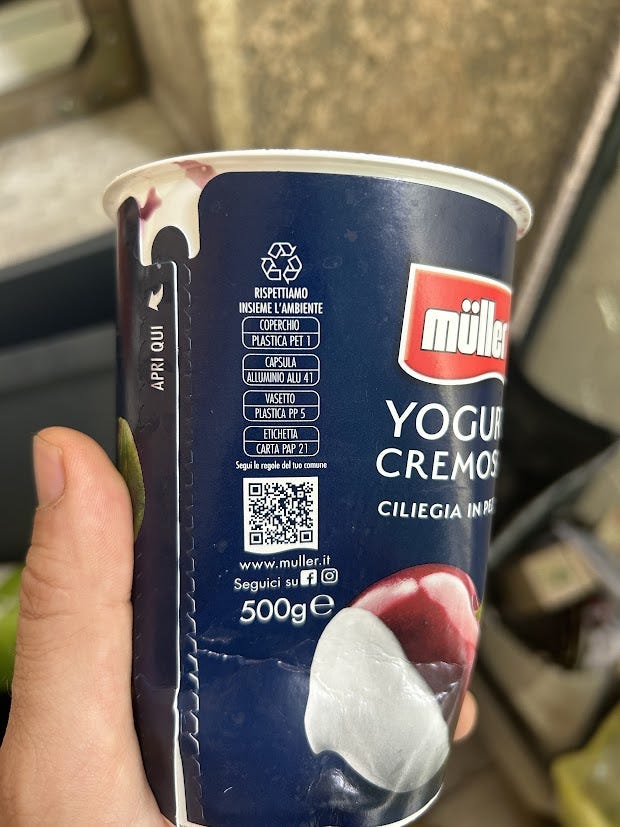
1. Every piece of packaging tells you how to recycle it
Every piece of plastic, paper or metal that you buy in Italy tells you how to recycle it. This started in 2023 in Italy and comes from a European directive. I find this simple and brilliant.
Every container tells you which part of the packaging goes into which recycling container. No more guessing! For example, the yogurt container below says to put the top in the plastic recycling, put the cover in metal recycling, put the container in the plastic recycling and the removable label in the paper recycling. Knowing how to recycle things should be this easy!
And virtually everything is recyclable too. This includes actually recyclable paper cups, recyclable paper cup lids and paper or biodegradable plastic straws. It seemed like Italy got all the benefits of packaging with none of the drawbacks (for example — litter, impossible to recycle materials).
2. Basic recycling everywhere
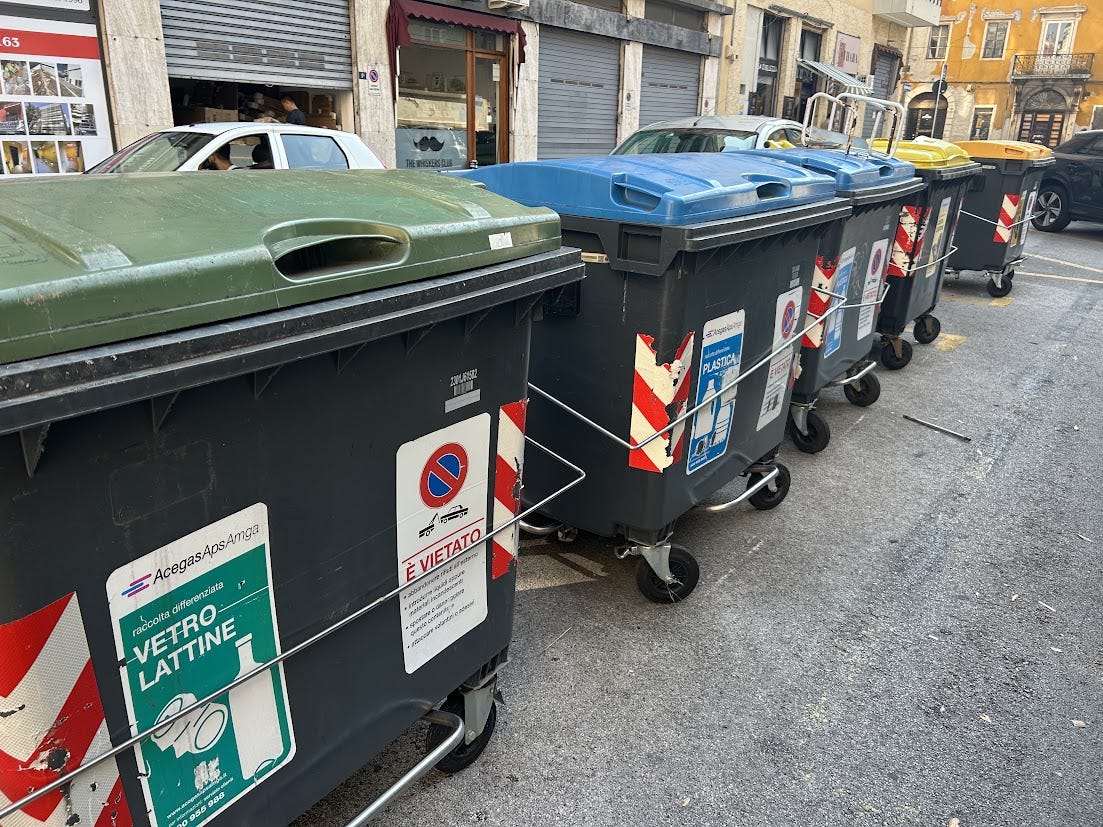
Italy’s basic recycling includes glass, metal, plastic, paper and food waste. Italians sort their recycling into these different types and either recycle them from bins in their apartment buildings or in communal containers located all around cities and towns.
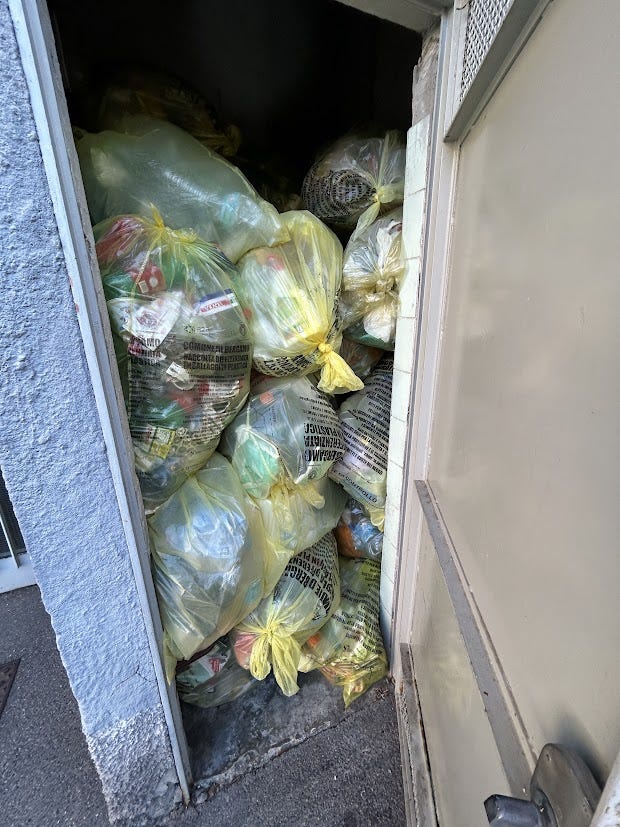
Plastic recycling also includes all types of plastic, it was all put together in specially sold yellow plastic bags in the city where we stayed in. It was especially nice not having to navigate all the different types and symbols for plastic recycling which make recycling harder and in my opinion discourage it.
3. Universal Food Composting
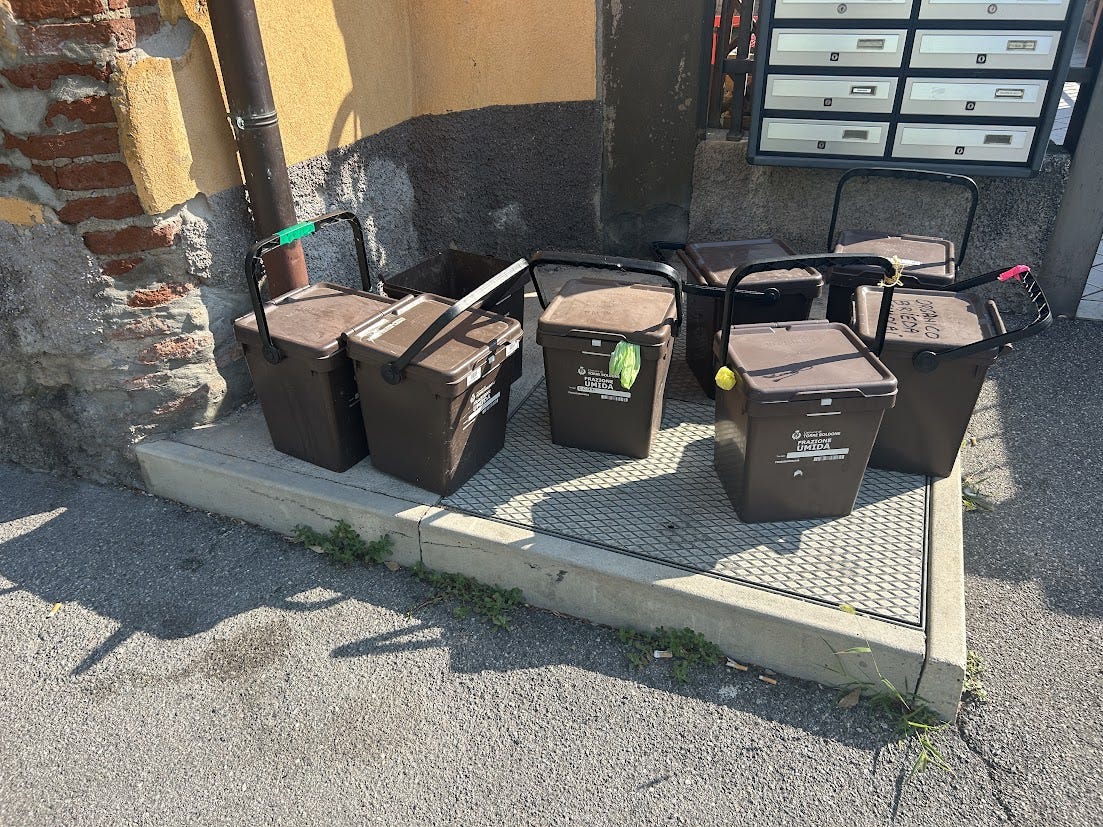
When I was an exchange student in Italy way back in 1999, I was stunned that many Italians separated and composted food scraps even way back then. I thought composting was something you did in your backyard, but here Italians were putting out food scraps to be picked up alongside their garbage.
Composting is now mandatory country-wide in Italy. Compare this to the US where only a third of the country has access to food composting. People put food scraps into the compostable plastic bags they get at the supermarket and then put them into specially labelled containers.
This keeps food scraps from rotting in landfills and creating methane gas — another sign of Italy’s advanced recycling system we should try to emulate.
4. Extra Containers for recycling different things are everywhere
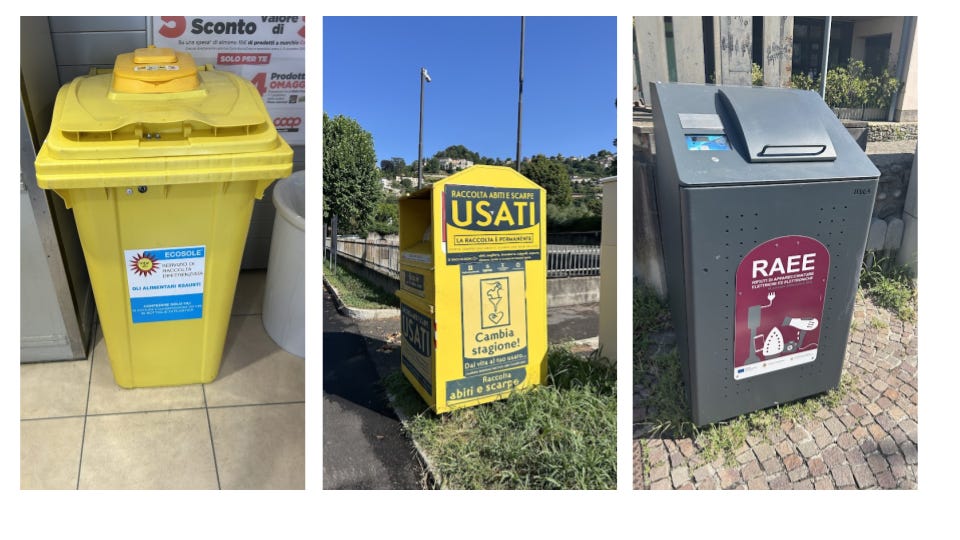
Aside from the standard paper, plastic, metal, glass, and food waste, other things like cooking oil, clothes, electronics, corks, etc. are easy to recycle as well. There are recycling bins located all around that make it easy to recycle these materials. We would pass these bins all the time — they are situated strategically so that you’re never too far from having a place to recycle your hard to recycle stuff.
5. Composting bags instead of plastic!
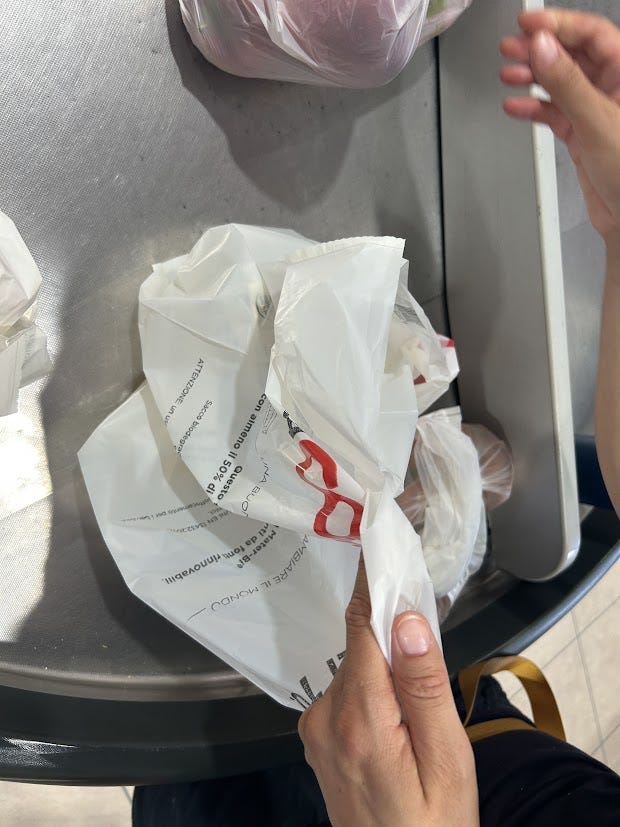
Imagine if all our plastic bags in North America were compostable. In Italy, that dream is reality. Since 2018, every supermarket, every produce bag is made from strong compostable plastic. No more feeling guilty that you’re using something that might never biodegrade and end up in the river or ocean, you can feel confident that the bag you use for five minutes to carry groceries won’t outlast you.
And because plastic bags are compostable, you don’t see them blowing around on the streets as litter or caught high on a tree branch. You also have a handy, free container to put all your food scraps into to be composted.
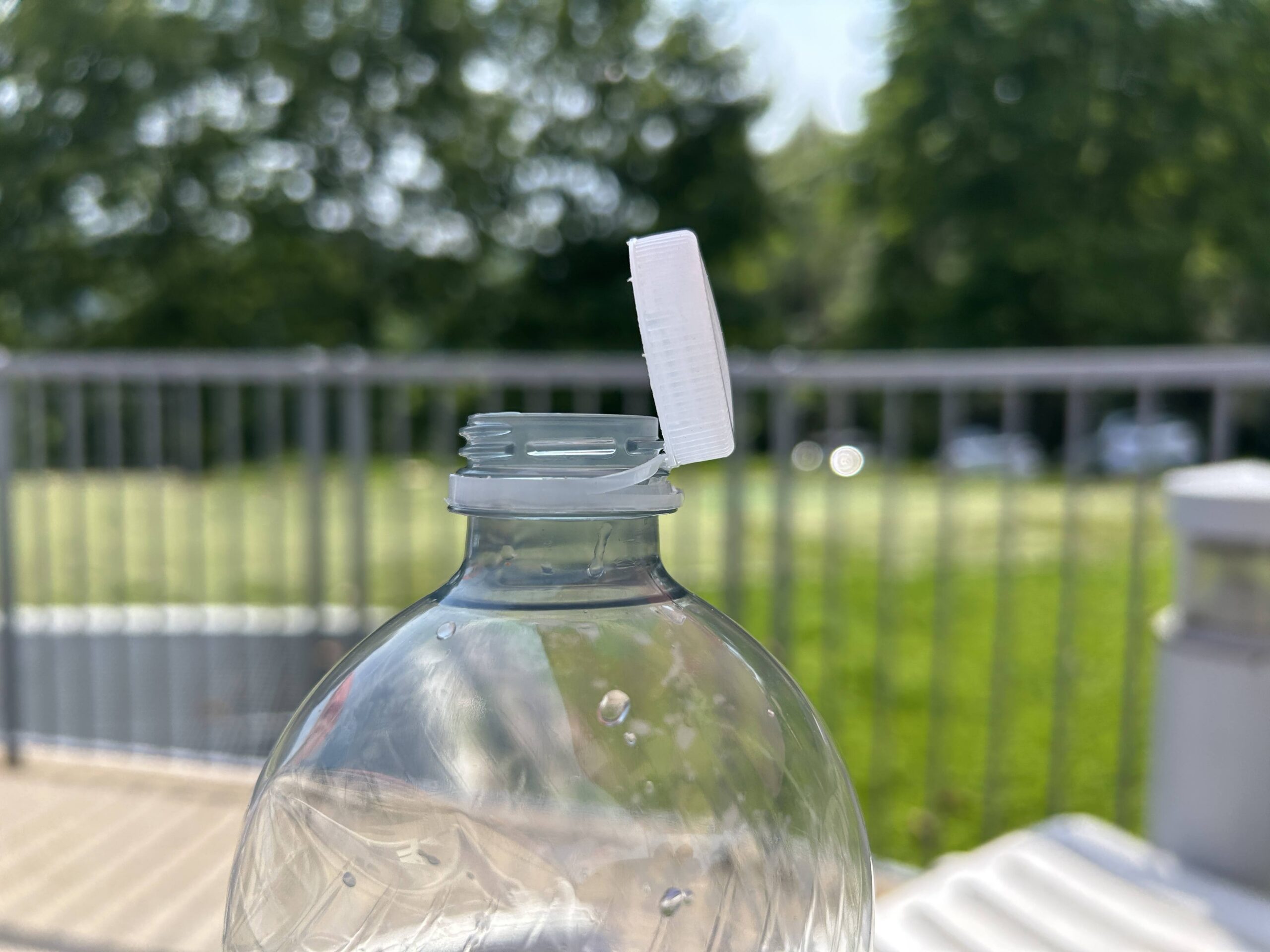
6. Plastic tops are attached to bottles
This one I absolutely love. Europe found that plastic bottle caps were one of the most prevalent sources of plastic pollution littering European beaches. So starting in 2024, they required bottle manufacturers to attach the bottle cap of everything from soft drinks, to milk bottles directly to the bottle.
It’s such an easy, brilliant fix to plastic pollution. It’s one of the first things I noticed on our trip to Europe this summer. The caps open and then stay stuck to the bottle. It’s both more convenient and better for the environment.
This great article from The Guardian shows how beverage companies fought this rule, then adapted, then touted their sustainability efforts. But they aren’t bringing this to other countries without being required. So let’s require them to do this common sense plastic waste reduction effort in North America!
Those were just some of the things I noticed in Italy this summer that make it so much easier for consumers to recycle. And Italians recycle like champs! The recycling bins I saw were always full. If you make the system easy and clear and simple people will participate. Congrats to Italy and the EU for their advanced and effective recycling laws and here’s hoping North America will follow suit.
Sign up for CleanTechnica’s Weekly Substack for Zach and Scott’s in-depth analyses and high level summaries, sign up for our daily newsletter, and follow us on Google News!
Have a tip for CleanTechnica? Want to advertise? Want to suggest a guest for our CleanTech Talk podcast? Contact us here.
Sign up for our daily newsletter for 15 new cleantech stories a day. Or sign up for our weekly one on top stories of the week if daily is too frequent.


CleanTechnica uses affiliate links. See our policy here.
CleanTechnica’s Comment Policy