
Even Under Extreme Warming, ASEAN’s Wind & Solar Generation Variation From Normal Will Be Less Than 1% In 2030
Support CleanTechnica’s work through a Substack subscription, on Patreon, or on Stripe. Help us produce all of the high-quality, original content we publish week after week despite the challenges of content-scraping AI, antisocial media, inflation, and other hurdles.
Distributed renewables offer far greater resilience to the power system during extreme climate events than fossil fuel systems.
Jakarta — Distributed renewable energy networks are far more resilient to climate shocks and natural disasters than the centralised fossil fuel systems that still dominate Southeast Asia’s power supply, according to a new report by global energy think tank Ember. Solar, wind and battery storage, paired with stronger grid interconnection, can isolate damage when disaster strikes and recover faster than fossil fuel plants, while also losing far less output from long-term climate stress.
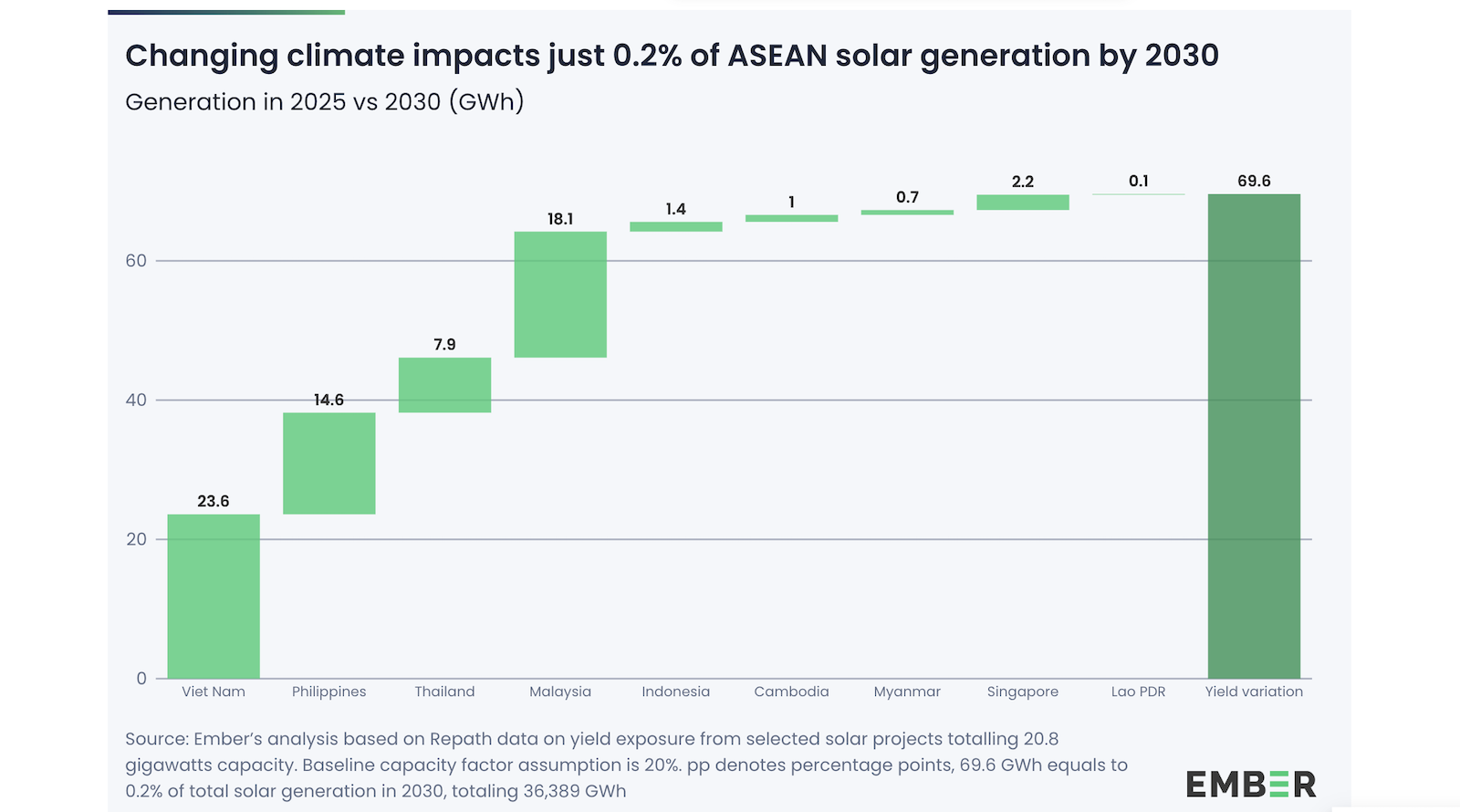
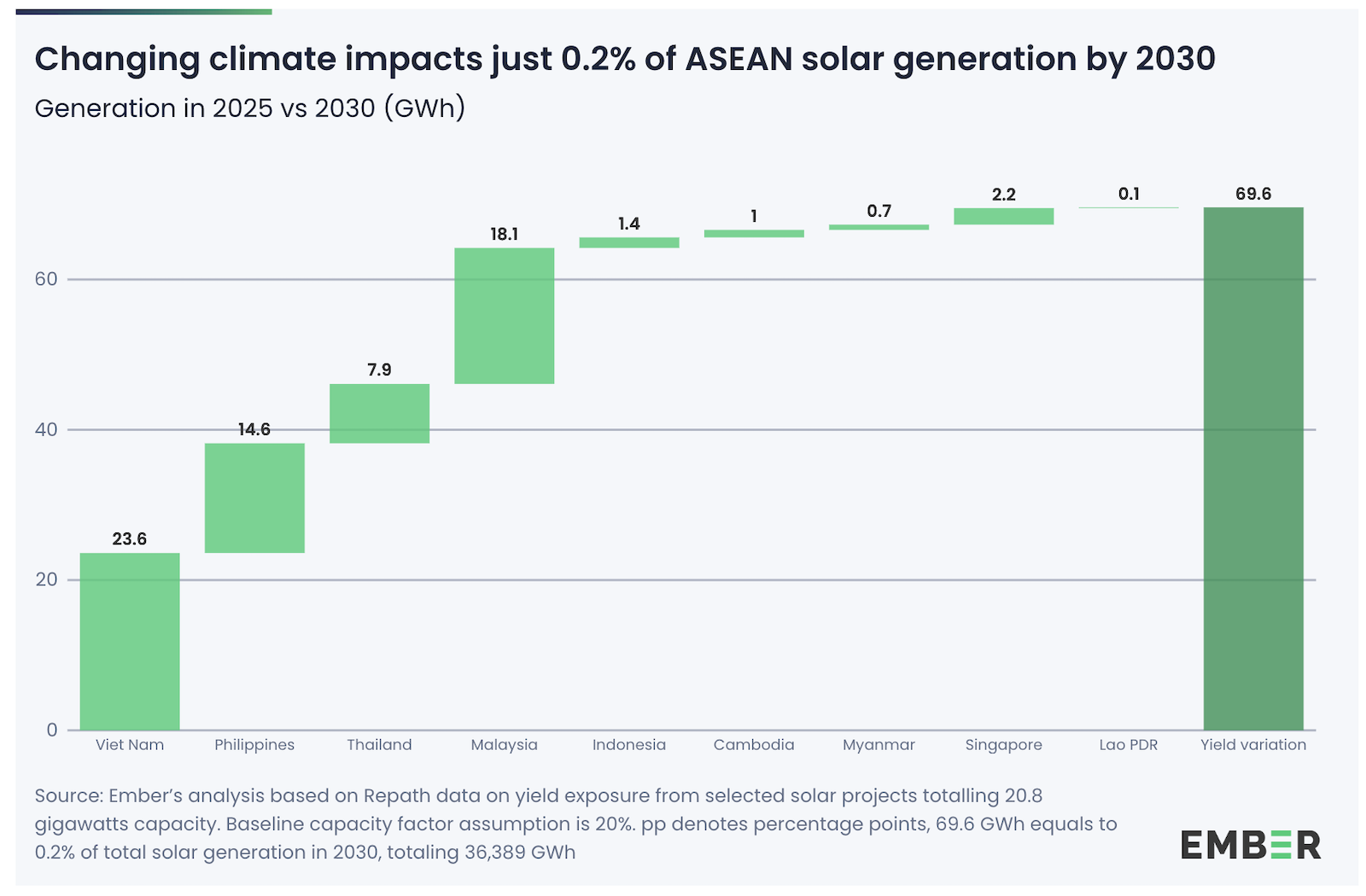
Ember’s analysis found that around 64% of ASEAN’s installed power capacity still comes from fossil fuels, leaving them exposed to disruption in one of the most disaster-prone regions in the world. It finds that even under the most extreme weather scenarios in 2030, wind and solar generation will vary by less than 1% from normal output, far less than the losses thermal and nuclear plants will face under milder warming.
“ASEAN has witnessed a sweeping account of natural disasters. Power system resilience is central to a supportive ecosystem to unlock the potential of the green economy,” said Dr Dinita Setyawati, Senior Energy Analyst, Asia at Ember. “Expanding renewable energy and strengthening grids are not technical afterthoughts. They are essential ideas that deserve a place at the centre of policymaking and decision-making across ASEAN.”
The report identifies two distinct threats facing the region’s power systems: chronic climate stress that gradually erodes the output of fossil fuel, hydro and renewable assets alike, and acute disaster shocks that can destroy generation and transmission infrastructure outright. Distributed renewable networks handle both threats better than centralised fossil fuel systems, because damage can be isolated and repaired without affecting the whole network.
In Central Sulawesi, Indonesia, where a 7.4-magnitude earthquake disabled the Panau coal plant in 2018 and forced the rehabilitation of 1,192 distribution units, the provincial energy plan still includes 2.25 gigawatts (GW) of additional coal capacity by 2030. Ember’s modelling shows that 600 megawatts (MW) of solar paired with 720 MWh of battery storage could offset 250 MW of that planned coal capacity, or 1.4 terawatt-hours (TWh) of coal generation, while also being faster to deploy and to repair after a disaster.
In the Philippines, Catanduanes province has experienced repeated power outages after typhoons due to its isolated, diesel-dependent grid. A planned 58 megavolt-ampere (MVA) interconnection with Luzon is projected to supply up to 22% of the island’s electricity demand by 2030, illustrating how interconnection supports quicker recovery in emergency situations.
In Viet Nam, limited grid flexibility and storage led to around 405 gigawatt-hours (GWh) of solar curtailment in 2020, at a cost of roughly US$26 million. The report finds that upgrading transmission infrastructure alongside smart grids and battery storage would allow the country to capture more of its solar potential while strengthening the grid’s ability to recover from disruption.
The report suggests a whole-system resilience planning is vital for ASEAN. This is marked by an integration of energy planning into regional disaster frameworks such as the ASEAN Agreement on Disaster Management and Emergency Response (AADMER), and by investing in the interconnection, grid flexibility and storage needed for distributed renewables to function as one resilient network.
“As we confront intensifying climate and system risks across Southeast Asia, strengthening power system resilience must be at the core of ASEAN’s energy transition,” said Felix William B. Fuentebella, Undersecretary and Philippine Senior Official on Energy. “Ember’s report underscores that scaling investments in renewables, storage and grid interconnection are not only pathways to decarbonisation, but essential safeguards against disruption, an approach already evident in the Philippines, from Catanduanes to the Palumbanes Islands. As AMEM-SOME Chair in 2026, we call for deeper regional cooperation to build power systems that can withstand, adapt and rapidly recover from future shocks.”
“This report makes a timely and compelling case that ASEAN’s energy transition must be designed around resilience as much as decarbonisation. By showing how renewable energy integration, storage, grid interconnection, and diversified energy supply can reduce exposure to fossil fuel disruption, hydropower variability, and climate-driven shocks, the report offers practical guidance for building power systems that can withstand worsening extremes. As El Niño and broader climate risks intensify across Southeast Asia, the report provides an important roadmap for ASEAN governments to strengthen preparedness, protect energy security and accelerate a more resilient clean energy future.” Said Brian Eyler, Southeast Asia Program Director at Stimson center.
About Ember
Ember is an independent energy think tank that aims to accelerate the clean energy transition with data and policy. It creates targeted data insights to advance policies that urgently shift the world to a clean, electrified energy future.
News release from Ember.
Sign up for CleanTechnica’s Weekly Substack for Zach and Scott’s in-depth analyses and high level summaries, sign up for our daily newsletter, and follow us on Google News!
Have a tip for CleanTechnica? Want to advertise? Want to suggest a guest for our CleanTech Talk podcast? Contact us here.
Sign up for our daily newsletter for 15 new cleantech stories a day. Or sign up for our weekly one on top stories of the week if daily is too frequent.


CleanTechnica uses affiliate links. See our policy here.
CleanTechnica’s Comment Policy