

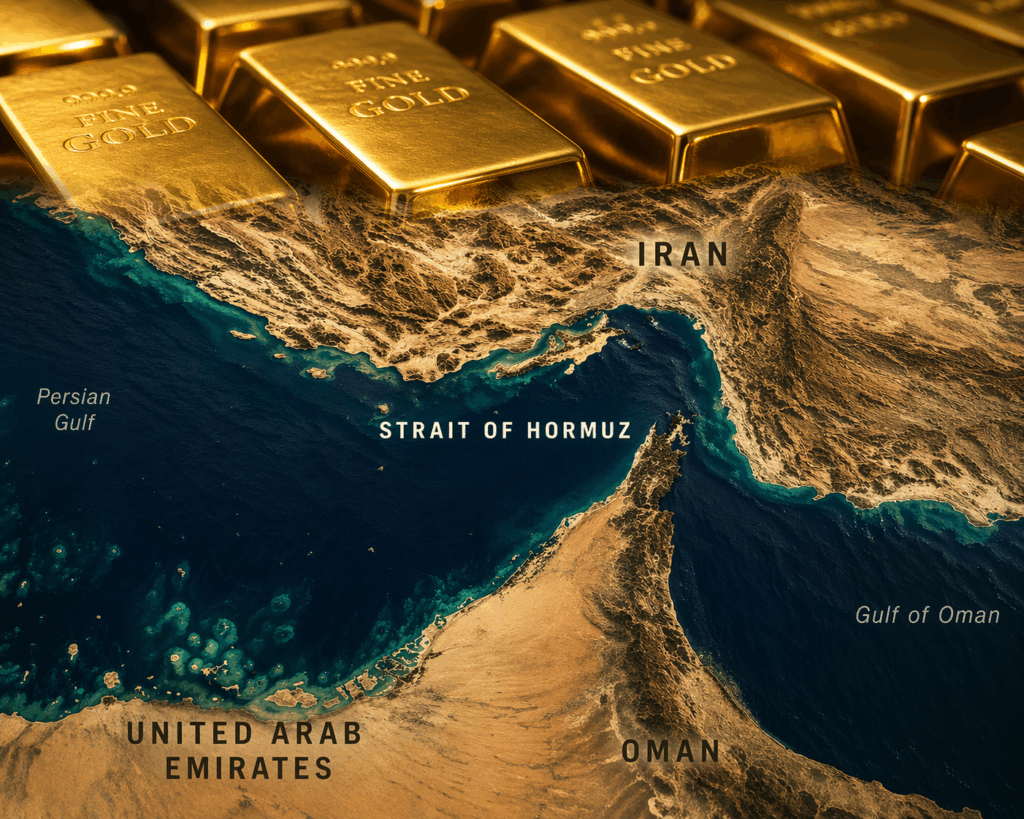
Gold prices climbed close to a one-month high after Iran announced the reopening of the Strait of Hormuz, a key global oil transit route, boosting investor sentiment and reshaping commodity market dynamics.
The reopening follows a temporary ceasefire in the Middle East, allowing commercial shipping to resume through the strategically vital waterway. The development led to a sharp decline in oil prices, easing inflation concerns and supporting demand for gold as a safe-haven asset.
Spot gold rose nearly 1% to around $4,830 per ounce, while futures also recorded gains, putting the precious metal on track for a strong weekly performance. Analysts noted that a weaker U.S. dollar and falling energy prices further enhanced gold’s appeal to global investors.
Market experts say the reopening of the Strait of Hormuz—a route that handles roughly 20% of global oil trade—has reduced immediate supply concerns in energy markets, but ongoing geopolitical uncertainty continues to support gold prices.
Despite easing tensions, the situation remains fragile. Iran has indicated that shipping is subject to certain conditions and could be disrupted again if the broader conflict escalates. This lingering uncertainty has kept investors cautious, maintaining steady demand for gold as a hedge against potential volatility.
Analysts suggest that if geopolitical risks persist alongside expectations of interest rate cuts, gold could continue its upward trajectory and potentially test new record levels in the near term.
The recent rally underscores gold’s enduring role as a safe-haven asset during periods of geopolitical instability, even as broader markets react positively to signs of de-escalation in the Middle East.