

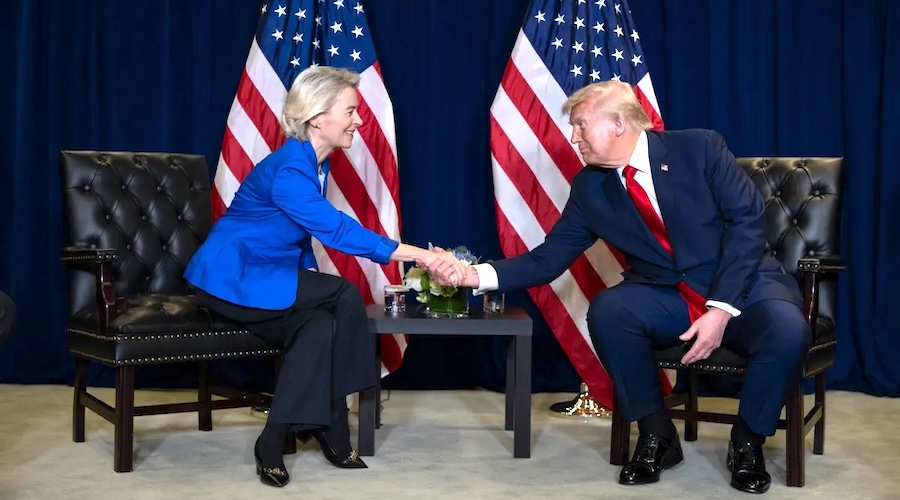
The European Union and the United States are nearing a landmark agreement on critical minerals, aimed at reducing their reliance on China and strengthening supply chain resilience for key industrial resources.
According to officials familiar with the discussions, the proposed pact focuses on securing access to essential minerals such as lithium, cobalt, nickel, and rare earth elements—materials that are crucial for electric vehicles, renewable energy technologies, and advanced manufacturing. The agreement is expected to promote cooperation in sourcing, processing, and recycling these resources.
The move comes amid growing geopolitical tensions and increasing concerns over China’s dominance in the global critical minerals supply chain. China currently controls a significant share of processing capacity for many of these materials, giving it considerable leverage over global markets.
Under the proposed framework, both sides aim to align regulatory standards, facilitate cross-border investments, and support joint ventures in mining and refining projects. The pact may also include provisions to ensure that minerals sourced meet environmental and labor standards, reflecting a broader push toward sustainable supply chains.
Officials suggest that the agreement could help European companies qualify for benefits under US clean energy incentives, particularly those linked to electric vehicle production. This would mark a significant step in transatlantic cooperation on industrial policy and green energy transition.
Industry experts believe the pact could reshape global supply chains by encouraging diversification away from China and boosting investment in alternative sources across Africa, Latin America, and Australia. However, they also caution that building new supply networks will take time and require substantial capital.
The development highlights the strategic importance of critical minerals in the global energy transition and underscores the increasing alignment between Western economies in addressing supply chain vulnerabilities.
As negotiations approach their final stages, the agreement is expected to play a pivotal role in shaping the future of the global minerals market and the broader clean energy ecosystem.