
China Extends Critical Mineral Export Reprieve for US Buyers Until January 2027 Amid Trade Tensions

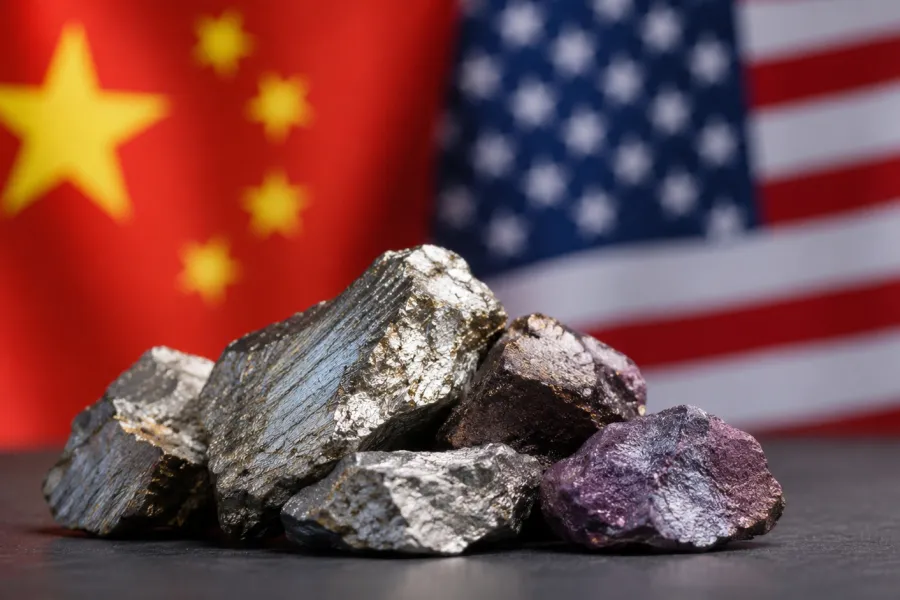
Beijing/Washington: China has extended the suspension of stricter export restrictions on several critical minerals destined for the United States until January 27, 2027, providing temporary relief to American manufacturers and technology companies dependent on Chinese supplies.
China’s Ministry of Commerce announced the decision on November 24, 2026, extending the existing suspension that was scheduled to expire on November 27. The move covers shipments of gallium, germanium, antimony and certain superhard materials, along with tighter end-user and end-use checks on selected graphite products.
The decision comes amid continuing trade negotiations between Washington and Beijing and reflects efforts by both countries to maintain a fragile trade truce.
Critical Minerals Vital for US Technology Industries
The minerals covered by the suspension play an important role in several strategic industries.
Gallium and germanium are essential materials used in semiconductor manufacturing, advanced electronics, fibre-optic communications, infrared equipment and solar technologies.
Antimony is widely used in batteries, flame retardants, industrial alloys and defence-related applications. Graphite is a major component of lithium-ion batteries used in electric vehicles and energy storage systems.
The availability of these materials is particularly important for American manufacturers seeking reliable supplies for advanced technology and industrial production.
China Maintains Strong Control Over Global Mineral Supply
China holds a dominant position in the global processing and refining of several critical minerals.
According to industry estimates, China accounted for approximately 99% of global refined gallium production, 95% of refined graphite output and 74% of refined antimony production.
This concentration gives Beijing considerable influence over international supply chains, particularly in semiconductor manufacturing, electric vehicles, renewable energy and defence technologies.
The United States remains heavily dependent on imported supplies of several of these materials, making export restrictions a significant concern for American industries.
Background: US-China Trade Dispute
China introduced tighter restrictions on exports of certain critical minerals in December 2024 in response to Washington’s restrictions on Chinese semiconductor-related technologies.
The measures initially included restrictions on exports of certain dual-use materials to American buyers. Beijing subsequently suspended parts of these restrictions following trade negotiations between US President Donald Trump and Chinese President Xi Jinping.
The latest extension continues that temporary arrangement for another two months.
However, China has not completely removed its export-control framework. Export licensing requirements remain applicable to controlled products, and restrictions on supplies intended for US military users or military purposes continue.
Relief for American Semiconductor and EV Manufacturers
The extension could provide greater certainty for US manufacturers that depend on Chinese mineral supplies.
Semiconductor producers, battery manufacturers, electronics companies and renewable energy businesses may benefit from the additional time to secure raw materials and manage procurement requirements.
However, the temporary nature of the suspension means companies will continue to face uncertainty about future supply arrangements.
What It Means for Global Mineral Markets
China’s decision highlights the growing importance of critical minerals in international trade and geopolitical relations.
Countries around the world are accelerating efforts to diversify mineral supplies, develop domestic processing capabilities and invest in recycling technologies to reduce dependence on concentrated supply chains.
For the United States, developing alternative sources of gallium, germanium, graphite and antimony remains an important strategic priority.
The latest extension offers temporary relief to American buyers, but the broader competition between Washington and Beijing over semiconductor technology, industrial supply chains and critical mineral resources remains unresolved.
The next major deadline will be January 27, 2027, when the extended suspension is scheduled to expire unless Beijing announces another extension.