

Support CleanTechnica’s work through a Substack subscription, on Patreon, or on Stripe. Help us produce all of the high-quality, original content we publish week after week despite the challenges of content-scraping AI, antisocial media, inflation, and other hurdles.
Fossil fuels are slowly beginning to lose their grip on the global transportation sector, with one key omission: rocket fuel. The rocket fuel conundrum has earned an uptick in attention in recent years, now that rocket launches, once rare, are becoming as commonplace as rush hour traffic. The Elon Musk venture SpaceX, for example, is building new natural gas pipelines in order to produce its own methane-based propellant, needed to sustain the launch of many thousands of rockets in the coming years.
More Natural Gas For More Rockets
Not all rocket fuel is methane-based, but that’s where some aerospace firms, including SpaceX, have landed in the pursuit of space domination. Methane is processed from natural gas, stripping away nitrogen and other impurities. Liquefied and mixed with liquid oxygen, it becomes a powerful propellant.
With its future volume of launch operations in mind, SpaceX aims to exercise as much control as possible over its fuel supply. The company is investing in its own natural gas pipelines and on-site fuel production facilities to help ensure that the taps don’t run dry, though it still relies on the gas industry to find the stuff and bring it up from the ground.
SpaceX has already been sucking up a copious amount of natural gas for its existing operations in Texas and Florida. “SpaceX (SPCX) is emerging as one of the largest new customers for natural gas,” reported the oil and gas analytics firm East Daley in October.
“Unlike Falcon 9, which burns rocket-grade kerosene and liquid oxygen, Starship creates a direct link between launch activity and natural gas consumption. SPCX plans to process and liquefy pipeline gas into liquid methane to fuel the rockets,” East Daley elaborates.
As described by East Daley, the SpaceX subsidiary Coastal Connect Services is planning a 32.4-mile natural gas pipeline to hook up SpaceX operations in Cape Canaveral, Florida with existing infrastructure jointly owned by Kinder Morgan and Energy Transfer.
Meanwhile, at the company’s launch site and newly incorporated (as of 2025) City of Starbase in Cameron County, Texas, plans are in motion for SpaceX affiliate Lone Star Mineral Development to connect the new 8-mile “Starpipe” natural gas pipeline with another 145-mile pipeline currently being built by the firms WhiteWater, Enbridge, and MPLX. Starpipe is expected to begin shuttling natural gas into Starbase Texas early next year.
Another Starbase City Is Coming
The two pipeline projects come alongside word that SpaceX has nailed down approvals for parts of a new $100 billion project that expands the company’s US footprint into another combination city-and-launch-site under the name of Starbase, Louisiana. The new city will presumably also require a reliable supply of natural gas for on-site rocket fuel production.
For the record, Starbase, Louisiana is not part of the educational non-profit organization STARBASE Louisiana, an affiliate of the national STARBASE program of the US Department of Defense, aimed at stimulating interest in STEM (Science, Technology, Engineering, Mathematics) topics among 5th grade students. The Louisiana branch of STARBASE is located Barksdale Air Force Base in Bossier Parish, in the northwestern part of the state.
Starbase, Louisiana will take up 125,000 acres of land at Pecan Island in a marshy region along the southern coast in Vermilion Parish, where plans are being laid for 30 launches per day. More than a dozen launch towers will eventually sprout up at the site, where the operation will include producing rocket fuel.
If you’ve gotten wind of the project under the name “Osprey,” you’re not dreaming. The new city was reportedly code-named “Project Osprey” during initial discussions with public officials. As described by the Gulf State News affiliate WWNO (New Orleans Public Radio) on November 11, Project Osprey was shrouded in secrecy during the initial negotionas, with “dozens” of local officials signing non-disclosure agreements that limited what they could say about the project.
The Osprey code name also reportedly enabled Vermilion Parish officials to sidestep public participation in ostensibly public hearings on the Starbase, Louisiana project earlier this year. Louisiana Governor Jeff Landry finally let the cat out of the bag in a public announcement in August. Local residents and the nonprofit organization Vermillion Citizens coalition have already filed a lawsuit against the project, alleging that parish officials approved parts of Starbase, Louisiana in violation of the state’s Open Public Meetings Law.
More New Natural Gas For The USA
If and when shovels hit the ground on Starbase, Louisiana, the Trump administration is taking steps to help ensure that natural gas producers in the US come through with the goods — not just for SpaceX, of course, although the firm has become a market-mover in the gas industry as noted by East Daley.
On November 10, for example, the US Department of Energy announced the finishing touches on a $480 million loan in support of Project Elkhorn, an endeavor under the umbrella of the oil and gas firm Arena Energy. Project Elkhorn covers the modernization of 22 existing platforms off the Louisiana coast — coincidentally or not, the same state that expects to host the new Starbase city.
Arena launched in 1999 with a focus on revitalizing mature oil and gas fields. According to the Energy Department, Project Elkhorn will ramp natural gas production up to 77 million cubic feet per day at peak production among the 22 platforms, alongside up to 38,600 barrels of oil per day. By way of contrast, the 22 platforms currently produce 30,000 barrels of oil per day. Over the lifespan of Project Elkhorn, the collective total is expected to add 25 million barrels of oil and 250 billion cubic feet of natural gas to the US fossil energy roster.
Natural Gas Keeps Clouding The Tesla Glow
As CEO of the leading EV maker Tesla, Elon Musk has earned his share of credit for rescuing electric cars from the dustbin of automotive obscurity and vaulting them into the mainstream mobility market of today — if not so much here in the US, then certainly overseas. Musk’s other ventures, on the other hand, threaten to offset, if not override, whatever sustainability gains are to be made from EVs.
In addition to SpaceX, Musk’s xAI data centers have also contributed to spiking demand for natural gas. Last year word dropped that Musk’s Colossus data center in Memphis, Tennessee trucked in approximately three dozen industrial-sized gas generators to power the site, at least 15 of which were already in operation without an air quality permit. The Southern Environmental Law Center has been among those raising the alarm over toxic emissions from the generators, which lack the pollution controls required of permanent power plants.
Natural gas also factors into a new data center planned for the SpaceX-backed City of Starbase, Texas, which sits adjacent to Brownsville. The city of Brownsville recently imposed a temporary moratorium on new data center construction. According to ABC News affiliate KVUE and other sources, earlier this year Elon Musk asked Brownsville officials to de-annex a parcel of land at its outskirts, evidently in order to building a $24 billion data center at the site along with a new gas-fired power plant for a new data center to be located in Starbase. The request was granted, enabling the project to skirt around the Brownsville moratorium.
Starbase city officials are scheduled to conduct a public hearing on the new data center on December 9, where presumably they will decide whether or not the project can make due with gas generators until a full gas power plant with appropriate pollution controls can materialize.
What Are The Options?
Over and above the rocket fuel issue, grassroots activists, environmental organizations, and researchers have been raising the alarm over the impact of Starbase in Texas for years, tracking significant harm to local public recreation resources as well as wildlife habitats. Similar concerns have surfaced around SpaceX’s plans for Starbase, Louisiana.
Of course, nobody seriously expects the whole domestic rocket business to stop in its tracks. The issue is one of mitigating climate and biodiversity risks, developing projects that avoid pummeling vulnerable communities with additional public health risks, and investing in more sustainable options including alternative rocket fuels.
Keep an eye on the aviation industry for some hints at the future of sustainable propellants. Airline stakeholders have been focusing on SAF, generally meaning a bio-based equivalent of kerosene jet fuel. However, the going has been slow, and it’s even slower in the field of propellants. The European Space Agency, for example, has been exploring green propellants for space operations for 25 years, with little to show for its efforts.
More recently, though, aviation stakeholders have begun turning to the emerging electrofuels or “solar fuels” industry, meaning fuels synthesized from captured carbon and green hydrogen, with solar and other renewables powering the operation. The green hydrogen industry has been struggling for traction, but signs of scaleup have finally emerged, with e-kerosene jet fuel in play along with green hydrogen. Honda, for one, is envisioning a fleet of reusable rockets propelled by renewable fuels, and at least two Chinese firms are also working the reusable rocket angle.
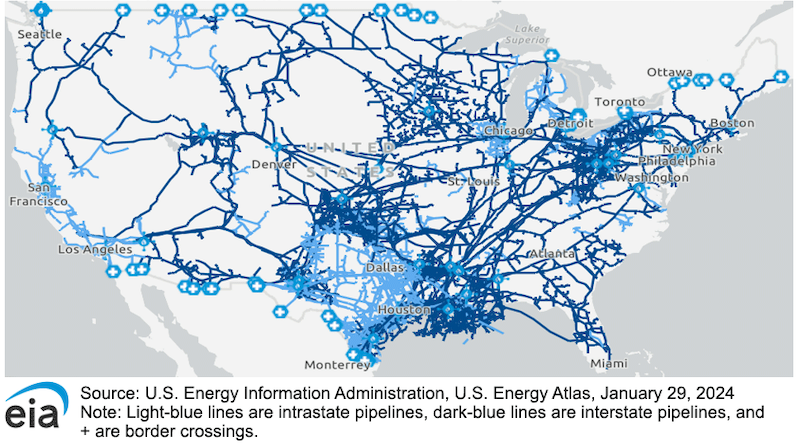
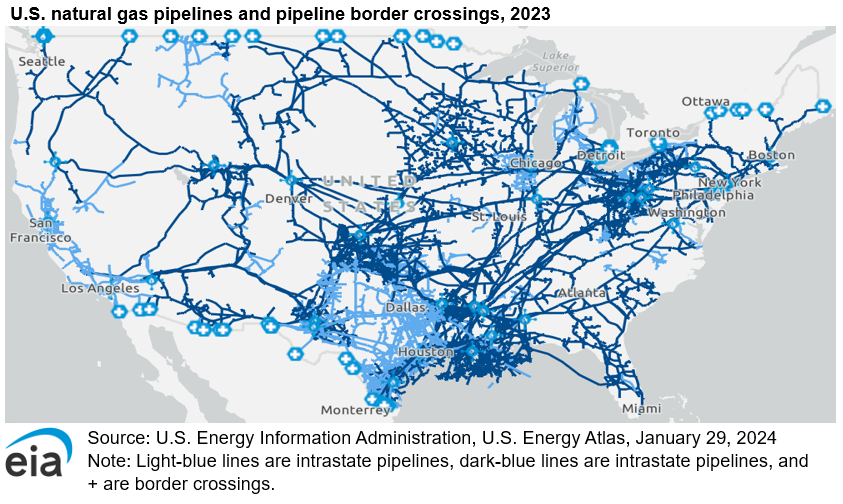
Image: SpaceX is among the industrial-scale consumers of natural gas adding more pipes to the nation’s sprawling network of gas pipelines, which the startup needs to ensure a steady supply of fuel for its growing fleet of rockets (courtesy of US Energy Information Agency).
Sign up for CleanTechnica’s Weekly Substack for Zach and Scott’s in-depth analyses and high level summaries, sign up for our daily newsletter, and follow us on Google News!
Have a tip for CleanTechnica? Want to advertise? Want to suggest a guest for our CleanTech Talk podcast? Contact us here.
Sign up for our daily newsletter for 10–15 new cleantech stories a day. Or sign up for our weekly one on top stories of the week if daily is too frequent.

CleanTechnica uses affiliate links. See our policy here.
CleanTechnica’s Comment Policy