
Support CleanTechnica’s work through a Substack subscription, on Patreon, or on Stripe. Help us produce all of the high-quality, original content we publish week after week despite the challenges of content-scraping AI, antisocial media, inflation, and other hurdles.
As the world is on track to exceed 1.5 degrees Celsius of global warming, climate action must double down but also go beyond emissions cuts to prioritize adaptation, respond to loss and damage, and confront growing inequality.
For decades, climate policy has been dominated by a central question: How do we avoid exceeding 1.5 degrees Celsius of global warming above preindustrial levels? An overshoot world—where warming exceeds 1.5 degrees Celsius before potentially declining—means more than higher temperatures; it means escalating risks to the communities, ecosystems, and species already bearing the brunt of climate change, with catastrophic consequences for many coastal regions and small island states.
The United Nations Environment Programme (UNEP) report on climate overshoot challenges us to confront a reality that many policymakers have been reluctant to fully acknowledge: The world will exceed 1.5 degrees Celsius. Decades of insufficient climate action have placed us in this predicament.
Aggressive emissions reductions can limit how far and for how long global warming exceeds that threshold. However, a future decline in global temperatures would not erase the losses experienced along the way. That reality should sharpen global climate ambition and broaden our understanding of what climate action requires. It is equally important to prepare for and respond to the escalating impacts that communities and ecosystems will experience in the decades between crossing 1.5 degrees Celsius and hopefully returning to a temperature below it.

Adaptation at the scale that overshoot demands
One of the UNEP report’s central messages is that mitigation and adaptation are fundamentally intertwined, and both will be essential in navigating an overshoot world. The report also emphasizes the growing need for transformational adaptation: actions that go beyond incremental adjustments to fundamentally reshape systems, institutions, and development pathways in response to escalating climate risks.
Yet there is an alarming disconnect between the scale of adaptation that is needed and the reality on the ground. Many countries are still struggling to finance and implement basic adaptation measures. Adaptation finance remains grossly inadequate, national adaptation plans are underfunded, and frontline communities continue to lack the resources needed to prepare for worsening risks. The Adaptation Gap Report 2025 estimated adaptation finance needs in developing countries at up to US$365 billion per year by 2035, while international adaptation finance flows from developed countries reached just US$35 billion in 2024, only around 10 percent of what is needed.
There is reason for optimism. After decades of advocacy, adaptation is finally receiving greater recognition as a core pillar of climate action. Negotiations on the global goal on adaptation (GGA)—which aims to enhance adaptive capacity, strengthen resilience, and reduce vulnerability—have elevated adaptation within international climate discussions. Initiatives such as the Fostering Investable National Implementation (FINI) are also helping to mobilize public and private investments to scale adaptation efforts.
But overshoot forces us to think beyond closing today’s adaptation gaps.
What happens when livelihoods—particularly those connected to our food system—become untenable because of chronic drought, extreme heat, or repeated disasters? What happens when infrastructure designed for one climate must function in a dramatically different one; when transit and energy hubs become inoperable due to heat? What happens when fundamental changes in land use become unavoidable, and our forests and farmlands can’t keep up with those changes?
“The challenge is not deciding which type of climate action deserves support. We need all three: mitigation, adaptation, and responses to loss and damage.”
These are questions of transformation, requiring us to rethink how societies are organized, how development occurs, and how communities can thrive in a warmer world with greater climate impacts. The challenge is that we are asking societies to prepare for transformational adaptation before many governments have fully integrated adaptation into planning, investment, and governance.
Governments and funders—both public and private—must therefore treat adaptation as an investment in economic stability, public health, food security, water security, and human dignity, not as a secondary environmental issue. Support must be predictable, accessible, timely, and responsive to local priorities. Researchers, practitioners, governments, businesses, and communities must work together to envision, plan for, and implement systemic change, from rethinking infrastructure and land use to reshaping governance, livelihoods, and development pathways.
At COP31, progress on the GGA must be a priority. Countries must move beyond the stalled discussions to reach agreement on how adaptation progress will be measured and how implementation will be accelerated. Discussions on preparing for the next global stocktake must also grapple more explicitly with the implications of overshoot for adaptation and adaptation finance.
Make loss and damage a core pillar of climate action
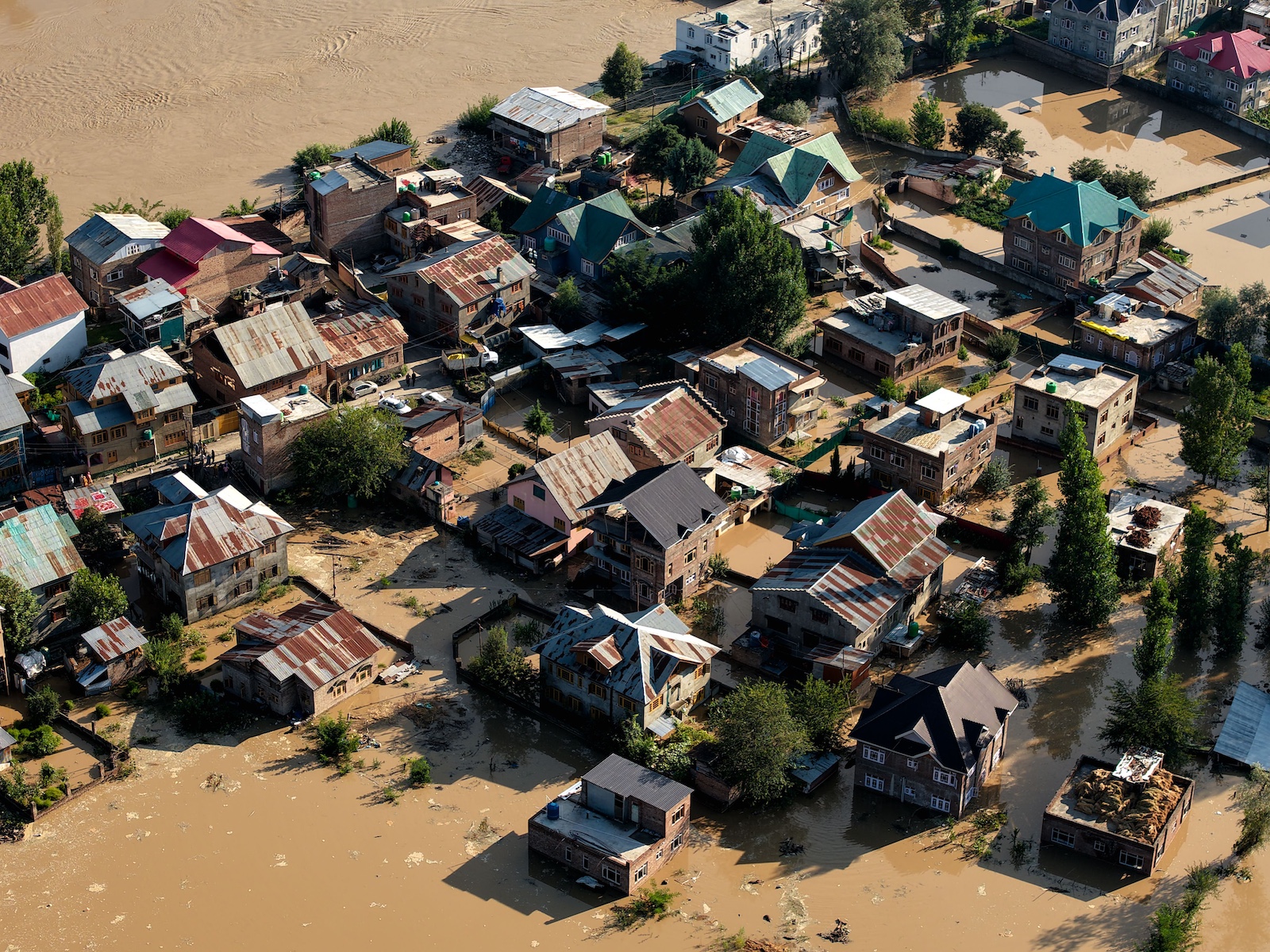
One of the most important implications of overshoot is that there are climate impacts that are unpreventable and irreversible. Some impacts exceed the capacity of households, institutions, and ecosystems to adjust, and others occur despite preparation. When communities lose lands to sea level rise, when repeated disasters force permanent displacement, when cultural heritage disappears, or when ecosystems collapse, we are no longer talking only about adaptation. We are talking about loss and damage.
Countries and communities need support for recovery and reconstruction, assistance with displacement and planned relocation, protection of livelihoods and cultural heritage, and solutions for slow-onset impacts such as sea level rise, desertification, and glacier loss. The scale of these needs is already staggering. Estimates find that loss and damage costs in developing countries could reach up to US$671 billion annually by 2030, and those figures only capture economic losses. They do not account for noneconomic losses, such as lives lost, cultural heritage erased, or permanent damage to ecosystems.
Yet climate policy discussions continue to focus primarily on the relationship between mitigation and adaptation. In an overshoot world, that is no longer enough. Responses to loss and damage must become a central component of climate action. The establishment of the Fund for Responding to Loss and Damage (FRLD) was an important step, but its success will ultimately depend on whether it mobilizes finance at the scale required and whether support reaches affected people quickly, directly, and equitably.
Loss and damage are also inseparable from questions of justice. The countries and communities contributing the least to climate change are those facing the greatest risks of irreversible harm. Small Island Developing States, Indigenous Peoples, women, low-income communities, and many countries across the Global South continue to bear disproportionate impacts despite contributing little to the problem.
Climate change has always raised questions about who bears the costs, who receives protection, and who gets left behind. Overshoot makes those questions even more urgent. If we are serious about navigating an overshoot world, loss and damage can no longer remain at the margins of climate policy. It must become a core pillar of climate action.
At COP31, loss and damage must be integrated across the full climate agenda rather than confined to a stand-alone negotiation track. Parties should move beyond procedural discussions and focus on delivering finance through the FRLD and other loss and damage funding arrangements at the scale required, with resources flowing quickly from pledges to actual disbursement. Access to support must become faster, more predictable, and responsive to the needs of affected communities. Discussions under the next global stocktake should also place loss and damage at the center of assessing collective progress, recognizing that overshoot will bring unavoidable and irreversible impacts that demand dedicated responses. Doing so will require rethinking current international approaches to climate finance and accountability, ensuring that support for loss and damage is treated as a core pillar of climate action alongside mitigation and adaptation.
From competition to collective climate action
One of the biggest barriers to addressing overshoot is the current approach to competing climate action. Too often, climate discussions become debates about mitigation versus adaptation and adaptation versus loss and damage. Overshoot makes it clear that this is the wrong conversation.
The challenge is not deciding which type of climate action deserves support. We need all three: mitigation, adaptation, and responses to loss and damage. These are mutually reinforcing responsibilities, not competitors. For climate finance, the problem is not only how we divide the pie; the problem is that the pie itself remains sorely inadequate for the challenges ahead of us. An overshoot world requires a dramatic expansion of overall climate finance that must be equitably distributed to mitigation, adaptation, and responses to loss and damage.
The findings from the UNEP report should serve as a blaring alarm—not only because overshoot is a reality, but because it forces us to confront whether our current systems, institutions, financing mechanisms, and political processes are capable of delivering the transformation required. An overshoot world is fundamentally about people: whether societies can adapt, how we respond to loss and damage, and whether the greatest burdens continue to fall on those who contributed the least to the problem.In an era of overshoot, our attention, ambition, and investment must finally match that reality.
By Dr. Adelle Thomas, Senior Director, Climate Adaptation, Environmental Health, NRDC
Featured image by Imad Clicks
Sign up for CleanTechnica’s Weekly Substack for Zach and Scott’s in-depth analyses and high level summaries, sign up for our daily newsletter, and follow us on Google News!
Have a tip for CleanTechnica? Want to advertise? Want to suggest a guest for our CleanTech Talk podcast? Contact us here.
Sign up for our daily newsletter for 10–15 new cleantech stories a day. Or sign up for our weekly one on top stories of the week if daily is too frequent.


CleanTechnica uses affiliate links. See our policy here.
CleanTechnica’s Comment Policy