

Support CleanTechnica’s work through a Substack subscription, on Patreon, or on Stripe. Help us produce all of the high-quality, original content we publish week after week despite the challenges of content-scraping AI, antisocial media, inflation, and other hurdles.
In the public relations business, they say any attention is good attention. Tesla CEO Elon Musk put that old adage to the test with much success over the years. More recently, though, Musk has been pushing his luck. Exhibit A is the long-awaited official re-launch of the Tesla Roadster EV, a shoutout to the to the original 2006 Tesla Roadster. Even if the launch proceeds as planned, the news has already been buried under a rising avalanche of ill will directed towards Musk himself.
Will The Flying Car Actually Fly?
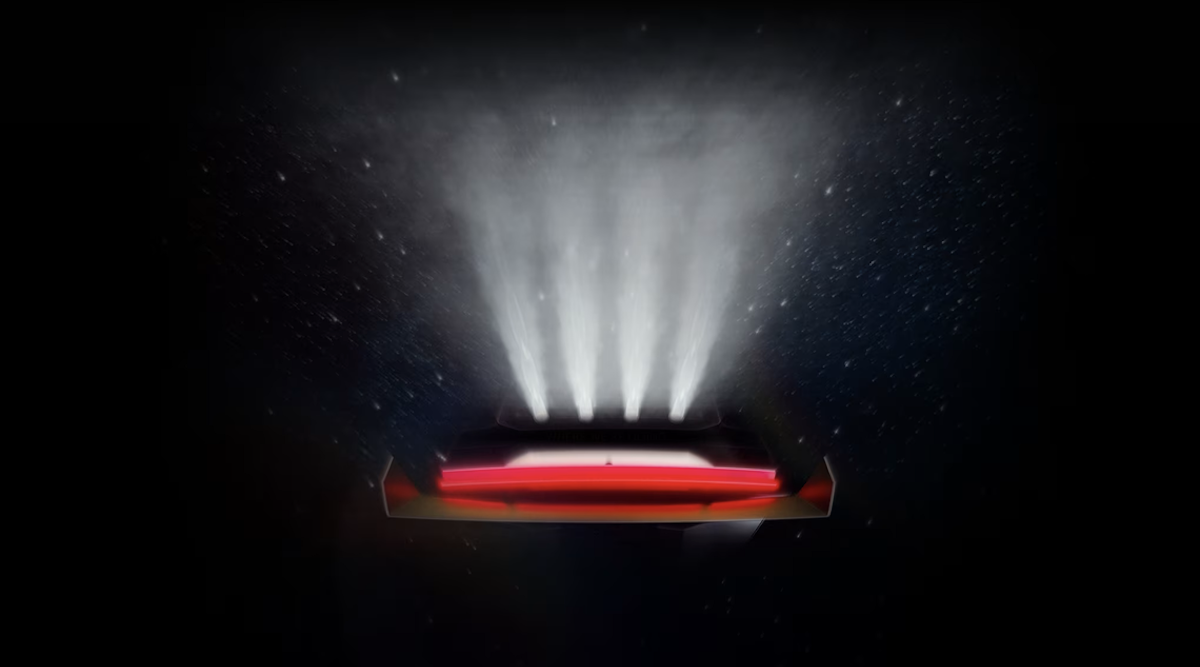
That’s a good question. As part of the hype surrounding the Tesla Roadster re-launch, Musk has described the event as among the most “exciting product unveils ever,” leading fans to speculate that the car will fly, or at least hover. Back in August, for example, the news organization The Information fed the speculation hopper under the headline, “Tesla Nears Unveiling of Radical New ‘Flying’ Roadster.”
Adding fuel to the speculation fire, the launch event is to be held on the property of another Musk venture, SpaceX, in Waco, Texas. According to The Information’s information, the event could feature a Roadster equipped with thrusters designed in collaboration with SpaceX.
That remains to be seen. The initial launch date of October 1 was pushed back to the 15th on account of the weather, leading some to wonder if the whole flying thing was an over-promise. Still, others have withheld judgement. “Stormy weather would’ve likely hampered the Roadster’s rumored hovering or flying ability,” Yahoo Finance Lead Auto Reporter Pras Subramanian neutrally observed on October 14.
Musk himself has tempered the expectations for something that resembles flight. “It’ll be a banger. Excitement guaranteed. Success is not guaranteed, but excitement is,” he said during an appearance at the All-In podcast on September 15.
Flying Car Meets New Flareup As Starlink Stabs Ukraine In Back
While the automotive press has its eyes trained on Waco, Texas, the rest of the media has been focusing on Musk’s other activities.
On October 8, Ukraine President Volodymyr Zelensky urged the US to help his nation defend against Russian attacks, partly by expanding military applications for Musk’s Starlink Internet service. A bipartisan Congressional delegation to Ukraine supported the ask, but to no avail. On October 14, multiple news organizations reported that SpaceX has limited Ukraine’s use of Starlink, crippling the country’s ability to defend its civilians from Russian attacks (see more background on the war here).
When challenged, Musk promptly used his social media platform X (formerly Twitter) to deflect responsibility for the decision to US President Donald Trump. Maybe so, but NATO member Poland points out that the US has not been footing the bill for Starlink service in Ukraine. Poland is paying for Starlink, to the tune of $50 million per year. “As your European customers, we are watching you,” Poland Foreign Minister Radoslaw Sikorski warned Musk on October 14.
This is not the first time Sikorski warned Musk that NATO will turn elsewhere for military-grade Internet service if Starlink is manipulated to undermine Ukraine’s defense. “The ethics of threatening the victim of aggression apart, if SpaceX proves to be an unreliable provider we will be forced to look for other suppliers,” Sikdorski stated on social media in March of 2025.
In response, Musk reminded Sikdorski that Starlink is “the backbone of the Ukrainian army.”
“Their entire front line would collapse if I turned it off,” Musk added during that exchange.
Well, that was then. Now it’s 2026. The news organization Euromaidan is among those reporting that China and other states are poised to share Starlink-type technology with Russia, and that Russia is developing a version of its own. So is Ukraine, for that matter. If Musk wants to hold onto those European customers, he’s going to have a tough row to hoe.
Musk Outdoes Self In 2026 Elections
Make of that what you will. In the meantime, Ukraine is still fighting back with or without the support of Starlink, Musk, or Trump.
As for deflecting responsibility for the Starlink limitations onto Trump, Elon Musk has some ‘splaining to do. After all, Musk emerged as a prominent Trump supporter during the President’s first term. He bankrolled the President’s successful re-election campaign in 2024, personally claiming credit for the win.
Not resting on his laurels, in 2024 Musk founded a super PAC (Political Action Committee) with any eye on protecting the Republican majority in Congress in the 2026 mid-term election cycle, thereby cementing Trumpian policy, foreign and domestic, into place for another two years.
The New York Times has been tracking the spend. “The world’s richest person has quietly become by far the biggest known midterm donor,” the Times summarized on October 10.
“Elon Musk has quietly funneled more than $276 million into Republican groups and his super PAC since the start of July, building a huge turnout operation to help the party battle headwinds in the midterm elections,” the Times added.
The figure includes a total of $158 million in donations to the Senate Leadership Fund super PAC over the summer, which the Times describes as “one of the largest political donations in American history.”
And, that’s just for starters. The Times estimates that Musk has already given $366 million to federal committees during the 2025-26 election cycle, far more than the $290 million he reportedly staked to boost Trump back into office in 2024. That’s just counting the disclosed donations. The Times indicates that an additional pile of dollars exists in donations hidden from the public eye.
Money aside, Musk’s America PAC has also been accused of disseminating inaccurate information to voters. On October 10, CNN reported that America PAC sent confusing messages to a group of voters in Colorado, setting off alarm bells among county elections officers and the voters themselves. Officials in Washington State have also issued public warnings about America PAC’s tactics.
“In the midterms, Musk’s team is focused on ground-level mobilization, with millions of dollars going to digital ads, phone messaging and printing expenses, federal records show,” CNN noted.
The effort also includes “VoteSafe.Org,” a website that bills itself as a nonpartisan voter information clearinghouse but evidently exists to collect data for use by America PAC. Voting rights organizations have warned voters to steer clear of the site and contact their local elections offices if they have questions about their registration.
Another Black Eye For Musk
Speaking of the public eye, Elon Musk’s personal and political behavior does not necessarily spell trouble for Tesla. Regardless of the impact on brand reputation, Tesla continues to hold a leading position in the global auto market.
Still, the bad attention kept piling up this past week. On October 12, the Washington Post chronicled the aftermath of Elon Musk’s tenure as the head of Trump’s “DOGE” budget-cutting office during the first months of 2025. As may be expected, the DOGE staffers hired by Musk went on to benefit from their government connections. “DOGE alumni have leveraged their government experience, raising at least half a billion dollars for firms spanning cyberwarfare, AI and data centers,” the Post observed under the headline, “They came to Washington to dismantle the government. Now, they’re profiting from it.”
Therein lies the rub. The “swinging door” to private sector enrichment is nothing new in government, but Musk’s tenure at DOGE was atypical. Though presented as a money save for taxpayers, DOGE summarily fired thousands of federal employees, in an operation that was soon revealed to have not saved taxpayers anything at all.
The Trump-Musk continuum was also on full display on October 13, when Bloomberg Government reported that DOGE failed to curtail government spending. As may be anticipated, the White House simply transferred excess spending to contractors. “Federal procurement spending is projected to cross the $1 trillion threshold for the first time,” Bloomberg reported, noting that Trump’s immigration and defense policies bore some responsibility for the swing-and-a-miss on spending.
“The record spending via federal contracts in fiscal 2026 reflects the steep cost of the administration’s priorities, and stands out after the now-dormant Department of Government Efficiency sought to slash government programs after Trump returned to office,” Bloomberg added.
Bloomberg also cited a recent Government Accountability Office indicating that DOGE’s claim of saving $110 billion for taxpayers cannot be verified.
Never Mind All That, Look At My Flying Car!
Capping off the week of bad attention is award-winning filmmaker Alex Gibney, whose new “Musk” documentary is the opposite of a love letter. The film debuted in the US market in New York and Los Angeles on October 9, with wide release across the US beginning on Friday the 16th.
For what it’s worth, regardless of all the negative attention Elon Musk will simply carry on being Elon Musk, as the unveiling of the new Tesla Roadster demonstrates. At a time when the electorate is spitting mad over the cost of fuel, food, and everything else, why would an automaker choose this moment to launch a new $200,000 EV ($5,000 down to reserve a spot, another $45,000 due within 10 days to really reserve it)?
Well, why not. After all, what does he got to lose?
Photo: Tesla CEO Elon Musk has promised that the October 15 launch of the new Tesla Roadster EV will be an exciting event, whether or not things go as planned (screenshot courtesy of Tesla).
Sign up for CleanTechnica’s Weekly Substack for Zach and Scott’s in-depth analyses and high level summaries, sign up for our daily newsletter, and follow us on Google News!
Have a tip for CleanTechnica? Want to advertise? Want to suggest a guest for our CleanTech Talk podcast? Contact us here.
Sign up for our daily newsletter for 10–15 new cleantech stories a day. Or sign up for our weekly one on top stories of the week if daily is too frequent.

CleanTechnica uses affiliate links. See our policy here.
CleanTechnica’s Comment Policy