

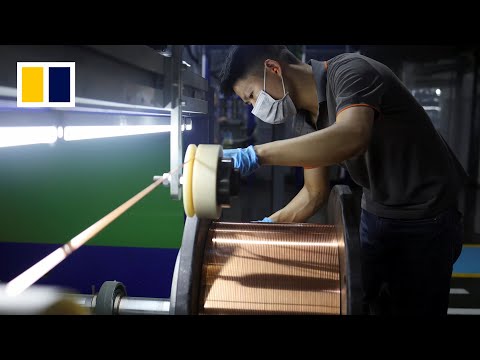
Beijing, September 28, 2026: China’s refined copper production is on track to record its slowest annual growth in decades, as smelters face tightening supplies of copper concentrate and scrap, while weaker sulphuric acid prices reduce the profitability of refining operations, according to analysts.
Analysts at Wood Mackenzie and Zijin Tianfeng Futures expect China’s refined copper output to increase by only around 3% to 3.4% in 2026, compared with a 10.4% increase in 2025. Reuters’ review of official data indicates that such growth would be the lowest since at least 2000.
Raw-material shortages pressure smelters
A major factor behind the slowdown is a prolonged shortage of copper concentrate, the primary feedstock used by smelters. The shortage has been aggravated by disruptions at several major mines, while global smelting capacity has expanded faster than the availability of mined copper.
Chinese smelters have increasingly turned to alternative feedstocks, particularly scrap copper. Scrap accounted for 25.2% of feedstock used in Chinese refined copper production during the first half of 2026, up from the same period a year earlier.
However, analysts say scrap availability is now also tightening. A tax-compliance crackdown has reduced scrap supplies, limiting the ability of smelters to compensate for the shortage of copper concentrate.
Lower sulphuric acid prices add to pressure
Smelter economics have also deteriorated as sulphuric acid prices, an important by-product revenue source, have declined. According to analysts cited by Reuters, sulphuric acid prices fell 11% in September, making it harder for smelters to offset extremely low copper concentrate processing charges.
Seven Chinese smelters are reportedly planning maintenance lasting between 30 and 60 days during October and November, with the shutdowns expected to reduce refined copper production by around 80,000 metric tons.
Implications for global copper prices
The expected slowdown in Chinese production could tighten the global refined copper market during the final quarter of the year. China is the world’s largest copper consumer and a major producer, meaning changes in its smelting output can have significant effects on international supply and prices.
CRU analyst Brian Peng projected an average copper price of around $14,500 per metric ton in the fourth quarter, compared with a range of approximately $11,700-$14,875 so far, although copper prices will also depend on global demand, mine supply and broader economic conditions.
The situation highlights a growing mismatch between China’s large smelting capacity and the availability of raw materials needed to operate it, a trend that analysts expect to remain an important factor in the copper market.