

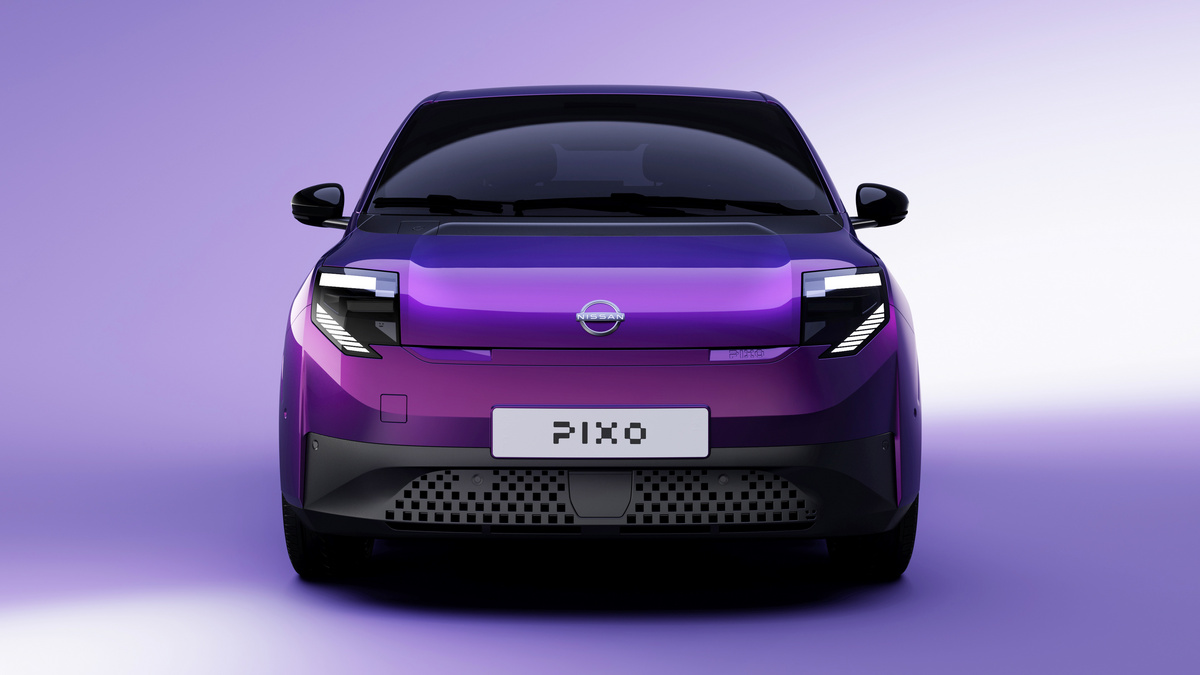
NISSAN Motor Corporation announced on September 23, 2026, its strategic return to the European A-segment with the unveiling of the all-new Nissan Pixo electric city car.
Built under the company’s “Mobility Intelligence for Everyday Life” roadmap, the Pixo represents Nissan’s push to lower entry barriers for urban electric mobility through targeted engineering, lower battery cost structures, and shared manufacturing frameworks within the Renault-Nissan-Mitsubishi Alliance. Nissan has not announced any plans to introduce or market the Pixo in the Japanese domestic market.
Photo from Nissan Motor Co.
Designed specifically for tight European urban environments, the Pixo measures 3,796 millimeters in length with a 2,492-millimeter wheelbase, offering a turning circle of 9.9 meters. Despite its compact exterior dimensions, the vehicle provides a luggage capacity of 356 liters with the rear seats upright, expanding to 1,221 liters with the rear row folded.
The powertrain features a 60 kW electric motor paired with a 27.5 kWh lithium iron phosphate (LFP) battery pack, marking the first application of LFP chemistry in a European Nissan model. The setup delivers a WLTP-certified driving range of up to 259 kilometers on a single charge. Charging infrastructure support includes a 50 kW DC rapid charging standard capable of replenishing the battery from 15 to 80 percent in approximately 28 minutes, alongside standard 11 kW AC bi-directional charging.
The Pixo was developed in collaboration with Renault, leveraging shared platform components to reduce development timelines and production overhead. Manufacturing will take place at Renault’s Novo Mesto facility in Slovenia. Vehicle onboard electronics include a digital cockpit integrated with Google built-in services, automated emergency braking, lane-keeping assistance, and Nissan’s e-Pedal system.
Official pricing details and market-by-market specifications are scheduled for release in December, with initial customer deliveries across European markets expected to begin in early 2027.