
Denison Mines Advances Canada’s First In-Situ Recovery Uranium Mine with Phoenix Project Construction

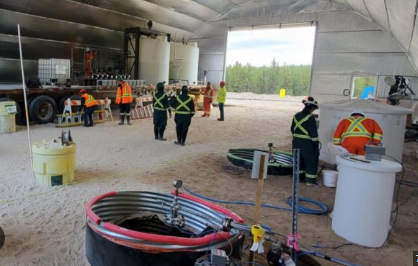
Canadian uranium developer Denison Mines Corp. has taken a final investment decision (FID) to proceed with construction of the Phoenix in-situ recovery (ISR) uranium mine at its Wheeler River project in northern Saskatchewan, marking a major milestone for the Canadian nuclear fuel sector. Construction activities are slated to begin in March 2026, with first production aimed for mid-2028, making it the first new large-scale uranium mine in Canada in over two decades.
The Phoenix project will use in-situ recovery — a method that extracts uranium by dissolving it underground and pumping the solution to the surface — a technique not previously deployed in Canadian uranium mining. Denison says this approach can deliver strong economics along with sustainability advantages compared with conventional mining methods.
The Wheeler River site hosts two high-grade uranium deposits, Phoenix and Gryphon, discovered in 2008 and 2014 respectively, and represents the largest undeveloped uranium asset in the Athabasca Basin, one of the world’s most prolific uranium regions. Denison holds a 90 % operating interest in the project, with JCU (Canada) Exploration Company Limited owning the remaining 10 %.
The project has secured key regulatory approvals, including environmental assessment clearance and licences from the Canadian Nuclear Safety Commission (CNSC), allowing site preparation and construction to advance. Industry observers note that Phoenix’s path to construction reflects years of work on permitting, community engagement, and financing to bring the project to this stage.
Denison’s decision underscores growing interest in expanding uranium supply to meet rising global demand for nuclear fuel amid trends toward decarbonization and energy security. Once operational, the Phoenix mine is expected to produce a significant new source of uranium oxide, enhancing Canada’s role as a key supplier in the nuclear energy market.