
Indian Budget 2026 Signals Strong Push for Solar Power with Sharp Rise in Clean Energy Allocation

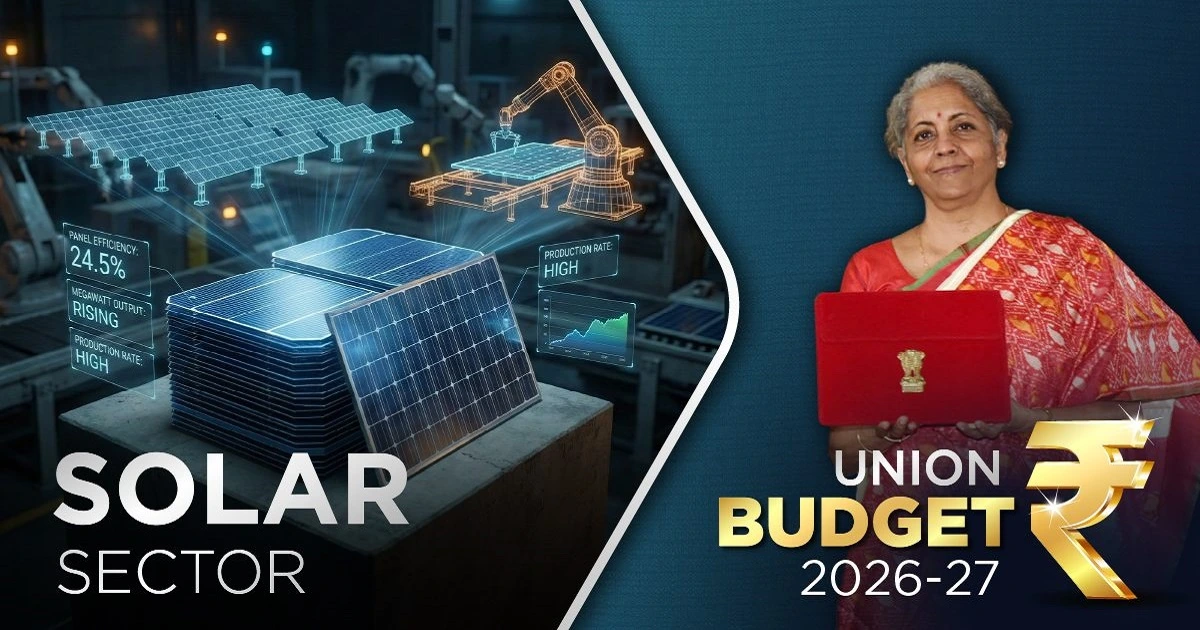
New Delhi : The Union Budget 2026 has placed solar power at the centre of India’s clean energy transition, significantly enhancing financial support for capacity expansion, grid integration, and household-level adoption. The allocation for solar power has been raised by 32% to ₹30,539 crore, underlining the government’s intent to accelerate renewable energy deployment in line with national climate and energy security goals.
A major highlight of the Budget is the ₹22,000 crore allocation for the PM Surya Ghar Muft Bijli Yojana, the flagship rooftop solar scheme aimed at providing free electricity to households through decentralized solar generation. The enhanced funding is expected to boost rooftop solar installations across urban and rural India, reduce household power bills, and create large-scale employment in installation, maintenance, and allied services.
In a parallel push to strengthen evacuation and integration infrastructure, solar grid funding has been increased by 77.5%, reflecting the government’s focus on addressing one of the biggest bottlenecks in renewable energy expansion. Higher allocations for green energy corridors and transmission networks are expected to support seamless integration of rising solar capacity into the national grid, improve reliability, and reduce curtailment risks.
The sharp rise in solar-related spending aligns with India’s long-term target of achieving 500 GW of non-fossil fuel capacity and progressing toward net-zero emissions. By prioritizing both generation and grid infrastructure, the Budget adopts a balanced approach that supports scale while ensuring system stability.
Industry stakeholders view the increased allocation as a strong policy signal that reinforces investor confidence in the renewable energy sector. The emphasis on solar power also supports domestic manufacturing under the broader self-reliance framework, as higher demand for panels, inverters, and balance-of-system components is expected to strengthen local supply chains.
Overall, Budget 2026 positions solar power as a cornerstone of India’s energy strategy, combining household empowerment, infrastructure readiness, and climate action. The substantial increase in funding reflects the government’s commitment to accelerating the clean energy transition while building a resilient and future-ready power system.