
Supreme Court to Hear Pleas on Taxation of Mineral Rights in India on May 20

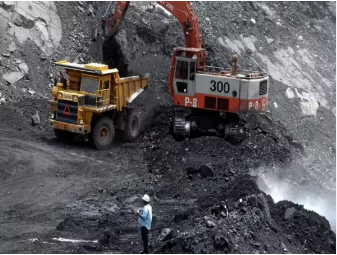
The Supreme Court of India is set to hear a series of crucial petitions on May 20 concerning the taxation of mineral rights, a case that could have major implications for India’s mining industry, state revenues, and the broader economy.
The legal dispute revolves around whether state governments have the authority to impose taxes on mineral-bearing lands and mining rights beyond the royalties already collected under central mining laws. The matter has triggered intense debate between mining companies, state governments, and constitutional experts due to its potential financial impact on the sector.
At the center of the controversy is the interpretation of constitutional provisions governing mineral resources and taxation powers between the Centre and the states. Several mining firms have argued that royalties paid under the Mines and Minerals (Development and Regulation) Act should not be treated as taxes and that additional levies imposed by states create financial uncertainty and increase operational costs.
State governments, however, contend that they possess constitutional authority to impose taxes on mineral rights and mining land usage as an important source of revenue. Mineral-rich states such as Odisha, Jharkhand, Chhattisgarh, and Karnataka are closely watching the proceedings because the outcome could significantly affect their future earnings from mining operations.
The issue gained prominence after earlier court rulings and conflicting interpretations regarding whether royalty payments constitute a tax or merely compensation for resource extraction. The upcoming hearing is expected to revisit these questions and determine the extent of state taxation powers over mineral resources.
Industry bodies have expressed concern that retrospective tax liabilities or overlapping levies could discourage investment in India’s mining and metals sector at a time when the country is attempting to expand domestic production of critical minerals, coal, iron ore, copper, and rare earth resources.
Mining companies argue that a clear legal framework is essential for long-term investment planning, particularly as India pushes infrastructure expansion, manufacturing growth, and energy transition goals requiring increased mineral production.
Legal experts believe the Supreme Court’s decision could establish an important constitutional precedent regarding the balance of fiscal powers between the central and state governments. The verdict may also influence future policies related to natural resource governance and mining sector reforms.
The hearing comes at a time when India is aggressively promoting mineral exploration and private sector participation to reduce dependence on imports and strengthen supply chains for strategic minerals used in renewable energy, electric vehicles, and industrial manufacturing.
Stakeholders across the mining, steel, power, and infrastructure sectors are expected to closely monitor the proceedings, given the potential impact on operating costs, government revenues, and future investment sentiment.
Keywords: Supreme Court mineral rights case, India mining taxation, mineral rights tax India, mining royalty dispute, SC hearing May 20, India mining sector, state tax on minerals, MMDR Act, mining industry India, mineral taxation case
NMDC Raises Iron Ore Prices by Rs 200 Per Tonne Amid Strong Demand
State-owned mining giant NMDC Limited has increased the prices of iron ore by Rs 200 per tonne, reflecting firm domestic demand and improving market conditions in India’s steel and mining sectors.
According to the latest revision, NMDC raised the price of lump ore as well as fines across its key mining operations. The move is expected to impact raw material costs for steel manufacturers while strengthening revenue prospects for the country’s largest iron ore producer.
Industry sources said the price hike comes amid rising demand from domestic steel mills, improving industrial activity, and steady consumption from infrastructure and construction projects. Analysts believe the increase also reflects global trends in iron ore pricing and stronger sentiment in commodity markets.
NMDC plays a crucial role in supplying iron ore to Indian steelmakers through its major mines located in Chhattisgarh and Karnataka. The company periodically revises prices based on market conditions, demand patterns, and international commodity movements.
Market observers noted that the latest increase could support the profitability of mining companies but may also raise input costs for steel producers already dealing with fluctuating raw material prices and global trade uncertainties.
India’s steel sector has witnessed sustained growth due to government spending on roads, railways, urban infrastructure, and manufacturing expansion. Strong domestic steel demand has, in turn, boosted iron ore consumption across the country.
Analysts also pointed out that iron ore prices have remained relatively firm globally due to expectations of stronger Chinese steel production, supply concerns in some exporting regions, and long-term demand linked to industrial growth.
The price revision by NMDC is likely to be closely watched by other mining companies and steel producers, as it may influence broader pricing trends within the domestic market.
NMDC has been expanding production capacity and modernizing mining operations to meet India’s growing raw material requirements. The company is also exploring opportunities in critical minerals and overseas mining projects as part of its diversification strategy.
The latest hike is expected to improve the company’s revenue outlook in the coming quarters while reinforcing its dominant position in India’s iron ore industry.