
Jackery Adds Capability & Expandability To New HomePower 1000 Plus v2 Portable Battery

Support CleanTechnica’s work through a Substack subscription, on Patreon, or on Stripe. Help us produce all of the high-quality, original content we publish week after week despite the challenges of content-scraping AI, antisocial media, inflation, and other hurdles.
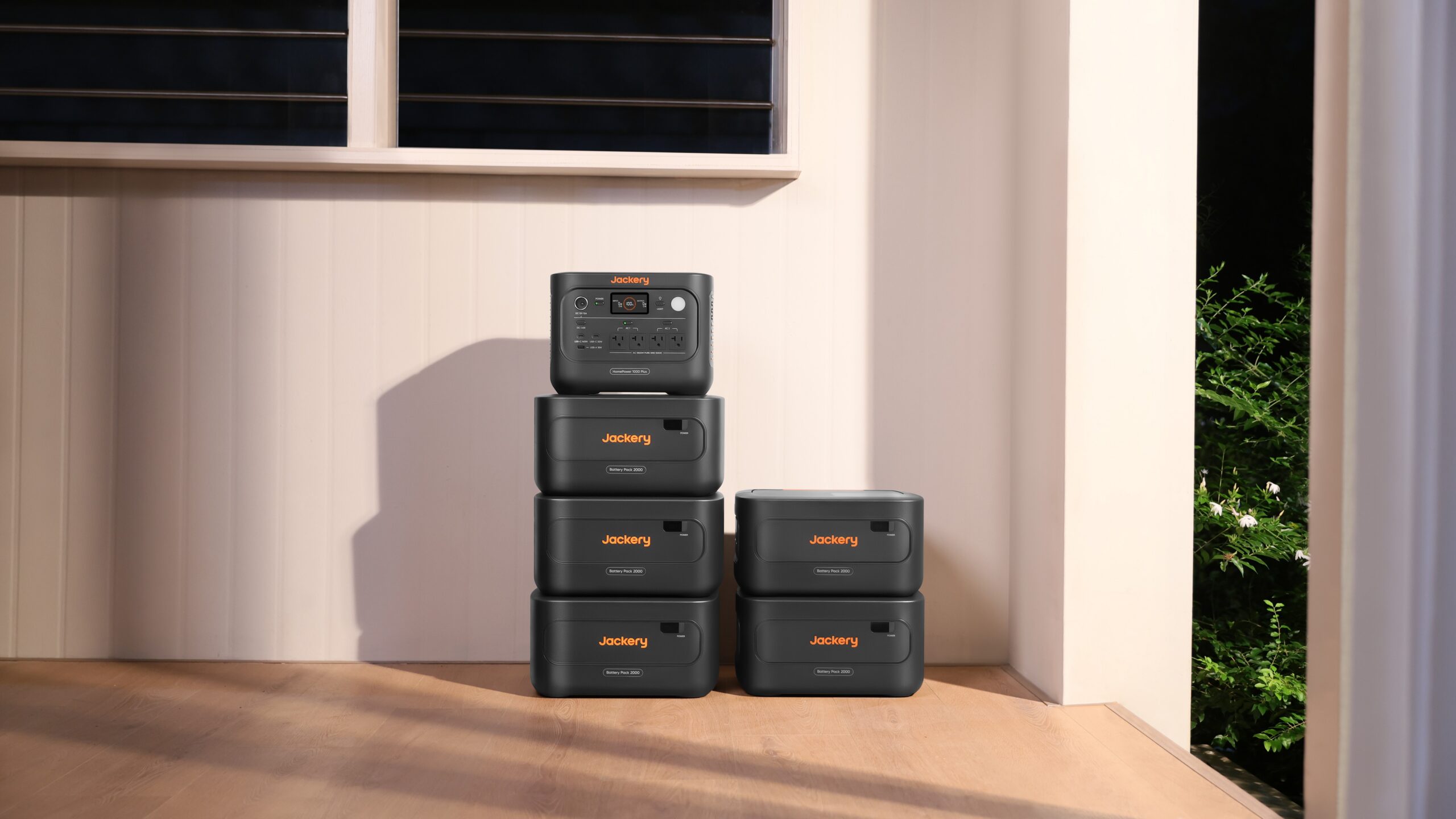
Jackery recently launched the new HomePower 1000 Plus v2, offering greater flexibility and capability for the home, outdoors and worksite while adding expandability to the portable battery. Within the compact case is 1024 kWh of battery storage. However, unlike its predecessor, the new battery also has the ability to add up to five 2 kWh expansion packs, for up to 11 kWh of total capacity.
The system uses premium LFP cells to offer 6000 charge cycles, backed by a 5 year warranty. However, unlike many portable batteries, the HomePower 1000 Plus v2 uses cell-to-pack construction. This integrates the cells as part of the battery structure, as seen in many automotive applications. This simultaneously makes the battery more rugged, lighter and more compact. Speaking of which, the HomePower 1000 Plus V2 measures 12.4” x 7.9” x 9.2” and weighs 23.8 lb. That makes it lighter and more compact than a 30-pack of canned beverages. The handle seems sturdy and is relatively comfortable. The portability gives the battery a lot of flexibility in how it is used. However, a shoulder strap or custom backpack would be useful to take it on the go.
Power output increases to 1800 W continuous, 3600 W peak across four AC outlets at 120 V, intended for the North American market. This is up from 1500 W/3000 W across three outlets in its predecessor. While that may not sound like a big difference, the new battery can now essentially handle any load that can be applied to a 120V, 15A breaker. That is not enough for most whole home use (outside of a tiny home/cabin), but it is enough to power many critical applications and can extend the capacity of whole home batteries and generators at the point of use. I could see it becoming especially handy in shops where you don’t want to run a long extension cord or on jobsites where you don’t want to keep a generator running or have to transport flammable fuel.
Speaking of flammability, Jackery’s BMS (Battery Management System) and battery control system can sense any voltage or current instability and automatically cut power to provide safety. In addition, the outer casing is made of fire-resistant materials.
Beyond AC, the HomePower 1000 Plus v2 has a 12V 10A DC plug, a 140 W USB-C, a 30 W USB-C and an 18 W USB-A. This should eliminate the need to bring along separate chargers for many electronic devices that need DC input power. Also on the panel is an LED light that can shine continuously or flash S.O.S. in Morris Code in cases of emergencies.
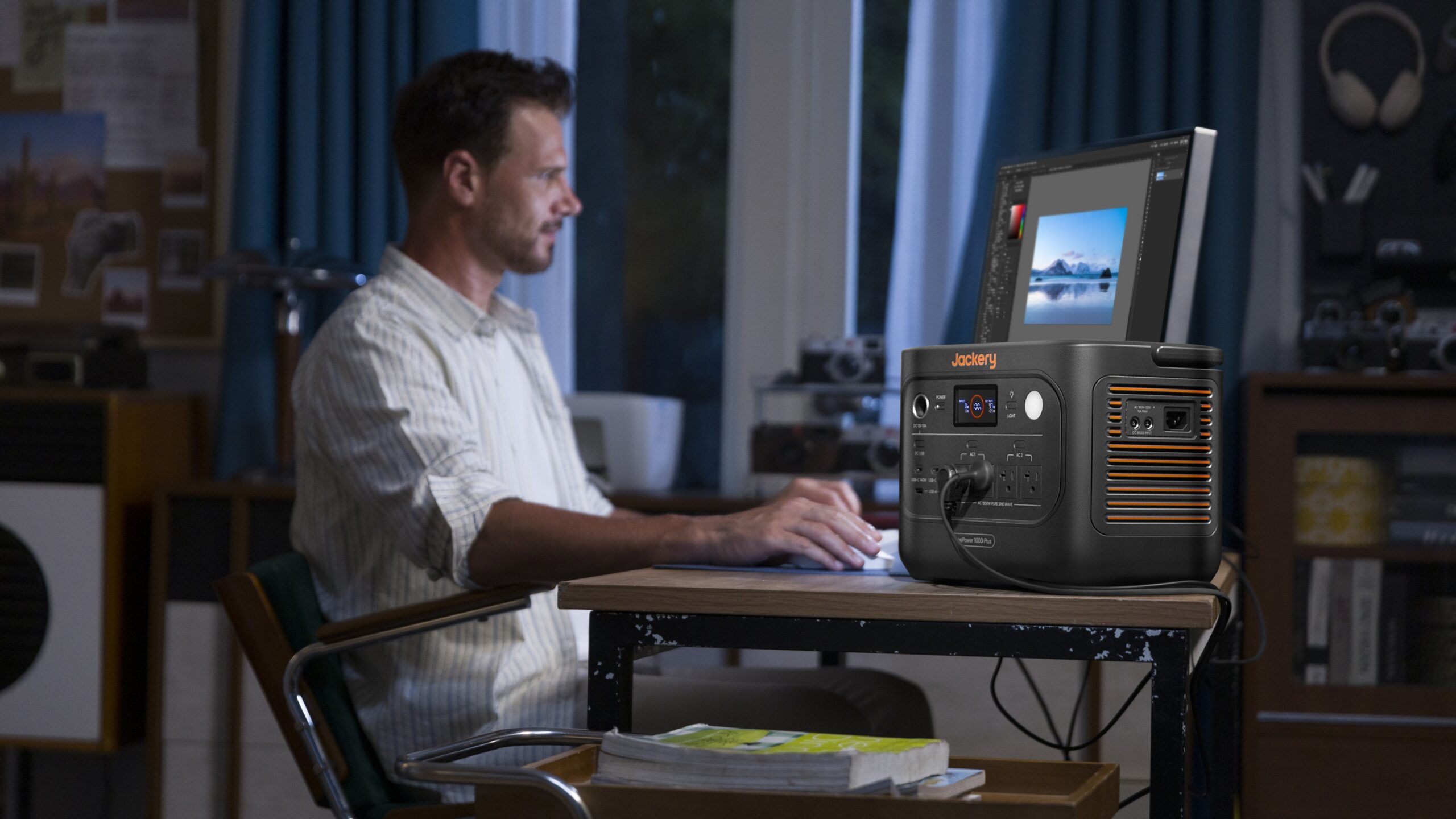
The HomePower 1000 Plus v2 can work as a UPS with a 10 ms switchover time, providing “pure sine-wave” AC power. This could make it useful for sensitive equipment, like desktop computers, 3D printers and audio/visual gear, for both blackouts and brownouts. 3kV/1000J of built-in surge protection also guards against power spikes. And the run time extends much longer than the typical UPS. It could be especially effective for remote use cases like photography and video production, either to keep device batteries charged or to power devices directly. Or it could be useful at trade shows where AC power is not readily available for displays. If I needed to work without a utility connection, I could recharge my laptop battery and keep my 5G WiFi router running for days.
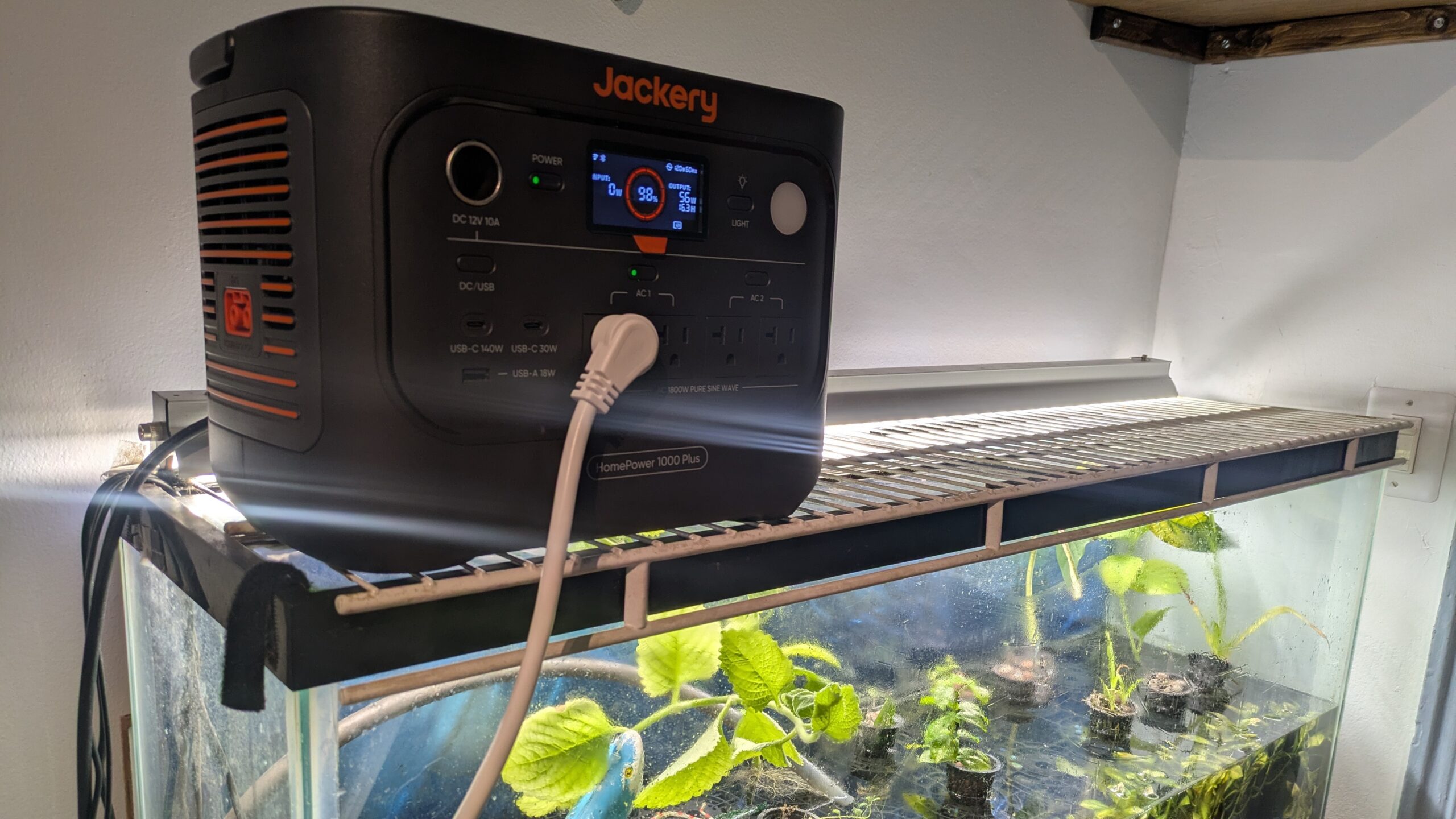
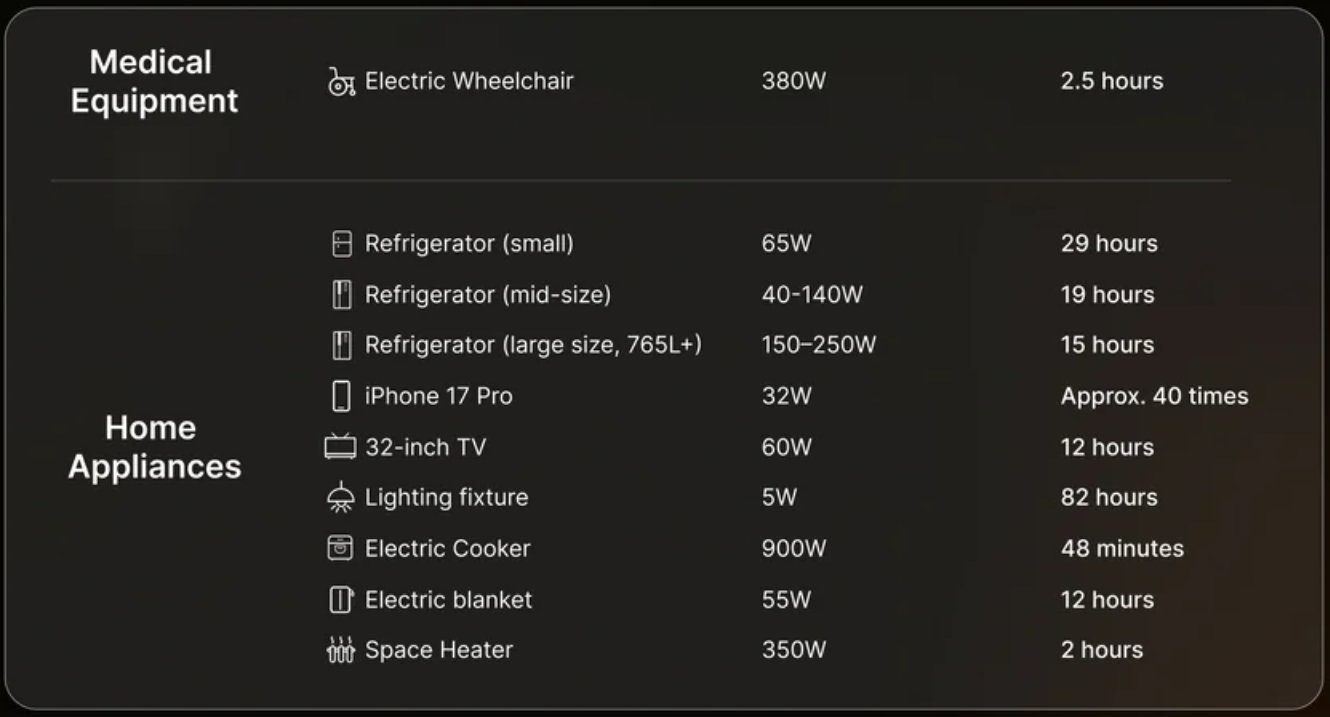
While it might not be as aesthetically attractive as Jackery’s sleek FridgeGuard battery, it could be used as backup power for a refrigerator in an outage. In addition to the traditional black and orange case, Jackery also offers a white case, which could blend better in some environments. However, the aesthetics are not as important in many applications. For homes with gas furnaces and hot water heaters, the battery could serve as backup to keep igniters, control panels and fans running. It could also power other critical needs, like aquarium pumps or home medical devices. Even if a whole home battery provides initial power, the battery at the point of use can maintain power for those critical applications longer. Jackery gave some examples of usage scenarios for 1 kWh.
In addition, the battery can also be used to shift energy consumption for time of use plans (TOU) or for people using solar systems. Depending on the application and utility plan, the battery could easily pay for itself over its lifetime through reduced utility bills. While the individual batteries may not replace whole home storage, they can reasonably shift electricity consumption at the point of use. It could potentially shift the usage for window air conditioners switched on when people get home from work, powering them for a few hours to get beyond peak TOU utility rates. If additional capacity is needed for the application, expansion batteries could be used.
Adding capacity at point of use lets people in apartments access the benefits of battery storage without needing expensive electrical upgrades to the building that are often not allowed. In places where balcony solar is not permitted, the battery and a couple of solar panels could also supply energy at the point of use, shifting to grid power when the battery is depleted. And the modular battery would be easy for renters to take with them when they move, as well as being portable enough to be used remotely as needs arise.
The HomePower 1000 Plus v2 can charge off AC power up to 80% in 36 minutes and fully in 50 minutes. However, when letting AC power pass through to power electronics, it will throttle back the charging to prevent overpowering the outlet.
The HomePower 1000 Plus v2 can also accept DC through two DC8020 inputs, with a single port accepting 16-60V at 12A and both ports simultaneously accepting 21A for 400W max. This would take 2 hours and 43 minutes to fully recharge the battery and, if combined with AC input, the battery could charge to 100% in 47 minutes. A “self-powered” mode prioritizes the solar input and reduces draw from the grid when both inputs are connected. The combination of the battery and solar could extend the capability to power devices, particularly in remote or emergency uses. If connected to a device with regular operation, the solar panels could be fully utilized to charge the battery when not needed to power the device. The DC input can also be connected to a car, but at 8A max, it would take much longer to charge.
Pricing for the HomePower 1000 Plus v2 starts at $749 MSRP, although the HomePower 1000 Plus v2 currently has an introductory promotional price of $619. Adding on a 200W portable solar panel adds $200. Bundling the main battery with a 2000 kWh expansion battery, MSRP increases to $1499, while the sales price is $1269. And a bundle with two portable solar panels and an expansion battery brings the total to $2139 MSRP, $1809 on promotion.
Putting It To The Test
I received a HomePower 1000 Plus v2 last week for evaluation and haven’t had the ability to test it fully yet. However, I have already run fans and charged my computer. I ran a 12,000 BTU Midea U window air conditioner for hours. The temperature has been pretty mild lately, but the air conditioner was able to drop the temperature in my pre-war, largely uninsulated corner apartment with 10 ft ceilings to ~5 degrees below outdoor temperature. However, it offered so little challenge to the battery that I got bored and tried it on something else.
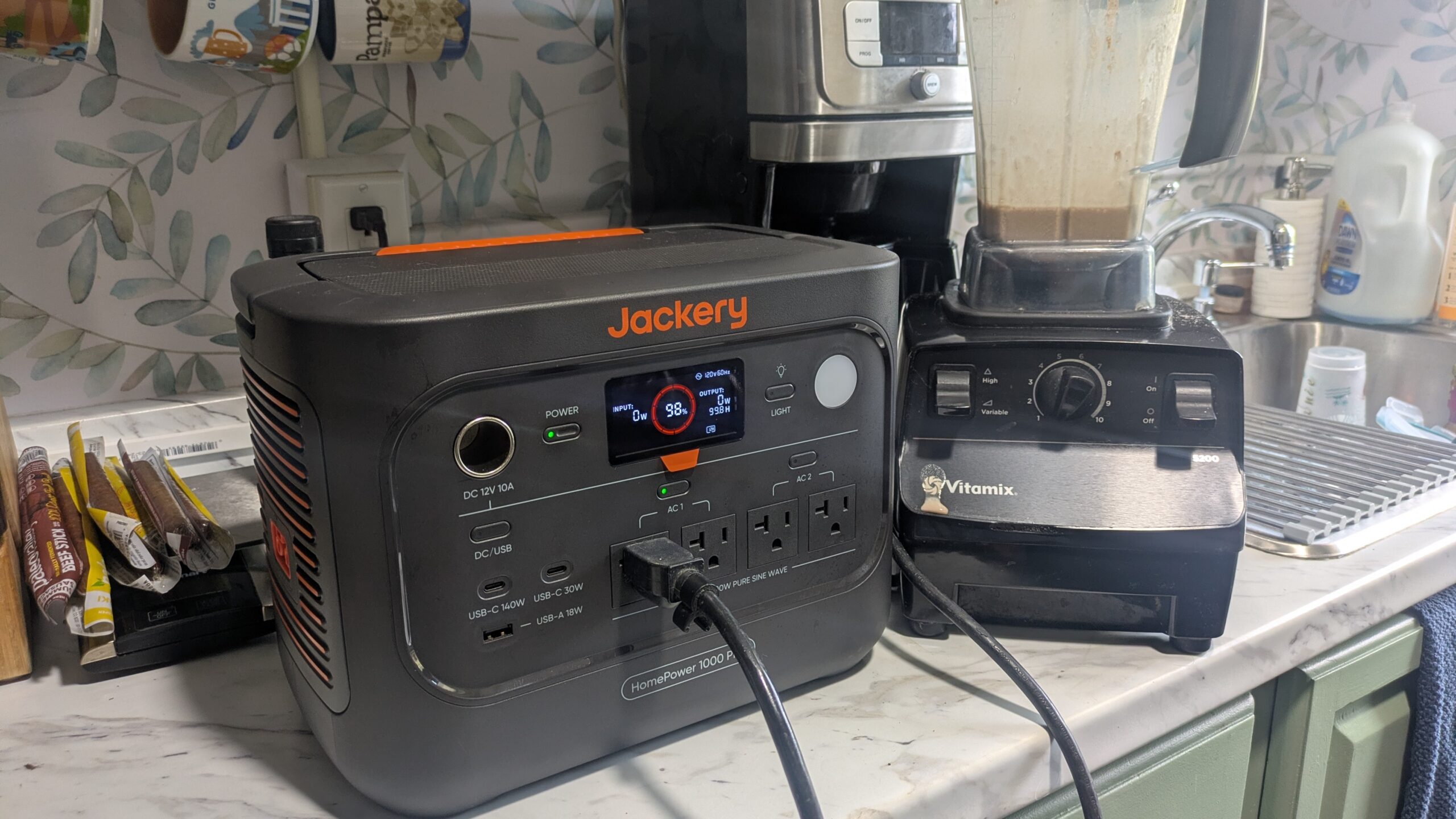
I washed a load of laundry with our compact washing machine, but it didn’t present much of a challenge. In the kitchen, I used it with my rice cooker and Vitamix blender, and the battery didn’t break a sweat. Frozen margaritas at the park with a warm crockpot of chilis should be easily doable for picnics. I am thinking about trying my electric flat grill next. I just ran my dishwasher on normal mode with the battery and, while water heating is energy intensive, the HomePower 1000 Plus v2 seems up to the task. The battery also seems to be conservatively rated, having already taken it to a little above the 1800 W continuous rating and run the capacity all the way down to 1%.
A battery like this could quickly become essential in outages or for remote use. And it could easily replace the entertainment/heating/cooking needs of a campfire if paired with the right accessories. With climate change impacting weather in many locations, the potential to replace the combustion of campfires, grills and generators could let people better enjoy the outdoors while reducing the risk of wildfires. In addition, it is light enough that you could easily carry it to recharge wherever power is available and then take the power with you.
But I am just getting started and haven’t even looked at the app yet to explore the intelligent capabilities. Jackery supplied me with the main unit, without the accompanying solar panels or expansion batteries, but I should be able to get a good idea of the capabilities. I will soon be going out of town and will use it as backup for my refrigerator while I am away. But I plan to test it more rigorously when I get back. In my garage, with my 3d printer, with more appliances and more applications. But what tests would you like to see?
Sign up for CleanTechnica’s Weekly Substack for Zach and Scott’s in-depth analyses and high level summaries, sign up for our daily newsletter, and follow us on Google News!
Have a tip for CleanTechnica? Want to advertise? Want to suggest a guest for our CleanTech Talk podcast? Contact us here.
Sign up for our daily newsletter for 15 new cleantech stories a day. Or sign up for our weekly one on top stories of the week if daily is too frequent.


CleanTechnica uses affiliate links. See our policy here.
CleanTechnica’s Comment Policy