
Food, Zoom, A Website, and Noodles From China to Italy: A Media Education Lab Curriculum Review

Support CleanTechnica’s work through a Substack subscription, on Patreon, or on Stripe. Help us produce all of the high-quality, original content we publish week after week despite the challenges of content-scraping AI, antisocial media, inflation, and other hurdles.
This summer I invited a group of talented writers who specialize in food systems to participate in a special Media Education Lab publication called MediaEd Insights. Our issue is called, “What’s for Dinner? Food as an Ecomedia Literacy Inquiry.” Our first essay introduced food systems as a way to engage in ecological education and media interpretation. Today’s post is a curriculum review that analyzes how a course incorporates noodles as a design motif and captures students’ “evolving and sometimes tumultuous relationship with food, often rooted in their childhoods.”
It is a fascinating dive into how classrooms can be much more than sites of knowledge transfer. Life-centered pedagogy can resonate with students and guide them toward “hope and new ways to cope.” Food, “intrinsically tied to the sustainment of human life as well as philosophies and traditions of healthy living,” became a pathway to meaning-making with students.
Thanks to Christine and Hong for sharing their observations and allowing us to walk beside them in their classrooms.
Food, Zoom, a Website, and Noodles from China to Italy: Teaching Toward a Life-Centered Pedagogy
Christine Ristaino, Professor of Practice in Italian Studies and Director of the Emory College Language Center
Hong Li, Professor of Pedagogy in the Department of Russian and East Asian Languages and Cultures, Emory University
As seasoned Emory University professors of Language and Culture, we began to notice a change in our student body at Emory University even before Covid arrived. An increasing number of our students were suffering from depression, anxiety, difficulty focusing, justice-related inequities, food insecurity, despair. We were spending additional hours meeting with students to talk, not about their academics, their grades, or even their goals for the future, but about them and their immediate state of mind. They were overwhelmed, anxious, isolated, and uncertain. Sometimes they didn’t see their own value, even though we did. Many times they felt as though the world was just too demanding. It seemed as though the precarious beam they had been teetering on before Covid had suddenly tipped them over. Covid was just too much.
We’re not surprised this happened. Often, students arrive at Emory having just landed the “get into college” plane. During high school, many of them were asked to play a sport, do hours of homework, study for the SATs, volunteer, even create a nonprofit, to be competitive for top schools. And our first-generation students had to hold demanding jobs, take care of siblings, sometimes translate for their parents, and do well in school. All this seems impossible already and then you throw in an international health crisis and justice inequities. When Covid shut down the world around us, our students wondered how they would ever survive this pressure. Many of them felt ill-prepared, not good enough, unable to compete with their peers, or just plain depressed. This realization was certainly alarming and concerning to both of us. However, what we did not foresee at the time was that we would, or even could, change our course and pedagogy to address our students’ struggles outside the classroom. Or, perhaps more precisely, that the changes in our students and the world would propel us to explore a new way of teaching.
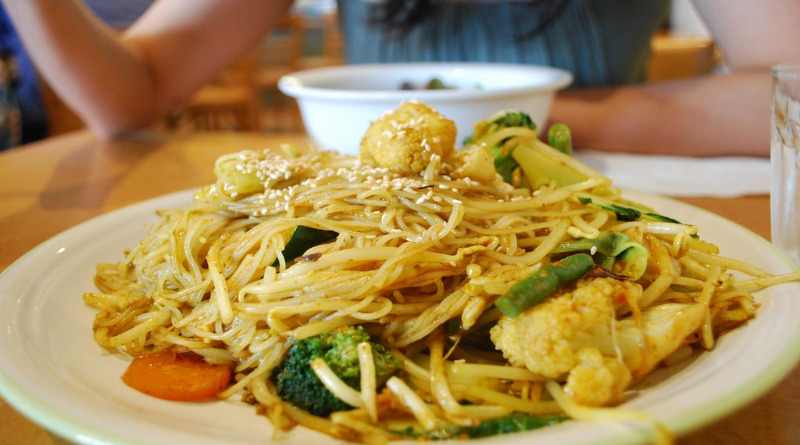
Although our expertise is different, we as educators both share a passion for languages, diverse cultures, and food, especially noodles. Our course, Noodle Narratives on the Silk Road: A Cultural Exploration of China and Italy through Noodles, captures all three of these interests. Our class looks at food, cooking practices, and cultural variations of shared ingredients as important and often undervalued vehicles of cultural memory, communal identification, and individual identity. In Noodle Narratives, we go deep into the noodle’s cultural significance to see how it has integrated itself into the symbolism, storytelling, literature, language, film, and cultural DNA of China, Italy, and, through in-class discussions and assignments, our students’ own countries of origins. Given the experiential nature of our class, we began to wonder if we could design and teach it in a way that helped students who were struggling with crisis, insecurities, depression, anxiety, and other difficulties, feel more connected to their communities and, by default, themselves. Could our course, through its content and instructional design, contribute to improving the day-to-day experiences of our students during the pandemic in an accessible, equitable, and inclusive way?
Understandably, these questions might seem too broad and general to be included in the scope and goals of a course about noodles. However, teaching Noodle Narratives during a crisis such as the pandemic brought these questions into sharp focus. Taking place in living rooms, kitchens, and bedrooms, academic classes on Zoom had literally woven into the everyday fabric of our students’ lives. We realized the relocation of the classroom into the domestic sphere, alongside Covid-induced struggles, necessitated and inspired a mind shift in our teaching. Rather than viewing teaching as solely an academic endeavor and jumping right into content, we began to view our course as an important component in the lives of our students, one that had the power to contribute to their wellbeing as whole people. In other words, our exploration moved into a technology-enhanced life-centered pedagogy that bridged academic teaching and learning with the day-to-day life experiences our students were having. Our multidisciplinary course topic, food, intrinsically tied to the sustainment of human life as well as philosophies and traditions of healthy living, seemed to be an ideal conduit through which we could explore this new approach.
To encourage students to reflect more deeply on the ways food connects them to their families and communities, we assigned a midterm cooking project. Students were asked to prepare a noodle dish that held personal or cultural significance for them during the pandemic. In addition to documenting the recipe and photographing cooking stages, they wrote reflective essays examining memories, relationships, and experiences associated with their chosen dishes. Through cooking for friends and family, they witnessed firsthand how preparing meals could foster care and connection. Students wrote testimonials to how history and culture were embedded in the food they prepared and ate for this project, which were, and still are, sources of inspiration and comfort during difficult times. They wrote coming-of-age stories that described their evolving and sometimes tumultuous relationship with food, often rooted in their childhoods, continuously contested and enriched by all the milestones in their lives. There were many moments of deeply personal and profound reflection that testified to their intelligence, resilience, kindness, and compassion. Through this assignment, our students shed light on their own cultural, historical, and regional heritages, their experiences growing up, and the impact recent events had had on their lives. As our interaction with our students deepened and broadened, we also began to observe changes in ourselves. We felt less isolated, more connected to each other, our students, and our loved ones from afar. The act of cooking, eating, and reflecting had made us feel safer, happier, and more connected.
Our cooking assignment led to the development of a website we named Pandemic Noodles, which virtually linked us to our students living and quarantining in over ten different countries. The site, which features more than ninety simple recipes from all over the world, took on the role of a global hub that expanded our students’ ties to us, their classmates, their families, and eventually the rest of the world. Some of the shared recipes were our students’ family treasures, passed down from generation to generation. For example, in one narrative, while quarantining in a hotel in China after a flight from the US, a student cooked the same family meal his grandfather had prepared for him as a child every time he had been sick. When the meal was ready, our student kept half and a relative picked up the other portion from outside his door, dropped it off at the hospital where his grandfather had been recovering from an illness, and the two ate together over Zoom. Other shared recipes were pandemic inventions by our students who had to replace old, trusted ingredients with something new because of food shortages, quarantine, and multiple other factors. One such recipe was submitted by Ahmed Aljohani, from Saudi Arabia. Ahmed had never cooked Kabsa until he arrived in Boston. Through cooking simple Italian American recipes inspired by North End neighbors, he gained enough confidence to prepare his own family recipe, “I started missing my family, my friends, our customs, and food. I decided to make a dish that reminds me of home and Kabsa popped into my mind as it can serve as a liaison to my culture. I could not find all the ingredients, and I had to modify the recipe by using Italian ingredients, such as olive oil, bell peppers, parsley, and, of course, pasta. In general, any type of meat can be used in Kabsa, but I chose chicken as it is the easiest one to cook. The resulting dish was a success, and my Saudi roommates loved it. The dish has become my signature recipe, and they call it The Italian Kabsa… I felt inclined to share this dish with my classmates as its aroma reminds me of warm dinners spent with family, the evenings with my roommates, my journey to the United States, and transition into a new culture.” Ahmed, through describing online how food brought him closer to both his family and Boston roommates, also created intimacy with his new classmates by sharing his experience with them through a digital storytelling platform (https://pandemicnoodles.wixsite.com/summer2020).
The Pandemic Noodles site served as a digital representation of our community, an additional place from which we learned about and from our students. During Covid, we both cooked our students’ recipes and shared photos with our classes. Students did the same and were delighted to have access to recipes that were simple and easy to make in college dorms or apartments. The impact of the website continued to grow. Our students shared the URL with their families and friends, and on social media. It delighted parents as they saw their children’s work on the website and their families’ dishes now appreciated by people of many ethnic and culinary backgrounds.
In summer 2020, Emory Report, an online information and news publication at Emory University, prepared an article and a video on faculty’s innovative approaches to teaching during the pandemic. We were interviewed for the article and featured in the video. As Pandemic Noodles gained traction, we and our students were contacted by journalists interested in the project. Some interviewed us, some our students, connecting us all with local and international communities beyond our website’s original reach. Atlanta Journal-Constitution (AJC), the only major daily newspaper in Metro Atlanta, published an article about our course titled “Community Cooks: At Emory, East Meets West with Pandemic Cookbook.” The article also featured the recipe for Linguine all’aglio, olio, e peperoncino written by Ahanu, a student in our class. Then in August 2020, our website was introduced in an article in SupChina, a New York-based, China-focused news, information, and business services platform. The article, Pandemic Noodles: Reflecting on Family Connections and Cultural Heritage through Cooking, included the stories of two students: Sophy Huang and Cherie Wang. Both Sophy and Cherie were international students from China. They each cooked a dish that was representative of their family traditions. On our Pandemic Noodles website, Cherie described a dish called Da Lu Mian that her grandmother cooked on many special occasions for her family. Since Cherie didn’t like vegetables, her grandmother “added green beans, potatoes mixed with meats, and shrimps as ingredients in making Da Lu Mian.” Cherie enjoyed the dish so much she even began asking for vegetables at meals. When Cherie’s studies required her to relocate, she could no longer eat her grandmother’s Da Lu Mian. Cherie stated, “I missed my hometown and my grandma so much. Therefore, I called my grandma to get the recipe for the Da Lu Mian so that I could prepare it myself… My final Da Lu Mian dish tasted so good, although the noodles were not cooked as well as my grandma’s. At the end of the cooking, I realized that my grandma’s love and warmth of family members at home were just as an important ingredient as the other ingredients. I guess that is what makes the Da Lu Mian dish special. For me, it is all about family.” For many of our students who were unable to return to their families in summer 2020, cooking family dishes brought back the warmth and love from their caring parents and grandparents.
Stories of our students continued to be told through various news sources. In October, 2020, Shayla Love, a Senior Staff Write for Vice, wrote an article about her “near-daily habit” during the pandemic of texting a photo of her meal to her Chinese mother. She wrote, “Hundreds of people were dying per day in my city (New York). My friends were laid off. One of my best friends died. My partner lost his job. A picture of my dinner was a simple reassurance, a way to say that my physical body was okay—even amongst ongoing emotional turmoil. To show her that I was trying my best, making an effort to nourish myself. And for my mom, someone born in China during a famine that killed millions of people, my dinner was also proof that I was safe.” She went on to tell the stories of our students Alex and Ruize. In spring 2020, Alex was able to leave Atlanta for Vancouver but was unable to return to China in June, as he had planned, because of China’s travel restriction and his status as a Canadian citizen. When it was time for him to cook a recipe for our class, he decided to make Pepper Sauteed Pork, a dish from his childhood in Hunan, China. “Whenever I prepare 辣椒炒肉 away from home, I also take a picture and send it to my family on WeChat. … It is my way of expressing how much I have missed them while away from home,” he wrote in his reflection. Ruize cooked Tomato Egg Fried Noodles, a dish his grandparents used to cook for him when he was growing up in Nanjing, China. He said that the dish “brought me back to the alley where my home is located” and the memories that came with the dish are “the days with grandmother, a crush on a girl, the smile on the owner’s face, and many stories that are never told to others.”
Over and over again, the stories our students told resonated. In difficult times such as famine, pandemics, wars, or natural disasters, food, according to one student, “is family, childhood innocence, vulnerability, tradition, and a way to relate.” The act of cooking is an expression of love, healing, and perseverance. Through these stories, the voices of our students became part of the national narrative, one that gave us all hope and new ways to cope.
When revisiting our classes and designing new ones in our current world, we have taken on the practice of asking a set of key questions that reflect the special challenges our students face today, questions that are geared toward making a difference in the lives of our students. We ask…
- Who are our students? What do they bring with them to our classroom?
- How do we help them integrate their whole selves and experiences into the larger world on a deep and meaningful level?
- What traits and behaviors should professors demonstrate in their teaching to minimize risk, nurture self-care, and foster connection?
- How do we create a community of learners who grow together in a safe, nurturing, and inclusive environment that embodies honesty, authenticity, and vulnerability, and leads to the development of competence, confidence, and resilience, both as individuals and as a group?
- How does our class allow our students to create a process of positive change that starts with themselves, moves into their own classroom community, and then outward into the world?
These questions guide us in all domains of our courses, including course site design, syllabi, content and readings, assignments, policies, teaching methods, technologies, instructor best practices, and teacher-student relationships.
Today, our resulting Life-Centered Pedagogy responds to the real-life experiences of our students while also considering the concerns and challenges educators face adjusting to a sudden and massive world shift. We continue to develop new courses guided by our Life-Centered Pedagogy. One is called “Diaspora in Italy and Beyond,” which is just as much about Italian diaspora as it is about the diaspora experiences of every student in the class. Students are given tools to dig deep into their family histories, cultural practices, and experiences. They learn about the diasporas of local refugees in Clarkston, GA, one of the most diverse miles in the US. They take field trips and partner with immigrant communities. They also explore indigenous diasporas and the concept of futurity, a way of being that seeks to repair the wrongs our ancestors had to endure, improve life for our current communities, and work together to create positive life situations for future kin. Through study of these topics, students learn more about who they are and what they value. They discover how to trust their gut and investigate their hearts for answers. They gain the skills required to listen deeply, find connections through storytelling and food, and value diverse experiences.
A second course is titled, “Flavor Paths: Chinese American Food.” It explores how Chinese American food reveals histories, struggles, and cultural creativity within Chinese immigrant communities. Through readings, discussion, and experiential learning, including cooking and community engagement, students investigate how Chinese American cuisine developed, how social and cultural changes shaped its evolution, and what food teaches us about belonging and identity. Students in this course work in groups to interview Chinese immigrants about their food experiences and some of them research their own families’ history of immigration. They also conduct ethnographic research in Chinese American restaurants to explore how food reflects social changes and immigration patterns, and the role food plays in building communities, facilitating cultural integration, and negotiating multiple identities. By exploring the pedagogical approaches that serve as the foundations of our Life-Centered Pedagogy, and connecting its principles to examples of course design and learning activities, we present educators with a pedagogical framework that not only integrates student life into academic learning but also creates pathways for positive changes in the lives of our students during challenging times. In addition, the stories, reflections, and recipes shared by our students on Pandemic Noodles, provide readers, educators, students, and the general public a platform they can relate to, delight in, gain new insights from, and find new ways to live a better and happier, connected life.
Sign up for CleanTechnica’s Weekly Substack for Zach and Scott’s in-depth analyses and high level summaries, sign up for our daily newsletter, and follow us on Google News!
Have a tip for CleanTechnica? Want to advertise? Want to suggest a guest for our CleanTech Talk podcast? Contact us here.
Sign up for our daily newsletter for 15 new cleantech stories a day. Or sign up for our weekly one on top stories of the week if daily is too frequent.

CleanTechnica uses affiliate links. See our policy here.
CleanTechnica’s Comment Policy