

Support CleanTechnica’s work through a Substack subscription, on Patreon, or on Stripe. Help us produce all of the high-quality, original content we publish week after week despite the challenges of content-scraping AI, antisocial media, inflation, and other hurdles.
For all the excitement over lithium-ion batteries, the energy storage field has yet to come up with the key to the next step in the energy transition. Li-ion batteries only last a handful of hours, but the wind and solar-saturated grid of the future needs storage on an all-day scale, if not multiple days and more. On the plus side, activity has been stirring in the thermal energy storage area, and now flow batteries are making their move.
The Long Road To Long Duration Energy Storage
Somewhat ironically, a century-old technology still accounts for almost all of the long duration energy storage capacity in the US, that being pumped hydropower (see more pumped storage background here).
Lithium-ion batteries have been chewing away around the edges, but the US Department of Energy has set a benchmark of 10 hours or more for long duration energy storage, and that that’s where Li-ion runs into snags related to cost and supply chain limitation, among other issues.
Flow batteries offer a work-around. Formulas vary, but they can be engineered without the use of toxic or flammable ingredients. The main components are tanks and pumps, where domestic supply chains and existing workforce skills can be applied (see more flow battery background here).
As with pumped hydro, the foundational technology of the flow battery has a long timeline, within which US innovators have played a central role. Of particular interest is the contribution of the Hoboken, New Jersey inventor John Doyle, who is credited with the first patent of a zinc-bromine redox flow battery in 1890 (redox is shorthand for the cyclical reduction-oxidation process that enables flow batteries to collect, store, and discharge energy).
After a long journey to efficiency, scale-up, and marketability since 1890, in recent years the flow battery field has achieved some progress, with the soft metal vanadium (not the hard metal vibranium!) being one focus of attention due to its ability to fulfill both sides of the redox task.
Another key variation to emerge in recent years is an organic formula that deploys carbon-based molecules. The Dutch firm Jena Batteries, for example, claimed credit for installing the first 100% organic flow battery in 2019.
Organic Flow Batteries For Long Duration Energy Storage
US innovators in the organic space have not exactly been sitting on their hands all this time. The California startup Quino Energy, for example, has been developing a water-based organic flow battery based on naturally occurring organic molecules called quinones. Quino was in the news earlier this summer, when its energy storage solution earned a grant from the CarbonX program under the wing of the leading Chinese conglomerate Tencent. The grant will help support a flow battery-enabled microgrid at Himandhoo Island in the Maldives, with a floating solar array and Li-ion batteries also contributing.
Another startup to surface on the CleanTechnica radar is the Massachusetts firm XL Batteries, which spun out of research at Columbia University in 2019. The company soon nailed down patents for its foundational chemistry in Japan as well as the US, pitching a “highly stable, pH-neutral, non-corrosive, scalable, longer-duration storage with a 20+ year lifetime at a low cost of less than $0.05/kWh.”
XL Batteries came to CleanTechnica’s attention in May of 2025, after the company announced the commissioning of a commercial-scale pilot project located at a Stolthaven Terminals facility in Houston, Texas. Data from the project supported the company’s white paper, issued in November last year. While the document does not nail down a specific duration for the new battery, the company cites an Energy Department analysis showing that flow batteries beat Li-ion technology on cost and safety in the longer duration range of 10 hours and up. The company also affirms a duration of “multi-hour to multi-day” for its flow battery formula.
May of 2025 was right around the time that the the data center energy “crisis” was beginning to emerge in force. The data center boom has intensified exponentially over the past year, and consequently XL Batteries has attracted the attention of data center stakeholders. On June 2, the company let word slip that the 2026 BloombergNEF Pioneer program tapped it for “Most Inspiring Startup” in a competition under the umbrella of the Data Center World Innovation Challenge.
“The recognition highlights growing momentum behind XL Batteries’ Organic Flow Battery technology and how it can support the power grid and rapidly expanding data center sector,” XL Batteries noted.
In April, BNEF Pioneer also tapped XL Batteries to participate in its Flattening the Duck Curve Challenge, with “duck” referring to a visualization of daily electricity demand that resembles the curve of a duck’s back from head to tail.
Next Steps For Data Centers
In May of 2025, XL Batteries also announced an energy storage agreement with the data center startup Prometheus Hyperscale, beginning with a 333-kilowatt demonstration scale facility next year, to be followed by two other, much larger systems in 2028 and 2029.
In the meantime, this is a good opportunity to open up the data center conversation.
Some data center stakeholders are focusing on renewable energy, particularly solar plus storage, as the quickest and most economical means of procuring the kilowatts needed to power up. However, energy storage is generally source-agnostic. In particular, long duration energy storage technology is essential for the energy transition, but it can also be an enabler of the data center boom and all that entails, including the potential to distract from, if not egregiously dial back, efforts to prevent catastrophic climate change.
On the other hand, signs that the AI bubble is about to pop have been rising, with a consequent impact on the demand for new data centers. If and when this modern-day manifestation of Tulip Mania runs its course, some of those investor dollars behind new energy storage startups will have already been spent, and the technology can be put to productive use elsewhere.
On that note, last fall XL batteries nailed down a $7.5 million investment from the family-owned firm Merrin Investors. “This investment will help accelerate the company’s ability to lead a trillion-dollar market while supporting the clean-energy transition,” said Merrin Investors founder Seth Merrin in a press statement.
Readers, what do you think? Do you see an energy storage light at the end of the data center tunnel? Considering the sharp U-turn in federal energy policy, are data centers stakeholders providing needed support to bridge the renewable energy and storage scale-up gap? Drop a note in the discussion thread…
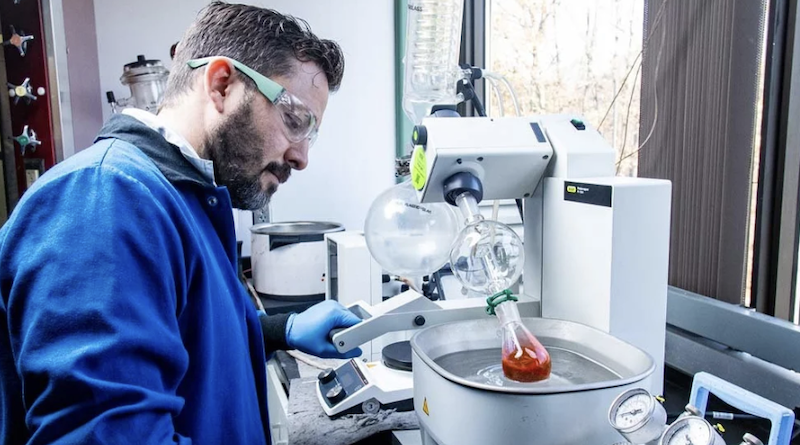
Image: Despite the sharp U-turn in federal energy policy, US innovators continue to push the long duration energy storage envelope, with organic flow batteries in play among other solutions (cropped, courtesy of XL Batteries).
Sign up for CleanTechnica’s Weekly Substack for Zach and Scott’s in-depth analyses and high level summaries, sign up for our daily newsletter, and follow us on Google News!
Have a tip for CleanTechnica? Want to advertise? Want to suggest a guest for our CleanTech Talk podcast? Contact us here.
Sign up for our daily newsletter for 15 new cleantech stories a day. Or sign up for our weekly one on top stories of the week if daily is too frequent.

CleanTechnica uses affiliate links. See our policy here.
CleanTechnica’s Comment Policy