
Hyundai Motor Group Expands Korea’s Hydrogen Ecosystem with First Group-Operated Waste-To-Hydrogen Facility
Support CleanTechnica’s work through a Substack subscription, on Patreon, or on Stripe. Help us produce all of the high-quality, original content we publish week after week despite the challenges of content-scraping AI, antisocial media, inflation, and other hurdles.
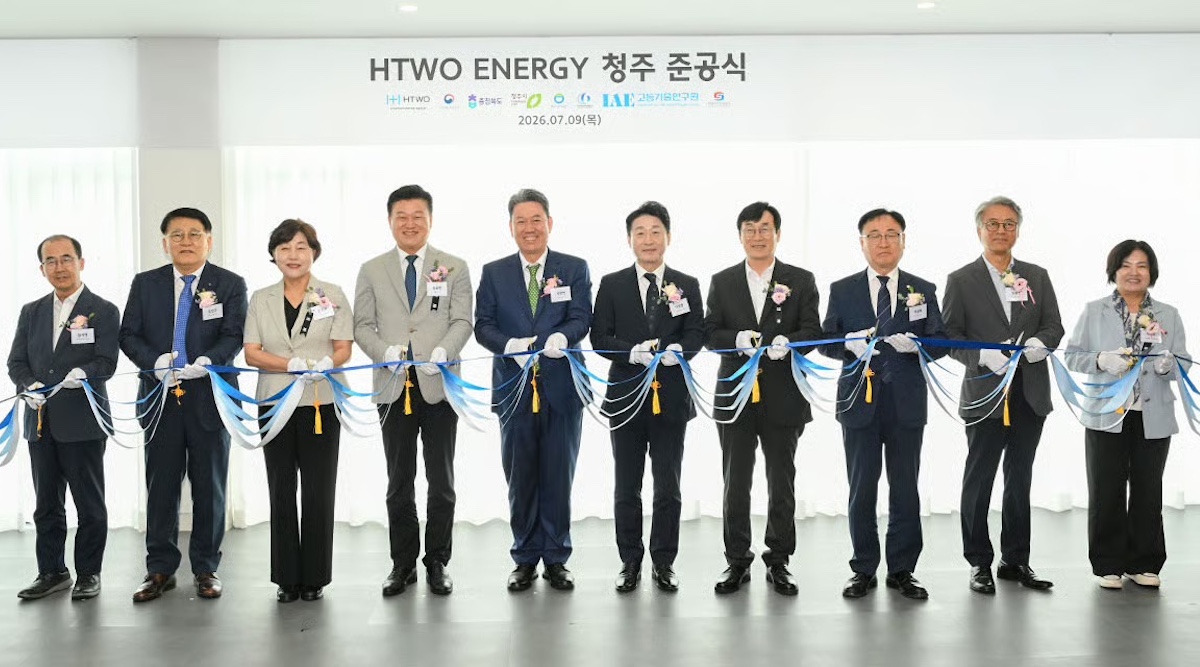
- Hyundai Motor Group opens HTWO ENERGY Cheongju, its first Group-operated waste-to-hydrogen (W2H) production and refueling facility
- HTWO ENERGY Cheongju supports localized hydrogen production and use, reducing transportation costs and enhancing regional energy self-sufficiency
- Equipped with biogas upgrading, hydrogen production and compression systems, the facility produces approximately 500 kilograms of hydrogen per day
- Production capacity is expected to increase to 2 metric tons per day
- The Group is strengthening W2H ecosystem through additional businesses in Korean and global locations

Hyundai Motor Group (the Group) announced the opening of HTWO ENERGY Cheongju, its first Group-operated integrated waste-to-hydrogen (W2H) production and refueling facility, establishing a localized hydrogen production ecosystem within the city.
The facility represents a breakthrough for HTWO’s W2H business, transforming regional waste streams into hydrogen, reducing supply chain costs over traditional hydrogen sourced from distant coastal areas.
“HTWO ENERGY Cheongju demonstrates a circular economy model in which hydrogen is produced from locally generated wastewater sludge and utilized within the local community. Hyundai Motor Group is actively supporting Cheongju’s development as South Korea’s leading inland hydrogen city, and to scaling the locally self-sufficient hydrogen production model into global markets.” — Gang Hyun Seo, President and Head of Corporate Planning at Hyundai Motor Group.

Why Is Cheongju a Strategic Location for Hyundai Motor Group’s W2H Ecosystem?
HTWO ENERGY Cheongju is the first Group-operated integrated W2H production and refueling facility. The facility produces and supplies hydrogen by converting biogas extracted from locally sourced wastewater sludge.
The Group established its first W2H hub in Cheongju with support from the Ministry of Climate, Energy and Environment, recognizing the city’s strategic role as a hydrogen logistics and distribution center geographically located in the middle of the Korean peninsula. Cheongju’s strategic importance was confirmed in 2025 when the city was selected by the Ministry of Land, Infrastructure and Transport for Korea’s Hydrogen City Creation Project. The city is actively developing comprehensive hydrogen infrastructure, emerging as one of the leaders in domestic hydrogen vehicle adoption.

What Are the Key Features of HTWO Energy Cheongju?
HTWO ENERGY Cheongju integrates multiple components of the hydrogen value chain within a single facility, including:
- Biogas Upgrading: Purification systems that remove impurities such as hydrogen sulfide and moisture from biogas to produce high-quality biomethane
- Hydrogen Production: Hydrogen extraction facilities that generate hydrogen through the reaction of biomethane and steam
- Carbon Capture and Utilization: Liquefied carbon dioxide production facilities that capture and purify carbon dioxide generated during hydrogen production for industrial reuse
- Compression: High- and low-pressure compressors that compress hydrogen to the required pressure levels for storage and distribution
- Storage: High- and low-pressure storage vessels that enable stable hydrogen storage and supply
- Refueling: Hydrogen refueling facilities that deliver stored hydrogen to fuel cell electric vehicles
The facility will produce approximately 500 kilograms of hydrogen daily. This is sufficient to fuel around 100 all-new NEXO FCEVs or 30 hydrogen fuel cell electric buses.
Beyond hydrogen production and refueling operations, HTWO ENERGY Cheongju also serves as a platform for hydrogen education and public engagement. The second floor of the office building features the Hydrogen Academy, a dedicated exhibition space for HTWO, the Group’s hydrogen brand and business platform, showcasing W2H process and hydrogen ecosystem applications.
How Will HTWO ENERGY Cheongju Support Regional Hydrogen Growth?
The Group plans significant capacity expansion aligned with Cheongju’s organic waste infrastructure development. By 2030, the Group intends to scale HTWO ENERGY Cheongju’s hydrogen production capacity from its initial 500 kilograms per day to two metric tons per day. By enabling localized hydrogen production and use, the facility is designed to support increased hydrogen self-reliance in Cheongju and surrounding areas.
How Does HTWO ENERGY Cheongju Connect to the Group’s Broader Hydrogen Strategy?
HTWO ENERGY Cheongju reflects the Group’s broader strategy to develop locally adapted W2H ecosystems around the world. Building on this approach, the Group is developing W2H business in Indonesia and Hong Kong, enabling each region to establish customized, W2H ecosystems suited to local environmental conditions, waste streams and energy infrastructure.
In Hong Kong, the Group’s W2H project, announced in May 2026, utilizes landfill gas to produce hydrogen for tourism buses and airport shuttle services. In Indonesia, a similar initiative announced in 2025 is currently under development and is intended to convert biogas from landfill into hydrogen, with insights from the project potentially informing future W2H initiatives in ASEAN markets.
Moving forward, the Group will continue to develop tailored hydrogen ecosystems globally, advancing W2H solutions and supporting the transition towards hydrogen ecosystem. Supporting this vision, HTWO delivers end-to-end solutions across the hydrogen value chain — from upstream to downstream — integrating the Group’s extensive capabilities as an open platform for collaboration, partnership, and investment.
Disclaimer: Hyundai Motor Group believes the information contained herein to be accurate at the time of release. However, the company may upload new or updated information if required and assumes that it is not liable for the accuracy of any information interpreted and used by the reader.
About Hyundai Motor Group
Hyundai Motor Group is a global enterprise that has created a value chain based on mobility, steel, and construction, as well as logistics, finance, IT, and service. With about 250,000 employees worldwide, the Group’s mobility brands include Hyundai, Kia, and Genesis. Armed with creative thinking, cooperative communication and the will to take on any challenges, we strive to create a better future for all.
Sign up for CleanTechnica’s Weekly Substack for Zach and Scott’s in-depth analyses and high level summaries, sign up for our daily newsletter, and follow us on Google News!
Have a tip for CleanTechnica? Want to advertise? Want to suggest a guest for our CleanTech Talk podcast? Contact us here.
Sign up for our daily newsletter for 15 new cleantech stories a day. Or sign up for our weekly one on top stories of the week if daily is too frequent.


CleanTechnica uses affiliate links. See our policy here.
CleanTechnica’s Comment Policy