

Support CleanTechnica’s work through a Substack subscription, on Patreon, or on Stripe. Help us produce all of the high-quality, original content we publish week after week despite the challenges of content-scraping AI, antisocial media, inflation, and other hurdles.
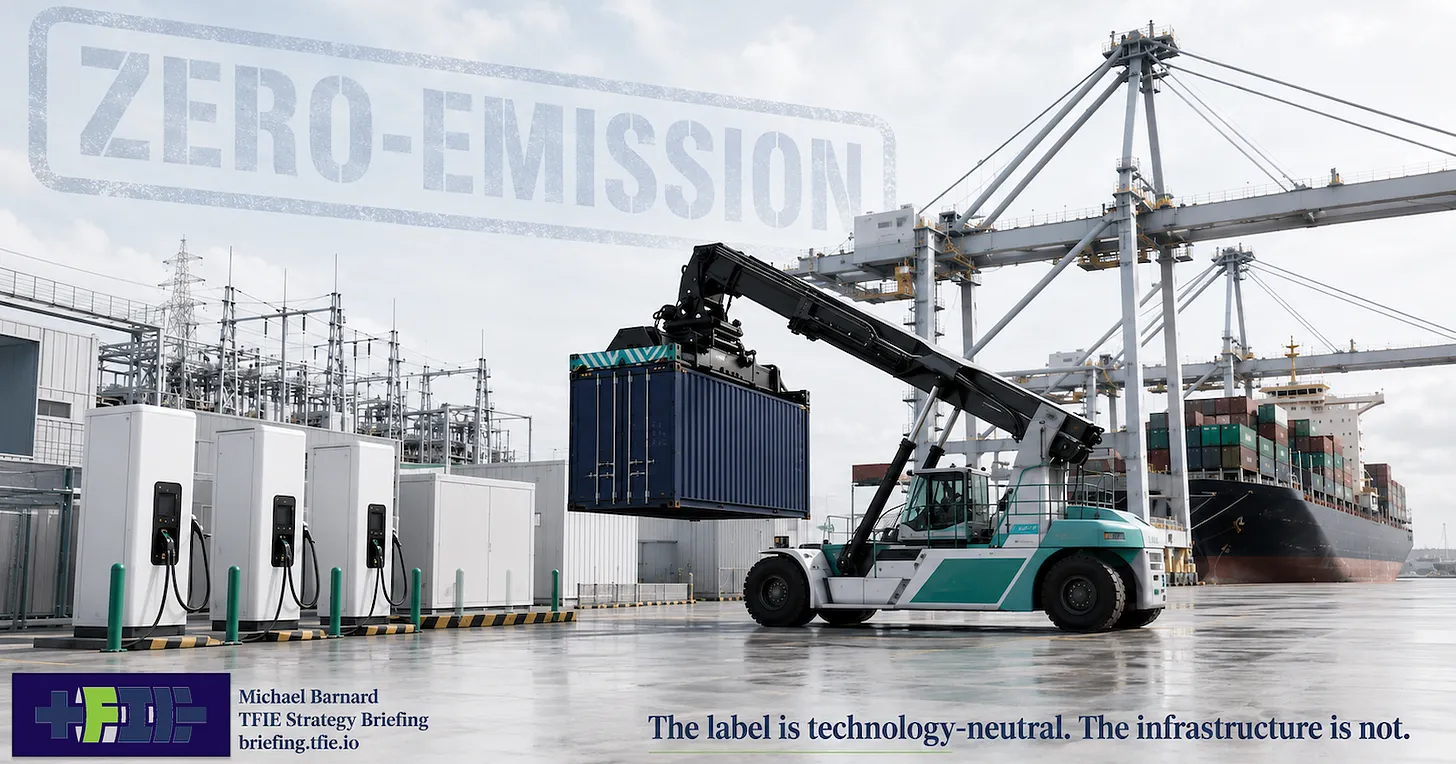
The Port of Long Beach keeps describing its clean-technology investments as “zero-emission,” a phrase broad enough to include both batteries and hydrogen. Its funded assets are much less ambiguous. Chargers, electrical infrastructure and electric cargo-handling equipment are extending the power system into terminal operations while hydrogen remains largely inside the policy vocabulary.
That shift matters because Long Beach was not a passive venue for hydrogen promotion. The port’s C-PORT program included a hydrogen fuel-cell yard tractor and dedicated fueling infrastructure alongside battery-electric equipment, while the wider port complex hosted Toyota’s Project Portal fuel-cell drayage trials and later its Tri-gen facility, capable of producing about 1,200 kilograms of hydrogen per day for light- and heavy-duty vehicles. Long Beach has not formally abandoned that pathway—it was still permitting liquid-hydrogen fueling equipment in 2024 and station upgrades in 2026—but that makes the current investment pattern more revealing, not less. Hydrogen received years of demonstrations and infrastructure access; chargers, electrical upgrades and commercial electric equipment are increasingly receiving the repeatable operating capital.
That is a more important development than an explicit announcement that the port has selected batteries over fuel cells. Large institutions rarely reverse a technology position cleanly. They preserve coalition language, avoid embarrassing demonstration partners and continue using the regulatory categories attached to state and federal funding. The operational decision appears gradually in procurement, infrastructure and maintenance practices. The useful denominator is therefore not how many times a press release says zero-emission. It is what the port is buying and making easier to buy again.
A charger supports more than one machine. It requires an interconnection, creates a charging schedule, gives technicians experience with high-voltage equipment and produces operating evidence for the next procurement. Once terminals have installed that base, every additional electric top handler, yard tractor or forklift encounters less institutional friction.
Hydrogen equipment has a different system boundary. The machine requires hydrogen production or supply contracts, delivery, storage, compression or liquefaction, dispensing equipment, safety procedures, station maintenance and enough fuel throughput to keep the infrastructure economically credible. Demonstrating that a fuel-cell machine can move a container proves the machine can perform the task. It does not prove that the parallel fuel system can compete with plugging equipment into an increasingly electrified terminal.
That systems distinction is visible in California’s own cargo-handling assessments. Battery-electric equipment still faces real constraints, including charging windows, equipment lead times, terminal power requirements and demanding uptime expectations. Those are commercialization problems for a pathway with an expanding product and infrastructure base. Hydrogen cargo-handling equipment remains concentrated in development and demonstration, with a much thinner commercial ecosystem.
Long Beach does not need to declare that hydrogen has failed. Doing so would reopen years of policy arguments and irritate agencies, suppliers and terminal operators with grants or partnerships tied to hydrogen. The port can continue to use the approved phrase zero-emission while putting capital into chargers and electric equipment. The public language preserves political optionality while the physical assets narrow the operational choice.
That does not make hydrogen risk disappear across every port segment. Drayage trucks and rail still attract arguments based on range, refuelling time, duty cycle and corridor coverage. Some of those constraints are real. The comparison still has to include the complete systems: battery trucks with depot and corridor charging against hydrogen trucks with production, distribution, dispensing, fuel cost, station reliability and subsidy exposure.
Cargo handling is more straightforward. Terminals are bounded operating environments with repetitive routes, centralized equipment management and a growing ability to plan charging around shifts and workflow. Electrical upgrades can serve multiple equipment classes and become more valuable as utilization rises. A hydrogen system must earn sufficient demand within the same terminal while competing against electrical infrastructure that is already useful.
This is how hydrogen retreats from institutional strategy. There will likely never be a Port of Long Beach announcement titled “We Were Over-Optimistic About Molecules.” Instead, the port will install chargers, train maintenance teams, adjust terminal workflows and order the next electric machine because the previous one performed well enough.
The wording may remain technology-neutral for years after the capital plan has become technology-specific. For policymakers, investors and equipment suppliers, procurement and infrastructure provide the clearer signal. They show which pathway is moving from demonstrations into repeatable operating assets.
The fuller analysis in Zero-Emission Language Is Hiding Port Electrification In Plain Sight examines what Long Beach’s program says about hydrogen’s quiet retreat, why the complete fuel system matters and where the risk of policy backsliding remains. Subscribe to TFIE Strategy Briefing for full analyses of complex transition pathways.
Sign up for CleanTechnica’s Weekly Substack for Zach and Scott’s in-depth analyses and high level summaries, sign up for our daily newsletter, and follow us on Google News!
Have a tip for CleanTechnica? Want to advertise? Want to suggest a guest for our CleanTech Talk podcast? Contact us here.
Sign up for our daily newsletter for 15 new cleantech stories a day. Or sign up for our weekly one on top stories of the week if daily is too frequent.

CleanTechnica uses affiliate links. See our policy here.
CleanTechnica’s Comment Policy