
Distributed Solar Has Pushed Up Pakistan’s Electricity Demand By A Fifth In Two Years
Support CleanTechnica’s work through a Substack subscription or on Stripe.
This rapid solarisation raises its electrification rate to the global average.
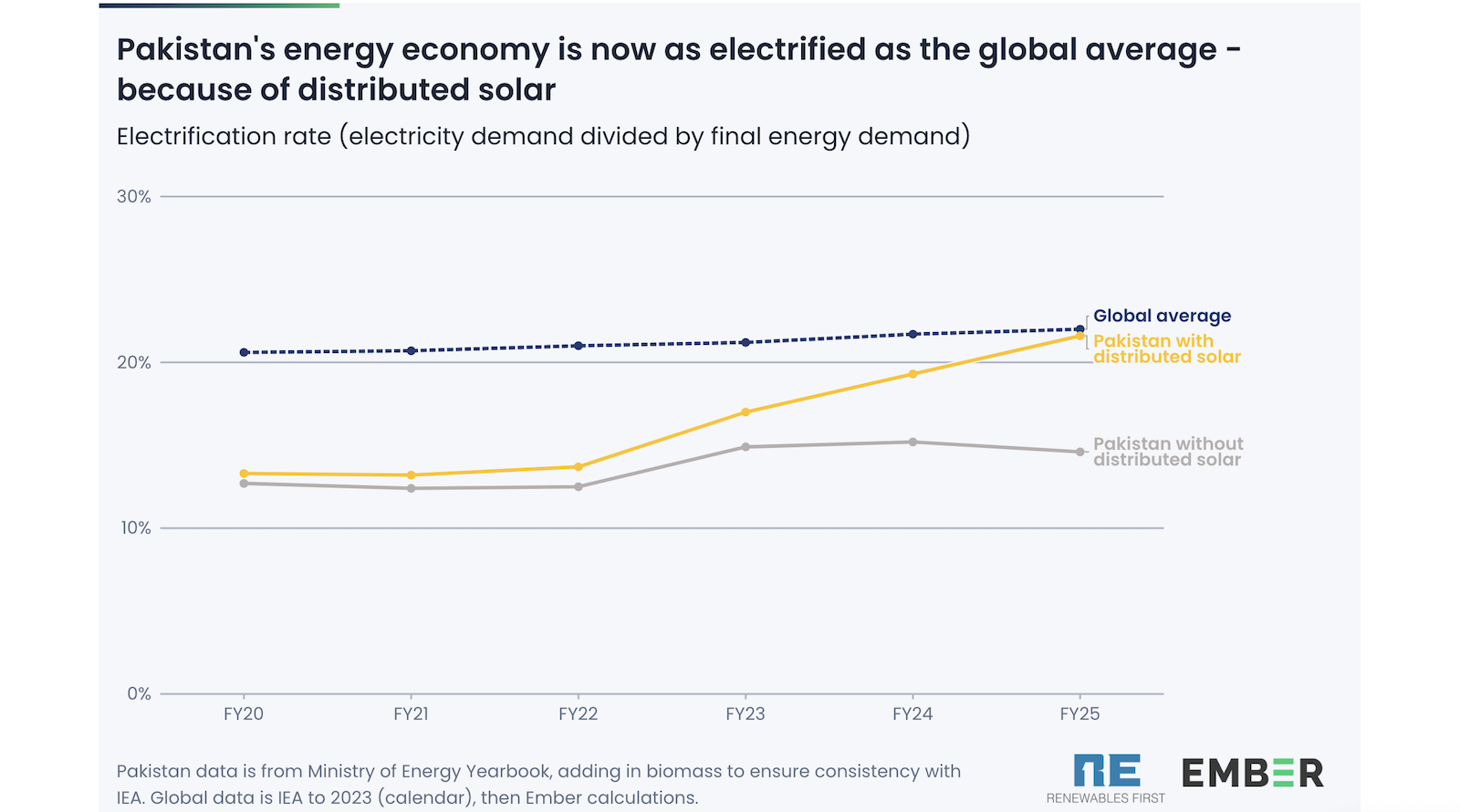
Pakistan’s energy economy is now as electrified as the global average, following a rapid solarisation that has transformed the country’s energy system in just two years, according to a new report, “The Solarisation of Pakistan’s energy economy,” from Ember and Renewables First.
Official statistics largely ignore distributed solar. This is the first time Pakistan’s energy statistics have been rebased to reflect Pakistan’s transformative distributed solar boom. The report makes the case that distributed solar actually helped to grow electricity demand.
Pakistan’s total electricity demand rose by 21% in two years. The rise in electricity demand of 33 TWh from FY23 to FY25 was led entirely by distributed solar generation, which rose by 36 TWh.
This surge in distributed solar, pushing up electricity demand, raised Pakistan’s electrification rate (the proportion of final energy demand coming from electricity) to 21.7% in FY25, a whisker away from the global average of 22.0%. Whilst electricity demand surged by 21%, non-electricity energy use rose just 2% — therefore distributed solar met not only electricity demand growth, it met almost all the energy demand growth.

This report comes two days after the launch of the Electrify Now campaign, where civil society organisations are pushing energy ministers to speed up electrification to match the ambition of 35% electrification rate by 2035 laid out this month in the COP31 Action Agenda.
The report finds distributed solar has helped to electrify almost every sector of Pakistan’s economy. In agriculture, solar has largely displaced diesel and grid electricity, changed irrigation economics and enabled farmers to pump more water than ever before. In industry, it has filled the vacuum left by collapsing captive gas and coal by providing competitive pricing advantages. In residential settings, it has unlocked consumption that high tariffs and loadshedding had long suppressed, driving new growth in appliances, especially more cooling. Commercial solar, meanwhile, has quietly absorbed demand growth without proportionate exposure to grid tariffs. Transportation, so far remained largely untouched by the shift, is becoming the next frontier of electrification.
“Pakistan has a thirst for energy, and solar is providing it. Distributed solar is so fast and cheap to build that it is actually driving up electricity demand. So many other emerging countries also have pent-up energy demand, weighed down by the problems and cost of fossil fuels. Pakistan’s distributed solar boom provides experience to show how fast clean energy growth can happen, and the benefits that this brings.” —Dave Jones, Chief Analyst, Ember
“Distributed solar is providing millions of Pakistani homes, farms and businesses with affordable, reliable electricity. Empowered by the widespread adoption of solar PV tech, consumers are playing a central role in Pakistan’s electrification and energy transition.” —Nabiya Imran, Associate — Energy Insights, Renewables First
The report argues that no other electricity source could have achieved what distributed solar achieved.
Distributed solar was faster — in just two years, 27 GW of distributed solar was installed, the same amount of operating coal, gas and oil plants built in Pakistan ever.
Distributed solar was cheaper — residential solar with a medium battery makes electricity at around PKR 20/KWh, half the PKR 40 price for grid electricity.
Distributed solar is better — it has eliminated daytime load shedding, avoided more than USD 12 billion in oil and gas imports by February 2026, reduced CO2 and air pollution and saved transmission and distribution losses.
Read the full analysis.
Article from Ember.
Sign up for CleanTechnica’s Weekly Substack for Zach and Scott’s in-depth analyses and high level summaries, sign up for our daily newsletter, and follow us on Google News!
Have a tip for CleanTechnica? Want to advertise? Want to suggest a guest for our CleanTech Talk podcast? Contact us here.
Sign up for our daily newsletter for 15 new cleantech stories a day. Or sign up for our weekly one on top stories of the week if daily is too frequent.


CleanTechnica uses affiliate links. See our policy here.
CleanTechnica’s Comment Policy