

Support CleanTechnica’s work through a Substack subscription or on Stripe.
Anker was one of the earliest brands to establish itself as reliable in the consumer electronics space, so when they moved into portable power stations, we knew it was going to be good. Since then, they have filled in their lineup with an array of batteries that has continued to evolve and improve over the years.
The Anker SOLIX S2000
Their latest portable power station, the Anker SOLIX S2000, pushes the boundaries on weight and form factor for what it delivers right out of the gate. It’s a 2 kilowatt-hour portable power station that is more compact than any other we’ve seen.

The design features integrated handles that keep its profile roughly rectangular, with an overall dimension of 8.2 x 11.1 x 12.7 inches / 208 x 282 x 323.3 mm. In addition to that, it’s super lightweight for a 2 kWh unit adjusts 35.7 pounds / 16.2 kilograms. That makes it even more accessible to even more people and brings the concept of portability back to this segment of the market.
It was designed with ports on multiple sides, meaning you can tuck it in a corner and still have confidence that you’ll have access to a plug. That makes it a great option for backup power use where you can plug it into your home knowing it will be ready and conveniently located in the event of an outage. You generally don’t need to plug everything into the unit all the time, only using its capacity and functions when the power actually goes out.
Tradeoffs?
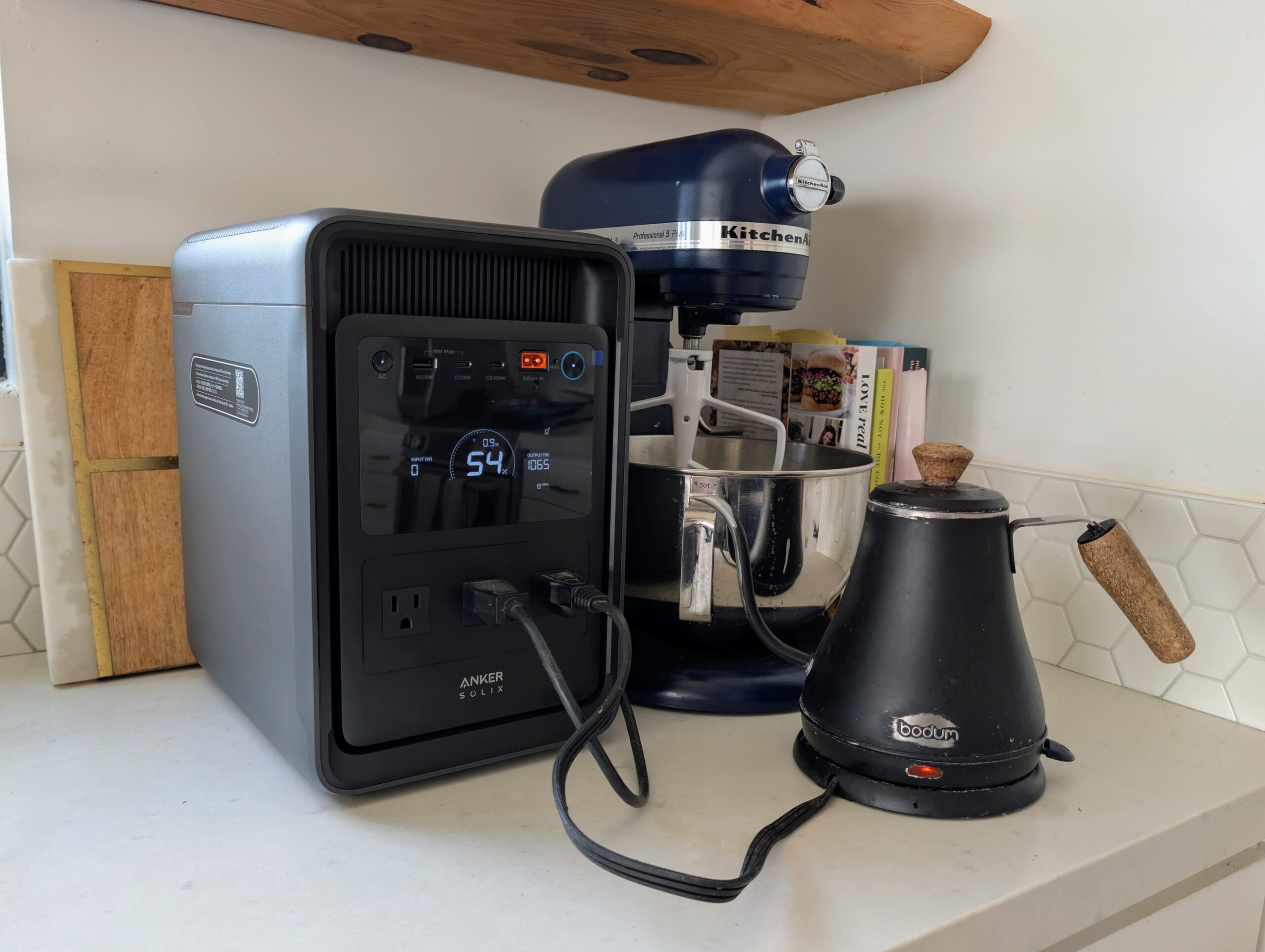
It’s small size does come with some compromises that are worth noting. First off, it has a maximum AC power out capacity of 1,500 watts. That’s plenty for just about anything in the home, including refrigerators, internet, lighting, and most appliances in the home.
If you’re planning to cook off of the unit, many single burner induction units can still run on the unit, but a double-burner induction unit and similar appliances that use electricity to make heat can push the limits of this unit. It’s not a showstopper, but it’s worth confirming what you’re planning to run off of it before purchasing if you’re planning to run some heavyweight equipment off of it.

Similarly, the Anker SOLIX S2000 has a lower solar input capacity cap at just 400 watts. That’s fine if you’re just looking to have a single foldout portable panel that you want to plug into it in the event of an outage. It can be a limiting factor if you’re looking to load it up with more panels to provide more input on a regular basis or as part of a portable power system for a vehicle with solar on the roof.
Again, that’s not a huge concern, but it is a change relative to the norm in this category, which is around 600 to 1,000 watts of solar input.
Testing
Charging up the SOLIX S2000 from a wall outlet, it absolutely screams. It pulls every bit of juice a standard home outlet can push out at up to 1,600 watts.
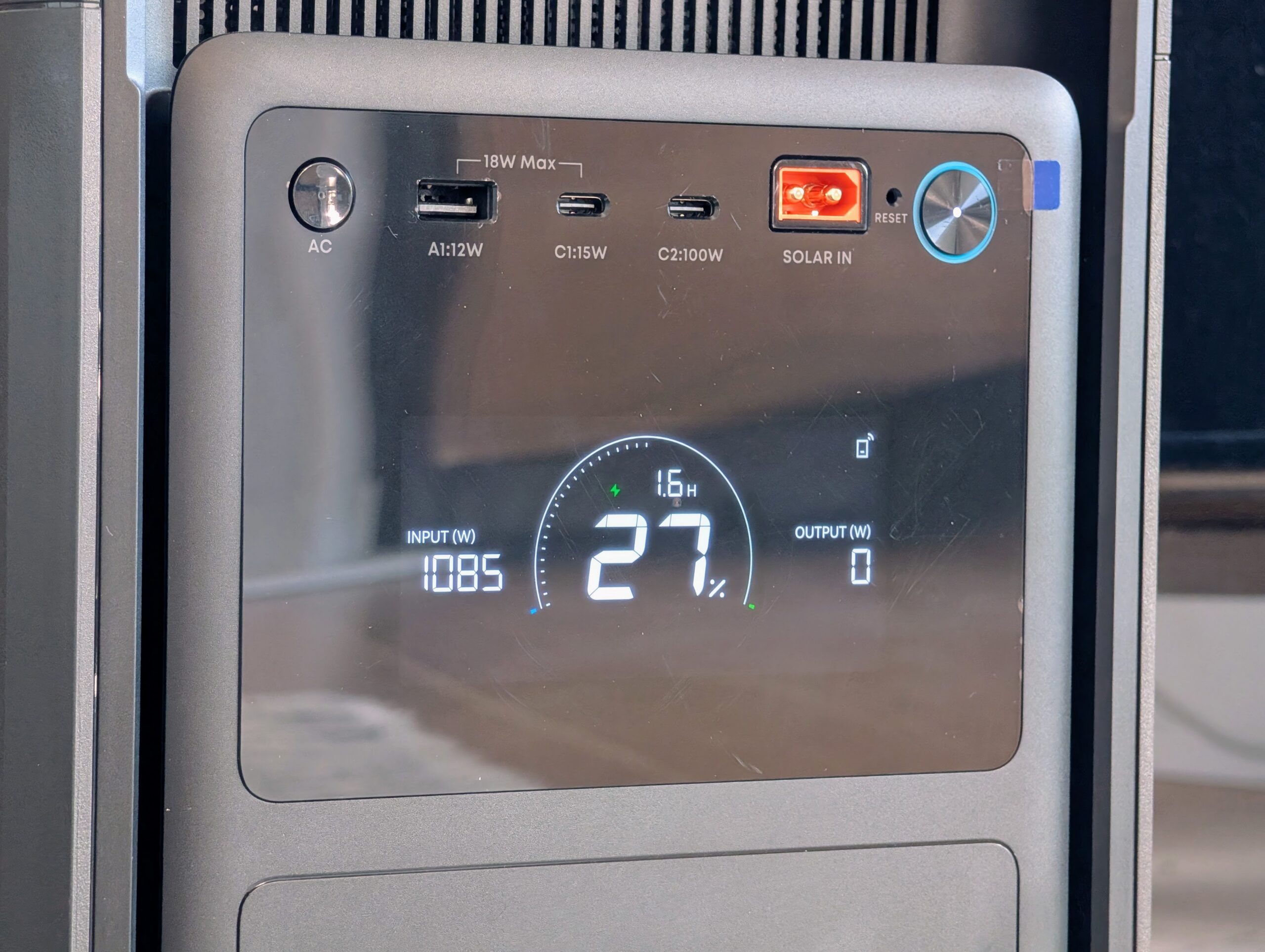
On the solar front, the Anker SOLIX S2000 is more than capable and can pull down up to 400 watts of power from solar. That’s right near the upper limit of what most portable solar panels produce, so if it’s just for home backup, it’s probably not a limiting factor.
When it comes time to use the stored power, the Anker SOLIX S2000 is a perfect unit for use in disaster recovery or as a backup power supply for the home. It can easily power a fridge, lights, and internet, while keeping a phone charged on the side. None of those pull significant power and we were able to run all of them in parallel in our testing.
With a max AC out limit of 1,000 watts, the SOLIX S2000 is not your best option for running electric heaters, cooktops, and other appliances that pull more than 1,000 watts. The unit can push out more than 1,000 watts for a few seconds, but it simply isn’t built for heavier loads. The Anker SOLIX C2000 and many of their larger units can easily support these larger loads, so look around in their lineup if that’s what you need.

For smaller loads, the SOLIX S2000 shines with its lighter weight and compact design.
Overall
The Anker SOLIX S2000 is an exciting portable power station because of its compact form factor and lighter weight. Those are two huge factors when it comes in at around 10 lb less than the competition.
It features next-gen LiFePO4 battery cells that can support up to 10,000 charge/discharge cycles. That’s the equivalent of charging it and discharging it almost daily for about 30 years. I personally wouldn’t expect to get that many cycles out of it, because it’s a consumer-grade device and that’s a lot to ask, but it’s reassuring to know that the batteries are up to the task.
Anker has truly pushed the envelope forward for portable power stations, and it’s exciting to see the 2 kilowatt-hour systems getting down to a weight and form factor that’s truly manageable again. Along with that, pricing should drop as logistics charges and overall economy of scales continue to improve.
For more information about the Anker SOLIX S2000 head over to Anker’s official website.
Sign up for CleanTechnica’s Weekly Substack for Zach and Scott’s in-depth analyses and high level summaries, sign up for our daily newsletter, and follow us on Google News!
Have a tip for CleanTechnica? Want to advertise? Want to suggest a guest for our CleanTech Talk podcast? Contact us here.
Sign up for our daily newsletter for 15 new cleantech stories a day. Or sign up for our weekly one on top stories of the week if daily is too frequent.


CleanTechnica uses affiliate links. See our policy here.
CleanTechnica’s Comment Policy