

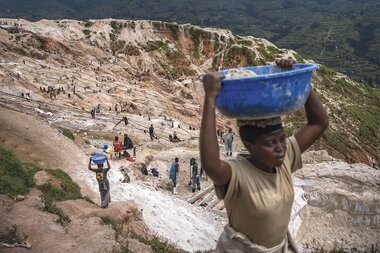
Armed rebel groups operating in parts of Democratic Republic of the Congo are reportedly attempting to position themselves as potential suppliers of critical minerals to the United States, raising serious geopolitical, security, and ethical concerns over access to strategic resources in Central Africa.
The Democratic Republic of the Congo is one of the world’s richest sources of critical minerals including cobalt, copper, lithium, tantalum, and tin — materials that are essential for electric vehicles, batteries, electronics, renewable energy systems, and advanced technologies. Global competition for secure mineral supplies has intensified as countries race to strengthen clean energy and technology industries.
Reports suggest that certain armed factions are seeking to leverage control over mining areas to gain political recognition, economic support, or influence in international negotiations. Analysts warn that such developments could complicate already fragile security conditions in eastern Congo, where armed conflicts and illegal mining activities have persisted for years.
Security experts say any involvement of rebel-controlled mineral supply chains would raise major concerns regarding transparency, human rights, conflict financing, and international trade regulations. Western governments and multinational companies have increasingly faced pressure to ensure that critical mineral sourcing does not contribute to violence or exploitation.
The United States and several allied nations have recently intensified efforts to diversify critical mineral supply chains and reduce dependence on dominant global suppliers. Africa, particularly Congo, is viewed as strategically important due to its vast reserves of battery-related minerals.
Human rights organizations have long warned about the risks associated with conflict minerals in the region, including illegal mining, child labor, smuggling networks, and armed group financing. Experts believe stricter supply chain monitoring and international oversight would be essential in any future mineral agreements involving high-risk regions.
Political analysts note that the situation also reflects the growing geopolitical importance of critical minerals as major economies compete for access to resources needed for advanced manufacturing and clean energy technologies.
The Congolese government continues to face pressure to strengthen mining governance, improve security around mineral-rich areas, and ensure that resource wealth contributes to national development rather than fueling instability.