
Deadly Blast at Liushenyu Coal Mine in Shanxi Raises Fresh Concerns Over Underground Mine Safety

Methane, toxic gases and monitoring failures once again expose the deadly vulnerabilities of underground coal mining operations
By Ashim Kumar Mukherjee
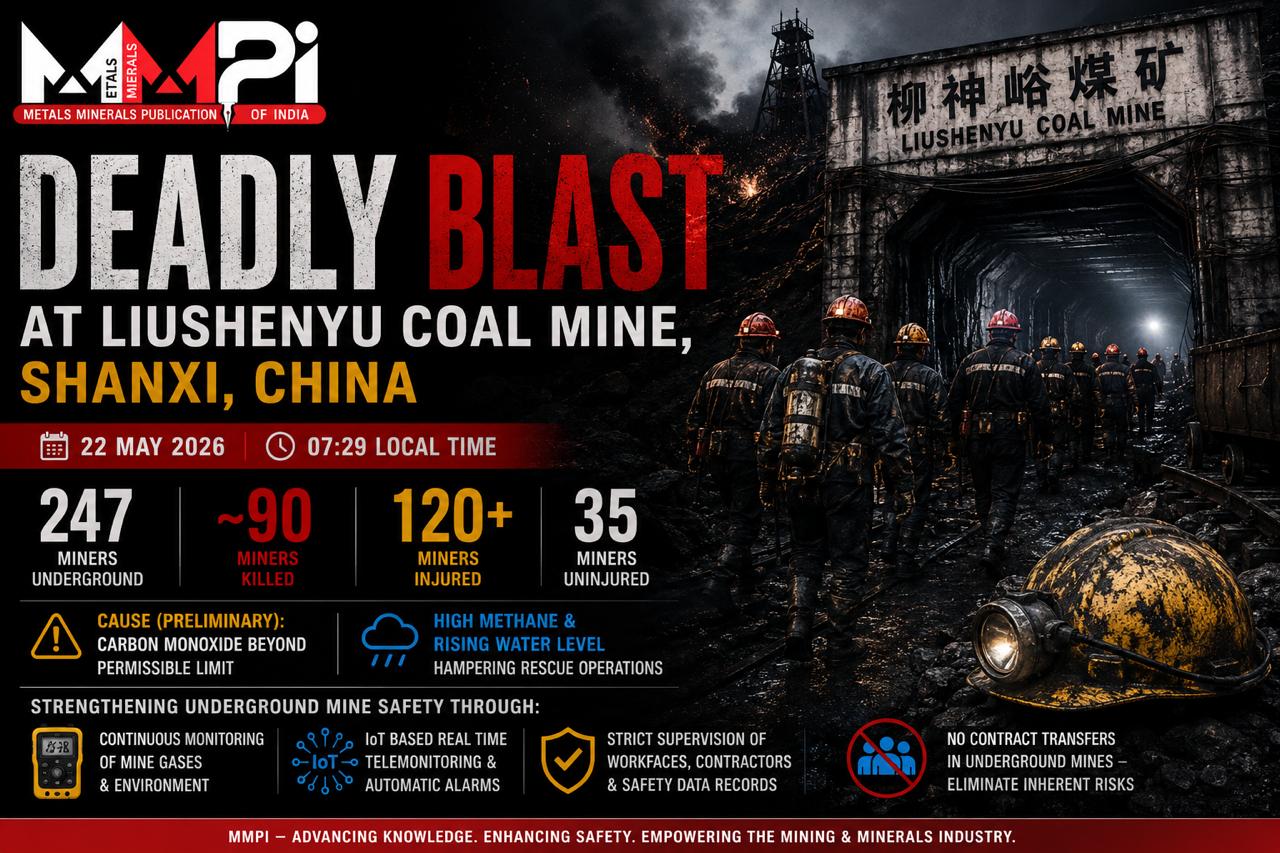
A devastating underground mine explosion at the Liushenyu Coal Mine in Qinyuan County, Shanxi Province, China, has once again highlighted the persistent safety risks associated with deep underground coal mining operations. According to initial reports, the deadly blast occurred on 22 May 2026 at approximately 07:29 local time, leaving nearly 90 miners dead and over 120 injured.
At the time of the incident, around 247 miners were reportedly underground. While 35 workers escaped without injuries, rescue efforts have been significantly hampered due to high methane concentration and rising water levels inside the mine workings.
The Liushenyu Coal Mine, operated by the Shanxi Tongzhou Coal & Coke Group, is known for producing coking coal or metallurgical coal, a critical raw material for the steel industry, with an annual production capacity of approximately 1.2 million tonnes.
Preliminary investigations indicate that the explosion may have been triggered by dangerous accumulation of carbon monoxide and other noxious gases beyond permissible safety limits underground. Experts have long warned that underground coal mines operating in high-gas geological zones require uninterrupted real-time monitoring and automated power isolation systems to prevent such catastrophic incidents.
Mining safety specialists point out that the presence of noxious gases beyond 50 ppm is considered highly dangerous. In India, the Directorate General of Mines Safety (DGMS) has mandated advanced telemonitoring sensor systems in underground longwall and depillaring panels. These systems continuously monitor methane and toxic gases and automatically cut off electrical power when methane concentration exceeds 0.75% or when noxious gases cross critical safety thresholds.
The tragedy has also renewed discussions around the urgent need for human-independent IoT-based continuous environmental monitoring systems capable of tracking mine gases, humidity, airflow and temperature across underground workings in real time. Such technologies are increasingly becoming essential for modern underground mining operations worldwide.
Industry observers further stress the importance of tighter supervision of underground workforce deployment, contractor management and operational accountability. Experts warn that uncontrolled subcontracting practices in underground mines can create severe safety gaps and dilute operational responsibility during emergencies.
The incident serves as another grim reminder that despite technological advancements, underground coal mining continues to remain one of the world’s most hazardous industries unless supported by uncompromising safety standards, intelligent monitoring systems and rigorous operational governance.