EIB and IDC Sign $329 Million Deal to Boost Critical Minerals Projects Across Africa

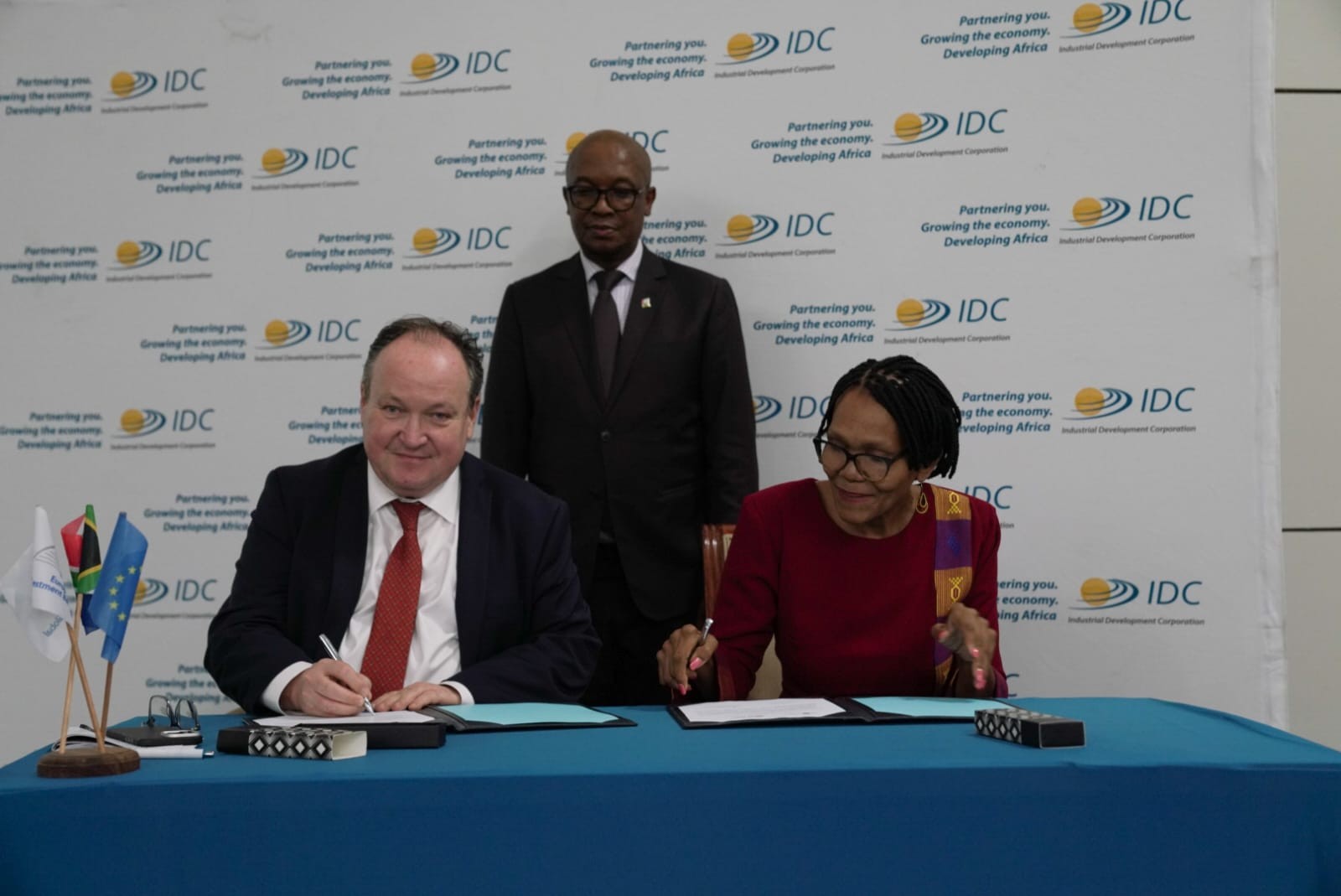
Johannesburg: The European Investment Bank (EIB) and South Africa’s Industrial Development Corporation (IDC) have signed a €300 million (approximately $329 million) financing agreement to accelerate the development of critical minerals projects across South Africa and other Sub-Saharan African countries.
Announced on November 26, 2026, the agreement aims to strengthen Africa’s position in global mineral supply chains by supporting mining, mineral processing, refining, recycling and downstream industrial activities.
The financing facility is expected to mobilise approximately €900 million in total investment, helping address one of the biggest challenges facing the African mining sector: access to affordable, long-term capital.
The agreement also marks the EIB’s first dedicated critical minerals financing operation outside the European Union under its strategic initiative launched in 2025.
Funding to Cover the Entire Critical Minerals Value Chain
The €300 million facility will support projects across multiple stages of the critical minerals industry, including:
- Mineral extraction: Supporting the development of mining projects and access to strategic mineral resources.
- Processing and refining: Expanding local processing capacity to increase the value of minerals before export.
- Recycling: Encouraging the recovery and reuse of valuable materials.
- Mineral substitution: Supporting technologies that reduce dependence on scarce raw materials.
- Infrastructure development: Financing essential energy, water, transport, logistics and digital infrastructure.
The initiative aims to move African economies beyond the traditional export of unprocessed mineral resources towards higher-value industrial production.
South Africa Positions Itself as a Critical Minerals Investment Hub
South Africa is expected to play a central role in implementing the financing programme, although eligible projects can also be located in other Sub-Saharan African countries.
The agreement aligns with South Africa’s 2025 Critical Minerals Strategy, which prioritises domestic mineral beneficiation, industrial development and stronger participation in international supply chains.
South Africa and the wider African continent possess significant reserves of minerals and metals that are increasingly important for renewable energy, electric vehicles, battery manufacturing, power transmission and digital technologies.
The new financing arrangement is intended to help convert these natural resources into industrial capacity, employment opportunities and long-term economic value.
European Union Looks to Diversify Mineral Supply Chains
The agreement also reflects Europe’s growing efforts to secure reliable supplies of critical raw materials.
Minerals such as copper, cobalt, lithium, graphite and rare earth elements are essential for the energy transition and the development of advanced technologies.
By supporting African mining and processing projects, the European Investment Bank aims to diversify supply sources and reduce vulnerabilities associated with concentrated global supply chains.
The financing facility will require supported projects to demonstrate clear connections to European value chains and comply with applicable international environmental and social standards.
EIB Vice-President Ambroise Fayolle said the partnership would help build resilient and diversified critical minerals supply chains while supporting economic growth and value creation in Africa and Europe.
IDC Sees Opportunities for Industrialisation and Employment
The Industrial Development Corporation believes the financing arrangement will help address funding constraints affecting strategic mining and industrial projects.
IDC Chief Executive Officer Mmakgoshi Lekhethe said the facility would provide long-term, competitively priced capital to de-risk and expand commercially viable projects across the critical minerals value chain.
The objective is to attract additional investors, strengthen local manufacturing capabilities and create employment opportunities.
South African Trade, Industry and Competition Minister Parks Tau also highlighted the facility’s broad coverage, noting that it could support projects involving extraction, processing, refining, recycling and essential infrastructure.
Three Decades of EIB-IDC Partnership
The latest agreement builds on more than 30 years of cooperation between the EIB and IDC, which began in 1995.
Seven previous financing facilities have supported hundreds of small and medium-sized businesses and development projects across sectors including agriculture, healthcare, energy, services and manufacturing.
The new agreement extends this partnership into the strategically important critical minerals sector.
Africa’s Role in the Global Minerals Race
The investment comes amid intensifying international competition to secure critical mineral resources. Governments and companies across Europe, the United States and Asia are increasing investments in mineral exploration, processing and supply-chain diversification.
For African countries, the challenge is to ensure that growing international demand translates into domestic industrial development rather than simply higher exports of raw materials.
The EIB-IDC financing arrangement could help accelerate this transition by directing capital towards processing facilities, infrastructure and downstream manufacturing.
With approximately €900 million in total investment expected to be mobilised, the initiative could become an important financing platform for Africa’s emerging critical minerals industry.
Its long-term impact will depend on project selection, investment execution, infrastructure availability and the ability of participating countries to build competitive local processing industries.