
Lithium’s $100 Billion Question: Who Will Build 134 New Mines?

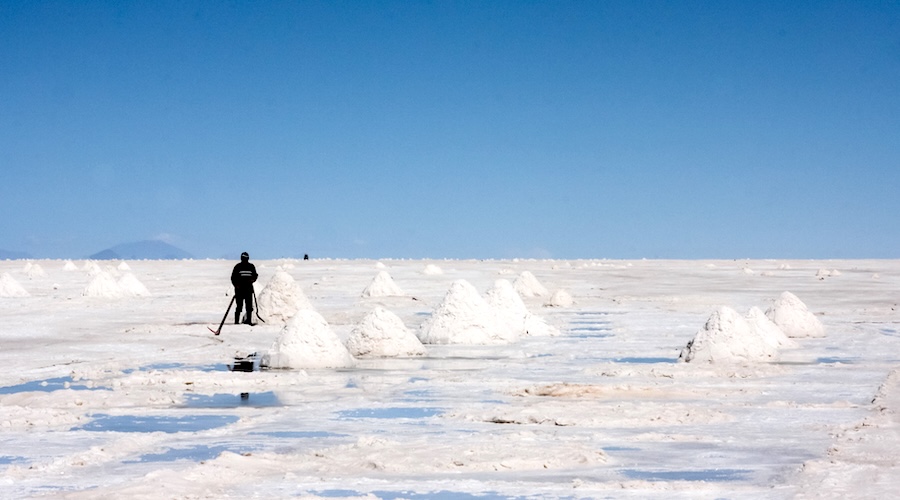
The global race to secure lithium supplies is entering a critical phase, as the energy transition drives demand for battery materials and raises questions about investment, infrastructure, permitting and mining capacity.
The global lithium industry faces a major challenge: turning ambitious demand forecasts into actual mining production. As electric vehicles, battery energy storage systems and renewable energy technologies expand, the world will need substantial new supplies of lithium. The central question is no longer simply how much lithium the market will require, but who will finance, develop and operate the mines needed to deliver it.
Estimates pointing to a potential $100 billion investment requirement and the need for 134 new mines highlight the scale of the challenge facing the industry. Such figures should be understood in the context of long-term supply projections, as the final investment requirement and number of projects will depend on demand growth, mine productivity, recycling and the development of alternative battery technologies.
Why the World Needs More Lithium Mines
Lithium is a critical raw material used in rechargeable batteries that power electric cars, consumer electronics and stationary energy storage systems. Governments and automakers are investing in electrification, while electricity networks increasingly require battery storage to manage fluctuations in renewable power generation.
These developments are placing greater importance on reliable lithium supplies. However, expanding production is a complex process that can take years, from identifying commercially viable deposits to obtaining regulatory approvals, securing financing, constructing processing facilities and reaching commercial output.
Even when a deposit contains significant lithium resources, that does not automatically mean it can be developed economically. Ore quality, extraction methods, water availability, energy costs, transport links and access to processing technology all influence a project’s commercial viability.
The $100 Billion Investment Challenge
Developing a new generation of lithium mines requires substantial capital. Investment is needed not only for extraction but also for processing plants, roads, electricity infrastructure, water systems and associated supply chains.
Mining companies must also navigate volatile commodity prices. When lithium prices rise, new projects become more attractive, encouraging companies to expand capacity. But when prices fall, financing becomes harder to secure, project timelines can be extended and proposed developments may be suspended.
This boom-and-bust cycle creates a major problem for long-term supply planning. Lithium projects often require substantial upfront investment, while revenues depend on market conditions that may change significantly before a mine begins production.
The challenge for investors is to identify projects capable of remaining competitive throughout the commodity cycle rather than relying solely on short-term price increases.
Who Will Build the 134 New Mines?
The responsibility is likely to be shared among established mining companies, specialist lithium producers, new project developers, financial institutions and governments.
Large mining companies have the capital, technical expertise and operational experience to develop complex projects. Established lithium producers can also expand existing operations, potentially using infrastructure and processing capabilities that are already in place.
Smaller exploration and development companies play a different role. They identify deposits, conduct feasibility studies and advance projects towards construction. However, many ultimately require strategic investors, joint ventures, acquisition deals or long-term supply agreements to finance development.
Battery manufacturers and electric vehicle companies may also help fund new projects through direct investments, offtake agreements and partnerships designed to secure future supplies. These arrangements can provide miners with greater revenue visibility and help lenders assess project risks.
Governments are another important participant. Public financing, loan guarantees, tax incentives and critical-minerals policies can help attract private investment, although projects must still demonstrate credible economics and meet environmental and regulatory requirements.
Permitting, Infrastructure and Environmental Pressures
Capital alone will not be enough to bring 134 mines into production. Permitting and construction timelines are major obstacles, particularly in regions where mining projects face complex environmental reviews, competing land uses or insufficient infrastructure.
Lithium extraction can also place pressure on local water resources and ecosystems, depending on the deposit and production method. Projects must account for water management, waste disposal, land rehabilitation and engagement with local and Indigenous communities where applicable.
Hard-rock mining and extraction from underground brines involve different technical and environmental considerations. New technologies, including direct lithium extraction, could improve recovery in certain deposits, but their commercial performance and environmental benefits must be assessed on a project-by-project basis.
Delays in approvals, shortages of skilled workers and limited access to power, roads and processing facilities can increase costs and postpone production. These risks make early planning and cooperation between mining companies, governments and local communities essential.
Can Recycling Reduce the Pressure?
Recycling could help reduce the volume of newly mined lithium required over time. As more electric vehicle and energy storage batteries reach the end of their useful lives, recovered materials may become an increasingly important source of supply.
However, recycling cannot immediately replace primary mining. The availability of end-of-life batteries depends on how many batteries were installed in previous years, how long they remain in service and how efficiently materials can be recovered.
Battery chemistry is another factor. Lithium iron phosphate and other battery technologies have different material requirements from nickel-rich lithium-ion chemistries, potentially changing the composition and pace of future lithium demand.
Consequently, the industry’s supply strategy will likely combine new mines, expansions of existing operations, recycling and improvements in material efficiency.
What It Means for the Global Mining Industry
The need for additional lithium capacity presents opportunities across the mining value chain, from exploration and mine development to mineral processing, engineering, equipment manufacturing and logistics.
Countries seeking to strengthen domestic battery supply chains may compete to attract investment in lithium extraction and refining. Yet the location of a mineral deposit does not guarantee that its host country will capture the greatest economic value. Processing capacity, technical expertise, transport infrastructure and access to end markets also matter.
For mining companies, the next phase will require disciplined capital allocation and realistic project schedules. For governments, the challenge is to provide predictable regulatory frameworks while protecting the environment and ensuring local communities benefit from development.
Conclusion: Turning Lithium Demand Into Supply
The prospect of a $100 billion investment requirement and 134 new mines underscores the scale of the challenge facing the lithium industry. Meeting future demand will require coordinated action by mining companies, investors, governments, battery manufacturers and technology providers.
The key question is whether projects can secure financing, obtain approvals and reach production at costs that remain competitive across changing market conditions. The outcome will influence not only lithium prices but also the pace and cost of the global transition towards electric mobility and renewable energy storage.
Ultimately, the lithium race will be determined not just by who controls the resources, but by who can develop them responsibly, finance them sustainably and deliver reliable supplies to a rapidly evolving battery market.