

Support CleanTechnica’s work through a Substack subscription, on Patreon, or on Stripe. Help us produce all of the high-quality, original content we publish week after week despite the challenges of content-scraping AI, antisocial media, inflation, and other hurdles.
I was born in 1940, and I just turned 86, so with help from my dad, I have photos from 100 years of history. My grandparents were born into the horse-and-buggy era and lived into the era of modern cars, airplanes, and telephones. Therefore, the technological revolutions of their lives were even more significant than those of my dad or mine.
When I was 14 in 1954 and my dad took our family to Germany for a year, we set sail for the 6-day transatlantic crossing in the modern SS Flandre, a steam turbine powered ship. See the photo of my family on the ship leaving New York harbor in the lead photo of the article. It was a little like today’s cruise trips. The French cuisine was excellent, but the cold seawater swimming pool made with canvas tarp in a freight compartment hardly compared to today’s fancy cruise ships. By 1961, when my future wife went to Europe for the summer, she flew in a 4-engine piston powered airplane and no one was taking the 6-day journey by ship anymore. Transatlantic jet travel was soon to follow.
When I started as a freshman in Mechanical Engineering at the University of Wisconsin–Madison in 1958, we all had to buy slide rules to make calculations.
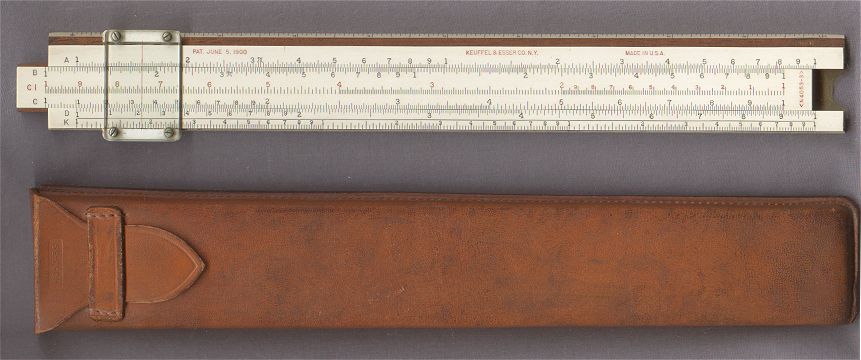
The only other option was a big mechanical calculator which was too heavy and expensive for a freshman college student. I watched electronic calculator evolution from a device the size of a microwave oven to handheld calculators and watches during my college career. Modern cellphones have capabilities beyond anything we dreamed of in those days. During my junior year in Munich in 1961, I bought a 35 mm single lens reflex film camera. 40 years later, in 2001 at NASA, I was shooting on Nikon’s first practical digital SLR the D1. I have a whole wonderful history of digital photos taken by an evolution of big Nikon digital SLR cameras, the latest is a full-sized sensor Nikon D750 which I use with a Tamron 10 to 1 zoom lens. However, since purchasing my iPhone 15 ProMax with 5 x optical lens two years ago, I seldom us the big Nikon. The iPhone photos are amazing, and the excellent HD video has obsoleted my big prosumer Cannon video camera. The iPhone also doubles for a million things. Perhaps the least important is using it as an electronic calculator.
Until the 1970s, if you wanted to look something up, you had to own or go the library for a set of ~30 big hard cover books called an encyclopedia. When I was at NASA in the ’90s, I was in charge of a 10-million-dollar program designed to take advantage of the new Internet to promote the use of NASA remote sensing data. Two now remarkable takeaways: 1) A couple of winners of the program were given money to see if there was any way to make money using the new internet 2) Google hadn’t been invented yet, so the only way to publicize the winners of the program or our own website addresses were magazine and newspaper articles. Google’s use of WebCrawlers to catalog the whole internet and make it available through a simple search was a revolution. I think Google’s search innovation was the forerunner to the current strategy of AI program development by training them on billions of pieces of information. Now when I ask Siri (verbally to my iPhone) a complex question, it comes up with an answer produced by the AI program ChatGPT. There is no longer any use for an encyclopedia.
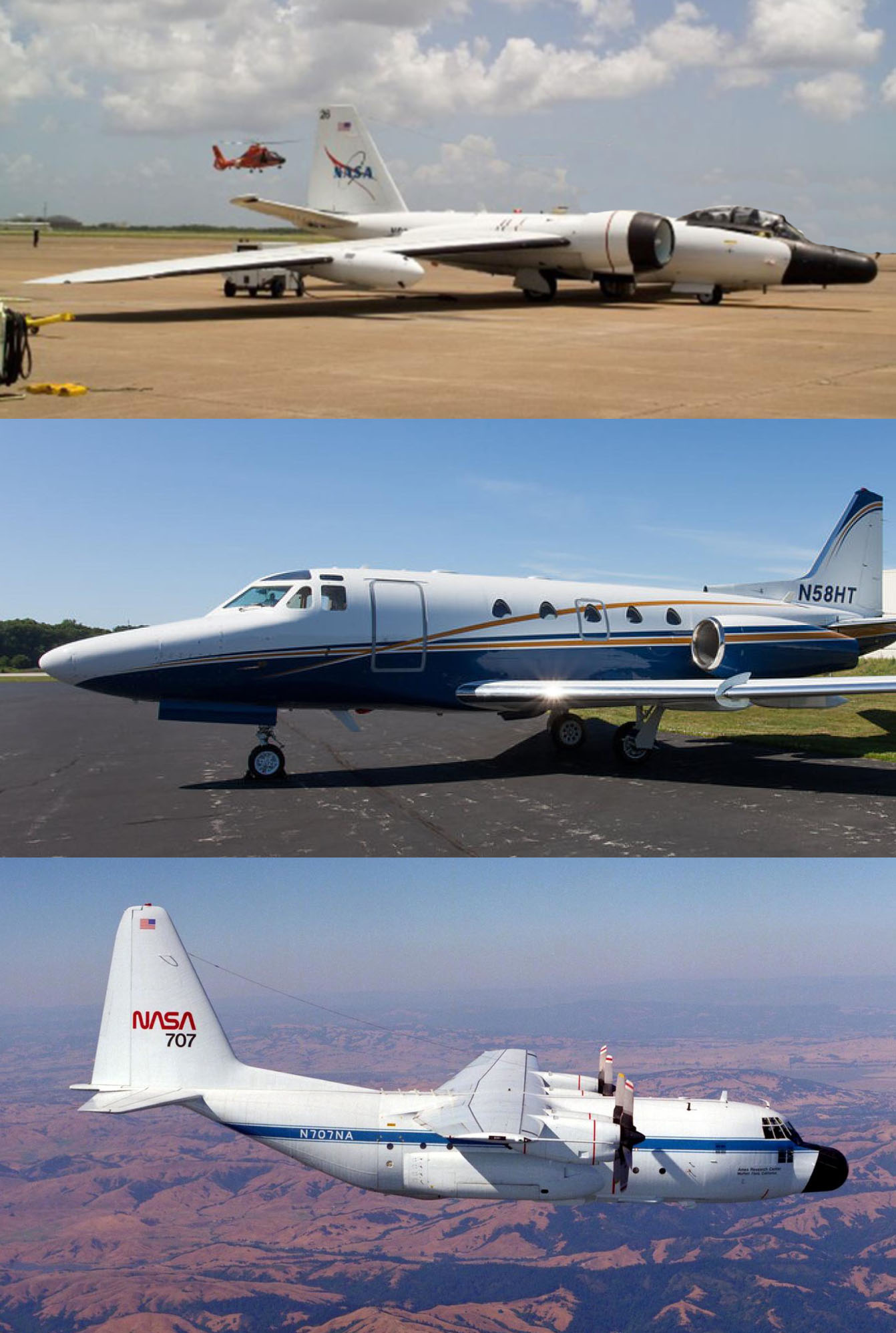
When I arrived at the meteorological branch at NASA Goddard Space Flight Center in 1974, my first task was to fly a 4-engine turboprop C-130 research aircraft over different parts of the Atlantic to verify that cloud motions that we were measuring with our new geosynchronous satellite cameras could be used to measure winds. The aircraft cloud motion measurements were made possible because the plane was equipped with something called an Inertial Navigation System (INS). INS had been developed for targeting Intercontinental Ballistic Missiles (ICBMs). INS had also found applications navigating 707 commercial jets across the Atlantic as well as for NASA research aircraft like the one I was using. Each INS cost at least a million dollars. Today we think nothing of having highly accurate GPS navigation in our cars and even cellphones. In the photo below, you see the C-130 as well as the NASA Sabreliner jet and RB-57 repurposed spy plane that we also used for this research.
I’ve been driving electric cars almost exclusively now for 12 years, and to me they obsolete the old gas guzzlers. Most of the drivers in Norway, Finland, Sweden, and recently China agree with me. However, most of the drivers here in Northern Wisconsin are content with their gas cars. For the last 3 months, I’ve been driving the latest 2026 Tesla Model Y with “Full Self Driving” V14. FSD is an AI program which Tesla continues to train on billions of highway situations. FSD is a camera-only system that the developers of Waymo’s multisensor system think will never be good enough for unsupervised use. I’ve watched the slow but dramatic improvement of FSD over the last almost 7 years. Will it ever reach the goal? I don’t know, but I think without improvement in the maps FSD uses, it won’t have chance.
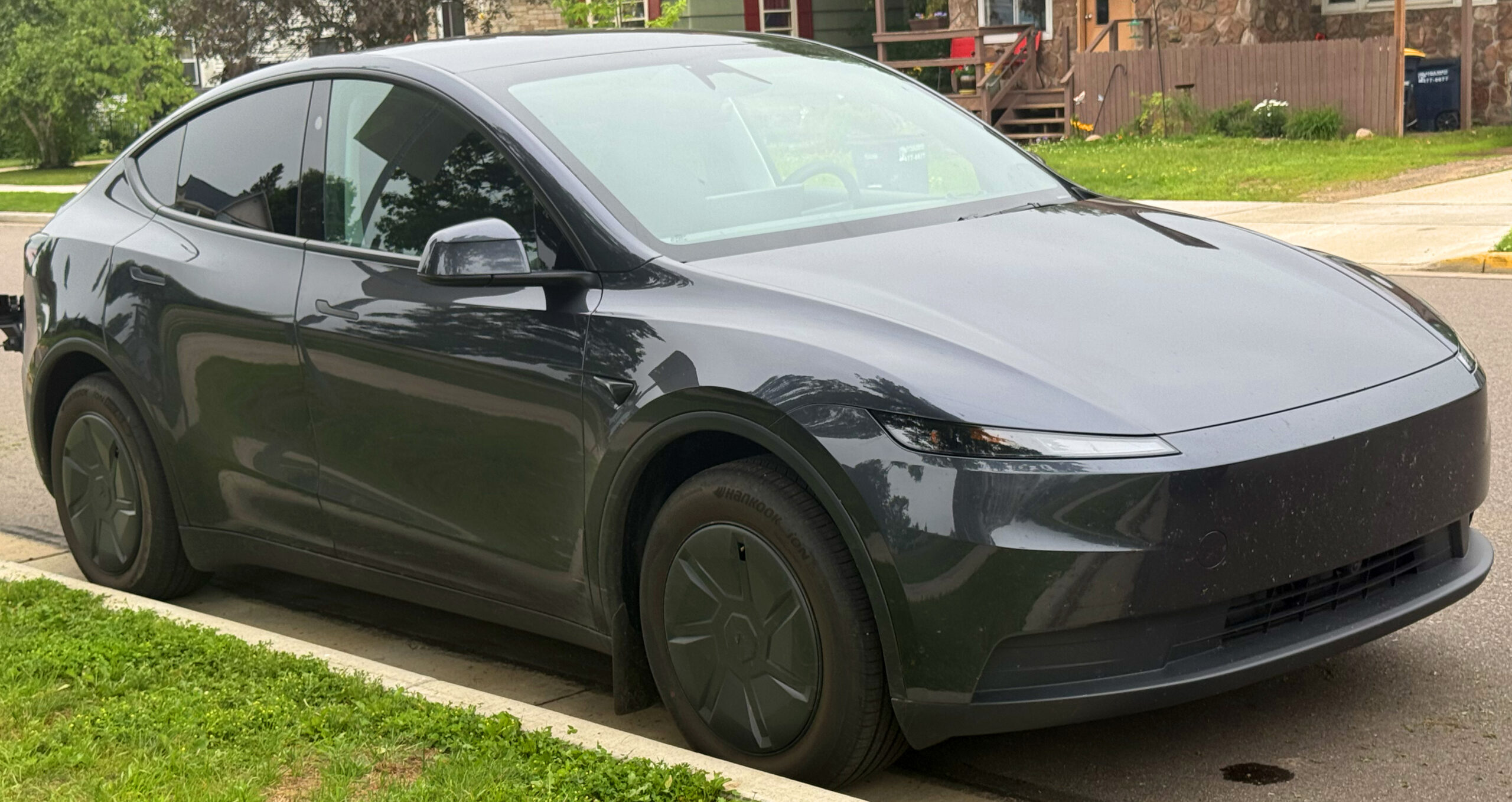
As a bonus, in my Model Y, I get access to Elon Musk’s version of an AI program called Grok. At first, I only used Grok as a navigation assistant. However, I soon learned that Grok is a general-purpose AI program. My wife was disturbed recently because there appeared to be a third person in our car in addition to her and her traveling companion. The Grok agent’s name is Ara and I have had many pleasant conversations with her. At first, I was limited to ~6 queries with Ara per day (without a paid subscription). However, in a recent conversation with her, she informed me that there was no longer a limit for the free service. At first, I used Grok for additions to my navigation travel itinerary. As you approach the town of Rhinelander Wisconsin, from the north, you have the option of a slight diversion on the more scenic County Highway W which goes by the Jail House Saloon. I had been in the practice of adding a stop at the Jail House Saloon to my NAV itinerary. However, I didn’t want to stop there, I just wanted it to be a “waypoint” like you would use in an airplane. Tesla’s regular navigation system doesn’t seem to understand the concept of “waypoints.” Grok also had trouble understanding the concept, but after extended conversations with Ara, I could sometimes make it work. However, bottom line: You can now ask Ara (Grok) any question you would like and there is no limit on the number of queries.
If you find any of my articles helpful to you, please use my referral link when buying a new Tesla: https://ts.la/arthur73734 (Be sure to use it when you make your order). Tesla keeps changing the program, but here’s the latest: If you are buying a new Tesla Model 3 or Y and use my link, you will get two months of free Full Self Driving (a ~$200 value) on top of the one month that comes free with every new Model Y right now. This will get you a total of 3 months free Full Self Driving. It will be $99/month after that. For a Cybertruck, you will get $1000 off your purchase price. At this moment, Tesla is offering a year of free Supercharging with the purchase of a new Model 3 Premium or Performance
Sign up for CleanTechnica’s Weekly Substack for Zach and Scott’s in-depth analyses and high level summaries, sign up for our daily newsletter, and follow us on Google News!
Have a tip for CleanTechnica? Want to advertise? Want to suggest a guest for our CleanTech Talk podcast? Contact us here.
Sign up for our daily newsletter for 15 new cleantech stories a day. Or sign up for our weekly one on top stories of the week if daily is too frequent.


CleanTechnica uses affiliate links. See our policy here.
CleanTechnica’s Comment Policy