

Support CleanTechnica’s work through a Substack subscription, on Patreon, or on Stripe. Help us produce all of the high-quality, original content we publish week after week despite the challenges of content-scraping AI, antisocial media, inflation, and other hurdles.
The race to dominate artificial intelligence is forcing Asia and the Pacific into an infrastructure buildout unlike any in its history, with electricity grids emerging as the next strategic battleground.
The Asian Development Bank is betting that the region cannot sustain the coming wave of AI data centers, semiconductor manufacturing, and digital economies without fundamentally changing how electricity moves across borders. Instead of countries building isolated power systems, the bank wants a continent-wide network capable of delivering renewable electricity wherever demand is highest.
That vision comes with a price tag of $70 billion by 2035, including $50 billion for a Pan-Asia Power Grid Initiative and another $20 billion for an Asia-Pacific Digital Highway. Together, the two programs seek to create the physical backbone for an AI-driven economy powered increasingly by renewable energy rather than imported fossil fuels.
“Energy and digital access will define the region’s future,” ADB President Masato Kanda said when the initiatives were unveiled during the bank’s annual Board of Governors meeting in Samarkand, Uzbekistan, last May. “By linking power grids and digital networks across borders, we can lower costs, expand opportunity, and bring reliable power and digital access to hundreds of millions of people.”
Powering the data economy
The strategy reflects a growing reality confronting governments across Asia. Global technology companies are investing billions of dollars in hyperscale data centers from Singapore to Malaysia, Indonesia, Thailand, and the Philippines. Those facilities consume enormous amounts of electricity, operating around the clock to power AI training, cloud computing and increasingly sophisticated digital services. Advanced semiconductor fabrication plants demand even more, requiring highly stable, uninterrupted electricity with virtually no tolerance for power fluctuations.
That demand is already beginning to reshape industrial policy. In the Philippines, the proposed Pax Silica economic security corridor in New Clark City is being developed under the Luzon Economic Corridor as a future hub for artificial intelligence, semiconductor manufacturing, and advanced technologies. Although the project is still under negotiation between Manila and Washington, its success will ultimately depend on one resource that receives far less attention than microchips or investment incentives: electricity. AI campuses, chip factories, and advanced electronics manufacturers require vast amounts of dependable power, making access to abundant clean energy as strategically important as land, logistics, and skilled workers.
Supplying that electricity while meeting climate commitments has become one of the defining infrastructure challenges of the decade.
For countries pursuing projects like Pax Silica, ensuring access to reliable low-carbon electricity may prove just as important as attracting semiconductor manufacturers themselves. If domestic renewable generation cannot expand quickly enough, cross-border electricity trade could become an increasingly attractive option for powering future AI industrial hubs.
ADB’s answer is regional integration
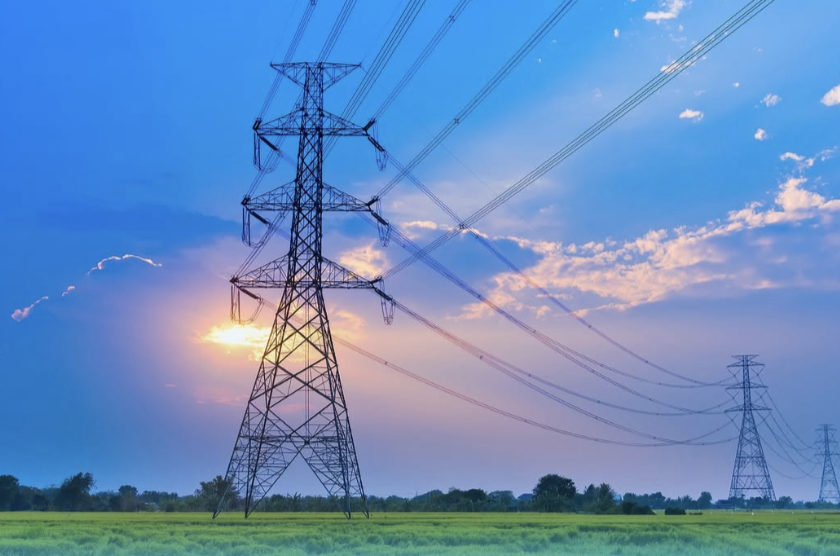
Rather than treating renewable energy as a domestic resource, the Pan-Asia Power Grid Initiative would allow countries with abundant solar, wind, and hydropower to export electricity across interconnected transmission networks. Instead of every nation building enough capacity to meet peak AI demand independently, neighboring countries could trade electricity across borders, improving reliability while reducing costs. The program covers Southeast Asia, South Asia, Central Asia, West Asia, and the Pacific, building upon existing efforts such as the ASEAN Power Grid, the South Asia Subregional Economic Cooperation program, and the Central Asia Regional Economic Cooperation Energy Strategy.
The initiative aims to mobilize $50 billion by 2035 for cross-border transmission lines, substations, battery storage systems, and digital grid technologies. ADB expects to finance roughly half the program from its own resources while raising the remainder through governments, development partners, and private investors.
By 2035, the bank projects the initiative will integrate approximately 20 gigawatts of renewable energy across national borders, build 22,000 circuit-kilometers of transmission lines, improve electricity access for 200 million people, and reduce regional power-sector emissions by 15 percent. It also estimates the program could create about 840,000 jobs.
The companion Asia-Pacific Digital Highway is designed to ensure the region’s communications infrastructure keeps pace with its expanding energy network. The $20 billion program will finance fiber-optic corridors, subsea cables, satellite connectivity, and regional data centers while supporting cybersecurity and AI readiness. A new Center for AI Innovation and Development in Seoul, backed by a $20 million contribution from South Korea, will help train about 3 million people in AI and digital skills by 2035.
The bank expects the digital initiative to provide first-time broadband access to 200 million people while improving connectivity for another 450 million, reducing communications costs in remote and landlocked areas by about 40 percent.
The interconnected vision has gained urgency as electricity demand from AI accelerates far faster than many utilities anticipated. Large language models, cloud computing, and advanced manufacturing require massive computing clusters that consume electricity at levels once associated only with heavy industry.
Debate at the Asian Clean Energy Forum
The Pan-Asia Power Grid Initiative became a major topic during last month’s Asia Clean Energy Forum in Manila, where ministers, regulators, utilities, and private developers examined the technical and regulatory barriers that continue to slow regional electricity trade. Many participants agreed that isolated national grids will struggle to accommodate rising demand from AI, electric vehicles, and industrial electrification.
But outside the conference halls, the announcement drew criticism from climate and civil society organizations, which argued that regional integration alone does not guarantee a just energy transition.
Demonstrators led by the NGO Forum on ADB gathered outside the forum venue in Mandaluyong City, calling on the bank to abandon remaining support for fossil fuels and strengthen protections for communities affected by energy projects.
“For more than sixty years, the ADB has trapped communities in a dirty legacy of destructive business across Asia,” said Elle Bartolome of the Philippine Movement for Climate Justice.
Lidy Nacpil, coordinator of the Asian Peoples’ Movement on Debt and Development, said the bank continues to leave room for continued oil and gas expansion while promoting what she described as “false energy solutions.”
“Real energy security requires accelerating a rapid, equitable and people-centered transition powered by renewable energy,” Nacpil said.
The coalition also urged ADB to exercise greater caution in financing critical minerals, mining, and nuclear energy projects, warning that the race to secure materials for the clean energy transition should not come at the expense of environmental safeguards or indigenous communities. Jaybee Garganera of Alyansa Tigil Mina said financing expanded extraction of nickel, copper, and other transition minerals without stronger protections could create new environmental and social conflicts.
The debate highlights the increasingly complex politics surrounding Asia’s energy transition. The region needs unprecedented investment in electricity infrastructure to support economic growth and AI while simultaneously reducing emissions and ensuring communities benefit from the transition.
The power struggle
For ADB, the challenge is no longer simply financing renewable energy projects. It is building an interconnected continental power system capable of moving clean electricity wherever it is needed, fast enough to keep pace with the world’s fastest-growing digital economy.
Whether future AI hubs such as Pax Silica ultimately draw electricity entirely from domestic renewable resources or supplement them through regional power trading, the equation remains the same: artificial intelligence runs on electricity. The countries that secure abundant, affordable, and clean power will be the ones best positioned to lead the next generation of AI manufacturing and innovation.
The Pan-Asia Power Grid is therefore more than an energy project. It is rapidly becoming one of the most important pieces of Asia’s AI strategy.
Sign up for CleanTechnica’s Weekly Substack for Zach and Scott’s in-depth analyses and high level summaries, sign up for our daily newsletter, and follow us on Google News!
Have a tip for CleanTechnica? Want to advertise? Want to suggest a guest for our CleanTech Talk podcast? Contact us here.
Sign up for our daily newsletter for 15 new cleantech stories a day. Or sign up for our weekly one on top stories of the week if daily is too frequent.


CleanTechnica uses affiliate links. See our policy here.
CleanTechnica’s Comment Policy