

Support CleanTechnica’s work through a Substack subscription or on Stripe.
Canadian Solar is the name of a leading global PV manufacturer headquartered in Canada, and they are not taking US President Donald Trump’s war on solar power sitting down. Late last year the company took steps to shield its US factories from the President’s on-again, off-again trade wars, and now they are just weeks away from shipping new high-performance solar modules to eager buyers throughout the world, including, presumably, the US.
A New High Density Solar Module From Canadian Solar
As described by Canadian Solar on June 22, the company’s new TOPCon 3.0 high-power-density photovoltaic module is aimed at the utility-scale solar power plant market. Large-scale industrial users and commercial businesses are also targets. The high end of the scale is a safe call for the US market. While Trump’s war on solar is among the factors putting a crimp on the small scale, residential solar industry of late, high-demand energy stakeholders are still gobbling up the clean kilowatts at a rapidfire pace.
To further grease the new module’s entry into the solar market, Canadian Solar configured it according to the 2382 × 1134 × 30 millimeter industry-wide standard, along with an impressive output of up to 670 Wp. Though more powerful modules are beginning to emerge, a 670 Wp is currently at the high end of the market, with Wp referring to a module’s capacity under optimal conditions.
The high capacity factor is important because it enables solar developers to squeeze more clean energy from the same land, or use less land to produce the same output. That saves money all along the development pipeline, from land acquisition on through maintenance and operating costs.
The Bifacial Element
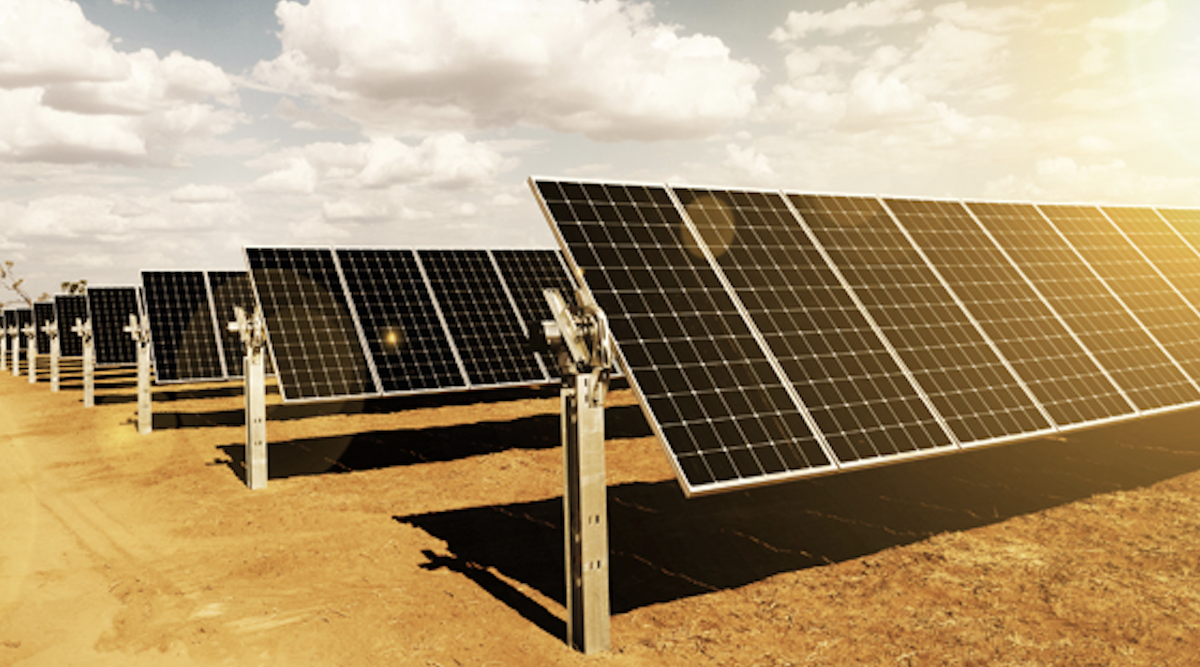
Among other advantages cited by Canadian Solar, the new module is designed for bifaciality, meaning that it can absorb and convert light from both sides of the panel. Bifacial solar panels also open up new opportunities for developers, particularly in the area of agrivoltaics. Bifacial panels can be set in an upright position rather than the more familiar angled alignment, enabling them to double as fencing on farmland (see more agrivoltaic background here).
Canadian Solar also notes that the new module is purpose-built to function efficiently in hotter climates, which is another opportunity springboard for solar developers. Earlier solar technologies generally perform better in cooler climates. They lose conversion efficiency when the temperature is too high, and they can also degrade more quickly over time. Canadian Solar notes that its hot-climate design contributes to a low degradation rate, arriving at an output of more than 88.85% even after 30 years of operation.
Canadian Solar In The USA
As for its US factories, in its Q1 report this year Canadian Solar highlighted the forthcoming expansion of its existing 5-gigawatt solar module factory in Texas. The timeline calls for the factory to operate at a capacity of 10 gigawatts per year before the end of this year.
Canadian Solar is also working on another factory in Jeffersonville, Indiana, which will manufacture new HJT (heterojunction technology) solar cells. The initial design called for a capacity of 5 gigawatts, but Canadian Solar has revised that upwards to 6.3 gigawatts. The company expects that red-hot demand for solar power in the US will support the new, two-phase plan, with the first phase getting under way through this year.
“Phase I has a nameplate capacity of 2.1 GWp and is expected to become one of the first commercial-scale HJT solar cell facilities in the U.S. upon commencement of commercial operations,” Canadian Solar explains.
“The Company expects to begin trial production for Phase II at the beginning of 2027. This expansion will add 4.2 GWp of capacity, bringing the Company’s total solar cell nameplate capacity in the U.S. to 6.3 GWp,” they add.
What Is TOPCon? For That Matter, What Is HJT?
For those of you new to the solar power scene, a bit of explanation is in order. Canadian Solar was not just making up names when they called their new product a TOPCon solar module. TOPCon stands for Tunnel Oxide Passivated Contact, a recent addition to the pantheon of mass-marketed solar technologies.
As applied to solar power, TOPCon technology converts light into electricity more efficiently than the current industry standard. PV researchers anticipated the superior qualities of TOPCon solar cells as far back as 2013, but they got hung up on the cost of manufacturing. In the meantime, a more economical, factory-friendly technology called PERC (Passivated Emitter and Rear Contact) flooded the market (see more TOPCon background here).
In the 13 years since 2013, TOPCon stakeholders have had plenty of time to unravel the manufacturing knots, and Canadian Solar is among other solar stakeholders transitioning into TOPCon.
HJT is another emerging technology that offers performance improvements. The US Department of Energy has been working with academic and private sector partners to commercialize HJT since at least the early 2000’s (here’s one example), so it’s no surprise to see marketable versions finally emerge.
Canadian Solar Trolls Trump With Onshoring Plan
As for how a company headquartered in Canada can help push the solar power envelope in the US without running afoul of President Trump, that’s a good question.
Anything could happen, but Canadian Solar has prepared the ground for a battle royale, legally speaking, in the event Trump attempts to bring his chopper down upon it.
Canadian Solar was founded by the Canadian citizen and materials scientist Dr. Shawn Qu. A native of China, Dr. Qu studied in Canada before launching Canadian Solar — in Canada, of course — in 2001. Though the firm is Canadian, its first solar factory commenced operations in China.
Other factories soon followed in Canada and elsewhere, including the US. Multinational manufacturing is par for the course, but the return of President Trump has exposed companies like Canadian Solar to new risks. Accordingly, on December 1 of 2025 the company announced a plan to establish firmer footing in the US market.
S&P Global was among those taking note of Dr. Qu’s focus on the US. “The company has refocused on strategic markets, Qu said, noting the creation of CS PowerTech in December 2025, which is helping it reshore US manufacturing,” S&P reported in May.
“CS PowerTech is a joint venture for US assets that avoids US scrutiny over China from new foreign entity of concern (FEOC) restrictions added under the July 2025 Republican-backed budget law to qualify for tax credits,” S&P added.
The S&P report follows an announcement last December, in which Canadian Solar noted that it will have a 75.1% controlling stake in CS PowerTech, which serves as its US-based platform for US solar module and cells manufacturing, and US sales as well. In the same report, Canadian Solar also confirmed its intent to purchase 75.1% of the overseas assets of CSI Solar that support its US operations.
In addition, last December Canadian Solar emphasized that the CS PowerTech venture is just the beginning. The company is also eager to add more joint ventures with US solar power stakeholders to its portfolio, so hold on to your hats.
Photo: A Canadian manufacturer is adding a powerful new solar module to its portfolio with an eye on the demand for clean energy in the US, despite the sharp U-turn in federal energy policy (cropped, courtesy of Canadian Solar).
Sign up for CleanTechnica’s Weekly Substack for Zach and Scott’s in-depth analyses and high level summaries, sign up for our daily newsletter, and follow us on Google News!
Have a tip for CleanTechnica? Want to advertise? Want to suggest a guest for our CleanTech Talk podcast? Contact us here.
Sign up for our daily newsletter for 15 new cleantech stories a day. Or sign up for our weekly one on top stories of the week if daily is too frequent.

CleanTechnica uses affiliate links. See our policy here.
CleanTechnica’s Comment Policy