
Quad Unveils $20 Billion Critical Minerals Framework Amid Efforts to Reduce Dependence on China

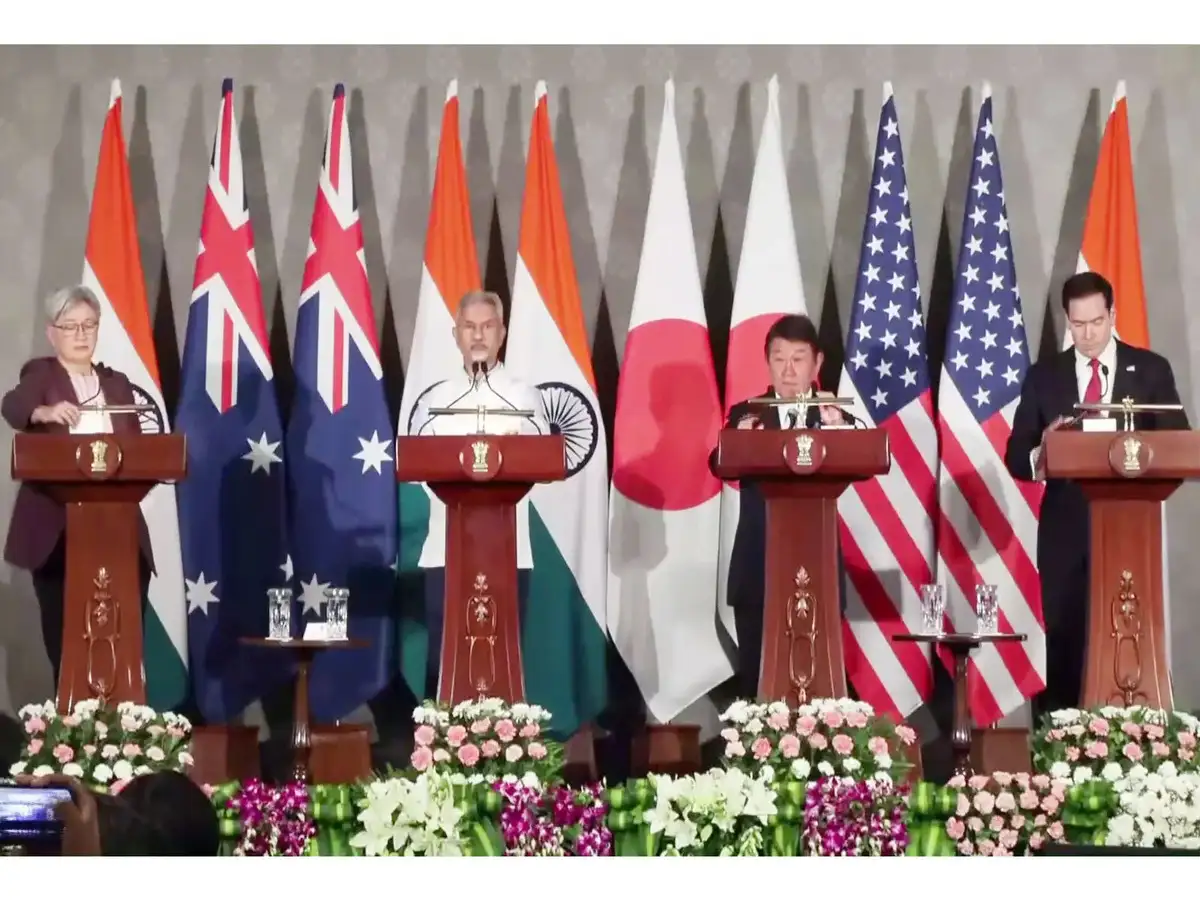
The Quadrilateral Security Dialogue, commonly known as the Quad, has announced a major $20 billion critical minerals framework aimed at strengthening supply chains and reducing global dependence on China for key industrial resources.
The initiative, unveiled during high-level discussions among Quad member nations — India, United States, Japan, and Australia — focuses on securing supplies of lithium, cobalt, nickel, rare earth elements, graphite, and other minerals essential for clean energy technologies, semiconductors, batteries, and defence manufacturing.
Officials involved in the framework said the partnership will support mining projects, refining infrastructure, processing facilities, and technology cooperation across member countries and allied regions. The investment package is also expected to encourage private sector participation and long-term strategic resource development.
The move is widely viewed as part of broader geopolitical efforts to counter China’s dominant position in global critical minerals supply chains. China currently controls a significant share of global rare earth processing and battery material refining capacity, making many countries heavily dependent on Chinese exports for advanced manufacturing industries.
Quad leaders stated that the framework aims to create resilient, transparent, and diversified supply chains capable of supporting the growing global demand driven by electric vehicles, renewable energy systems, electronics, and artificial intelligence technologies.
Analysts believe the initiative could reshape global commodity markets by accelerating alternative mining and processing hubs in regions such as Australia, India, Southeast Asia, and North America. Industry experts also expect stronger cooperation on research, recycling technologies, and strategic mineral reserves.
The announcement comes amid increasing international competition for access to critical minerals considered essential for economic security and the global energy transition. Governments worldwide are racing to secure long-term resource supplies as industries shift toward low-carbon technologies.
Market observers say the Quad’s large-scale investment signals rising coordination among democratic nations to build independent industrial ecosystems outside Chinese-controlled supply chains.