

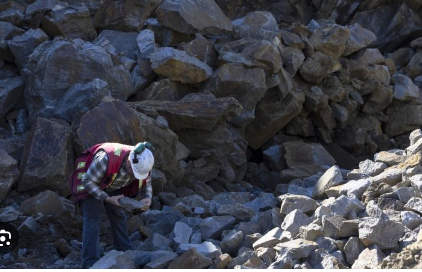
The United States Pentagon sought urgent proposals to secure domestic supplies of 13 critical minerals just one day before the United States and Israel launched military strikes on Iran, highlighting Washington’s growing focus on securing resources essential for modern warfare and advanced technology.
According to documents reviewed by officials, the U.S. Department of Defense requested mining companies to submit plans for boosting the production, processing, or recycling of key minerals used in semiconductors, weapons systems, and other strategic technologies. The request was sent to members of the Defense Industrial Base Consortium (DIBC), a network of more than 1,500 companies, universities, and organizations that supply the U.S. military.
The proposal call asked companies to submit detailed project plans by March 20, including cost estimates and operational strategies. Selected projects could receive development funding ranging from $100 million to $500 million to accelerate domestic production capacity.
The Pentagon’s list includes 13 strategically important minerals: arsenic, bismuth, gadolinium, germanium, graphite, hafnium, nickel, samarium, tungsten, vanadium, ytterbium, yttrium, and zirconium. These materials are essential components in military equipment, aerospace systems, electronics, and advanced defense technologies.
The timing of the request — issued one day before U.S. and Israeli strikes on Iranian targets — has drawn attention from analysts. However, there is no confirmed evidence that the initiative was directly coordinated with the military action. Officials say the move is part of a broader strategy to strengthen supply chains for critical resources used in defense manufacturing.
The United States currently relies heavily on imports for many of these minerals, with China dominating global supply and refining capacity for several rare earth elements. Export restrictions and geopolitical tensions have increased concerns in Washington about supply vulnerabilities in critical materials needed for national security.
In parallel with the proposal request, the Defense Logistics Agency is also exploring potential stockpiles of additional strategic materials such as lithium, chromium, and tellurium to further secure the country’s defense supply chain.
The move underscores a growing global race to secure critical minerals that power modern military systems, electric vehicles, advanced electronics, and next-generation energy technologies.