
Union Budget FY 2026–27: Reinforcing Growth with Fiscal Prudence Under the Viksit Bharat Vision
by MMPI NEWS DESK

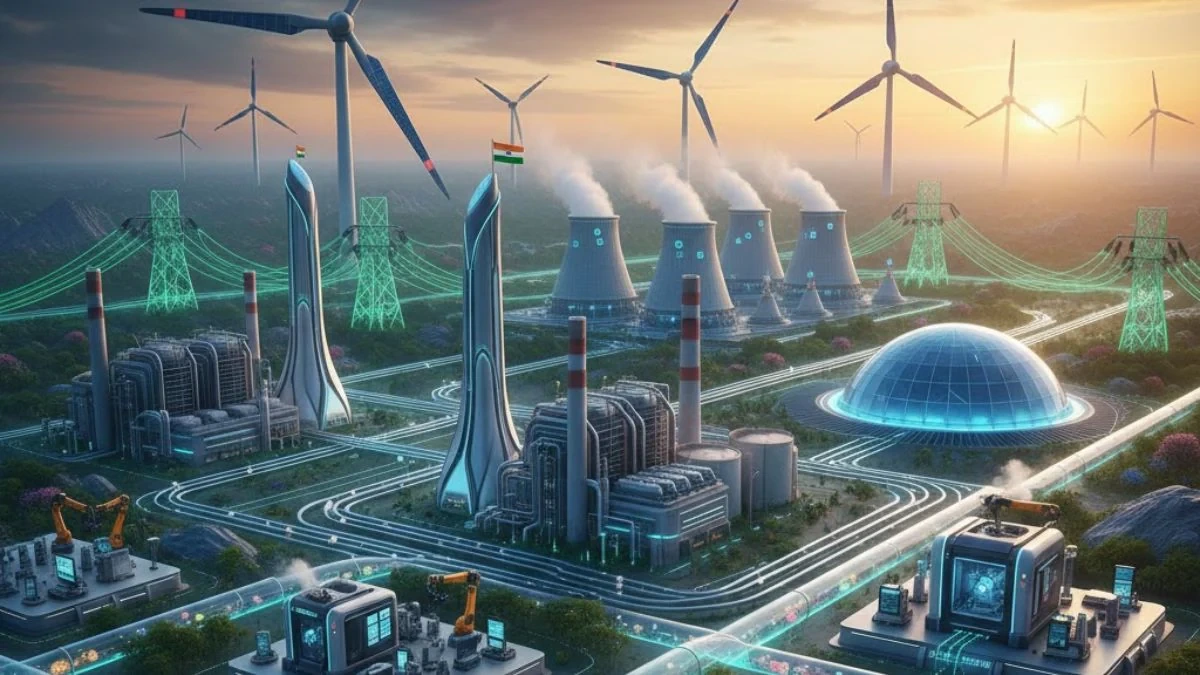
New Delhi: The Union Budget for FY 2026–27, presented by Finance Minister Nirmala Sitharaman on 1 February 2026, reflects a calibrated macroeconomic strategy aimed at sustaining high growth while reinforcing fiscal discipline. Anchored in the long-term Viksit Bharat vision, the Budget underscores continuity in policy direction, prioritizing infrastructure-led expansion, technology adoption, and domestic manufacturing without resorting to disruptive tax changes.
From a macroeconomic standpoint, the Budget projects India’s GDP growth to remain above 7% in FY 2026–27, positioning the country among the fastest-growing major economies globally. This projection is grounded in India’s strong domestic demand, sustained public investment, and improving private sector confidence. Rather than relying on short-term stimuli, the government continues to emphasize structural drivers of growth that enhance productivity and competitiveness over time.
Fiscal consolidation remains a central pillar of the government’s economic framework. The fiscal deficit for FY 2026–27 has been targeted at approximately 4.3% of GDP, signaling a steady and credible path toward medium-term fiscal sustainability. This approach balances the need to support economic expansion with the imperative of maintaining macroeconomic stability, thereby strengthening investor confidence and preserving fiscal space for future contingencies.
A key feature of the Budget is the allocation of around ₹12.2 lakh crore towards capital expenditure. This sustained emphasis on public capital investment reinforces the government’s role as a catalyst for growth, particularly at a time when global economic conditions remain uncertain. High-quality capital spending is expected to generate strong multiplier effects across sectors, stimulate job creation, and crowd in private investment, especially in infrastructure and manufacturing.
Strategically, the Budget sharpens its focus on sectors critical to India’s long-term economic transformation. Infrastructure development remains the backbone of the growth strategy, complemented by increased attention to clean energy and the energy transition. Simultaneously, the government continues to back domestic manufacturing, with particular emphasis on emerging and strategic technologies such as semiconductors, artificial intelligence, and digital public infrastructure. These priorities align with global technological shifts and reflect India’s ambition to strengthen self-reliance while remaining deeply integrated into global value chains.
Notably, the Budget avoids dramatic tax overhauls, opting instead for policy stability and predictability. This measured stance enhances trust among businesses and households by providing clarity and certainty for long-term decision-making. By focusing on expenditure quality, institutional reforms, and technology-driven efficiency rather than headline-grabbing fiscal measures, the government reinforces the credibility of its economic management.
Overall, the Union Budget FY 2026–27 demonstrates a strong alignment with the principles of Expertise, Experience, Authoritativeness, and Trustworthiness. It reflects policy experience gained over recent years, offers authoritative fiscal and growth signals, builds trust through prudence and predictability, and rests on realistic macroeconomic assumptions. In doing so, it lays down a clear roadmap for sustainable growth and nation-building, reinforcing India’s trajectory toward becoming a developed economy in the coming decades.